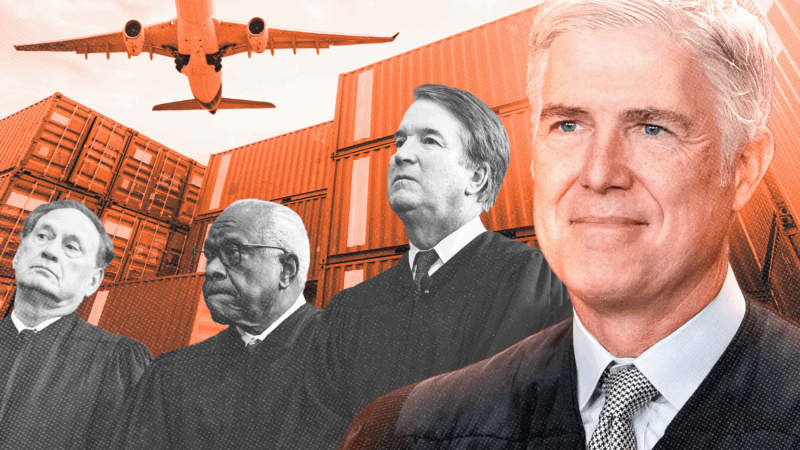
Six of the nine justices who currently serve on the U.S. Supreme Court were appointed by Republican presidents. Today, in its landmark decision invalidating the unilateral tariff regime imposed by President Donald Trump, those six jurists split right down the middle, with three holding Trump's tariffs to be unlawful while the other three dissented in favor of the president's power grab. What explains this notable fracture in the Court's so-called conservative bloc?
Justice Neil Gorsuch, who joined today's majority opinion in Learning Resources, Inc. v. Trump, tackled that query in the solo concurrence that he filed. "My dissenting colleagues have defended the major questions doctrine in the past," Gorsuch observed, referring to the legal doctrine which says that when the executive branch seeks to wield significant regulatory power, it must first point to an unambiguous delegation of such power by Congress to the executive.