
The Pixel 10 Pro Fold didn't change too much from its predecessor, but Google got several things right: the foldable came with a bigger battery, better ingress protection, and a brighter panel.
With the Pixel 11 Pro Fold, Google is addressing lingering issues. The foldable is 19g lighter than the Pixel 10 Pro Fold, and it is considerably easier to hold and use. It is a little thinner as well, and the new 2nm Tensor G6 is faster than previous iterations. There's also a new 48MP main camera alongside new features to make you take better photos, and greater customizability of your images.
Like previous years, it's the software that's the real star of the show. Google is once again showing how it can deliver the best AI-enabled features of any phone, and the Pixel 11 Pro Fold takes things to a whole new level. So let's take a look at everything new, and why the Pixel 11 Pro Fold stands out this year.
Google Pixel 11 Pro Fold: Availability and pricing
The Pixel 11 Pro Fold made its debut at the annual Made by Google event on August 12, 2026. The foldable is available in all countries where Google sells phones, and it retails for $1,899, a $100 increase from last year.
With Samsung selling the Galaxy Z Fold 8 Ultra at the same price and the Moto Razr Fold retailing for the same in the U.S., it's clear that this is what foldables cost now.
Google Pixel 11 Pro Fold: Design
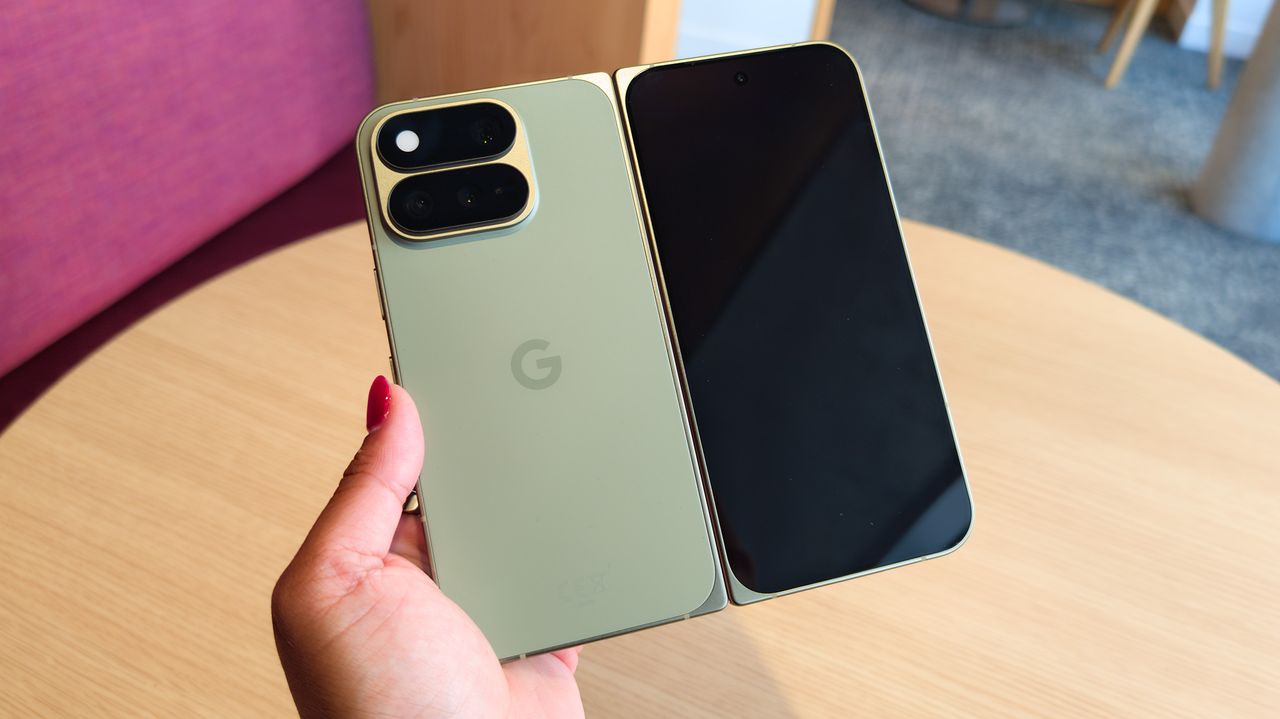
Google didn't change the design of the Pixel 11 Pro Fold too much; it still has the same visual identity as its predecessor. It is a little thinner, but not quite on the same level as the Galaxy Z Fold 8 Ultra or the Find N6 — those foldables are significantly sleeker. Thankfully, Google made a lot of progress in making the Pixel 11 Pro Fold easier to hold and use, and at 239g, it is 19g lighter than its predecessor. However, it continues to be one of the heaviest foldables around, and I don't really understand why that's the case; it doesn't have a huge battery like the 243g Razr Fold.
At 10.1mm folded and 5.0mm unfolded, it is definitely thinner than the Pixel 10 Pro Fold as well, and the difference is noticeable when using both foldables next to each other. I do like the Olive color this year; it's fresh and vibrant, and is a nice contrast to the standard Obsidian model.
On that note, the new HiLight feature is pretty cool too. It's basically a cluster of LED lights around the flash module that light up when you get notifications. You can also use it to interact hands-free with Gemini, but to use the feature, your phone needs to be face-down on a table. I don't know how usable that is, but I never leave my phones face-down, and I'm not going to start now.
The Pixel 11 Pro Fold has a slightly bigger 6.5-inch outer panel this year, but the inner 8.0-inch panel is the same size as last year. Both OLED panels have 120Hz refresh, and they get brighter this year, going up to 3,600 nits in outdoor use.
Google made changes to the hinge, and the crease isn't as noticeable as previous years. It still isn't quite the same creaseless design as the Find N6, but it is a definite upgrade.
Google Pixel 11 Pro Fold: Specs
Google is using the Tensor G6 in the Pixel 11 Pro Fold, and the 2nm node is faster than its predecessor by quite a long way. It should make using the foldable a lot better, but Google didn't talk much about gaming, and that makes me think the Pixel 11 Pro Fold won't have much new in this area. I'll test how it holds up while gaming after I get my hands on the retail unit.
Now, the switch to a 2nm node means the Pixel 11 Pro Fold has much better efficiency. That's why it's annoying to see that the foldable has a smaller 4.750mAh battery; the 10 Pro Fold got a 5,015mAh battery last year. The way I see it, Google looked at the gains from the Tensor G6, and decided to put a smaller battery to shave weight and thickness while still delivering the same usage figures.
I don't really understand the rationale in doing so; I always want a bigger battery in my devices, and with all other foldables sporting at least a 5,000mAh battery, the Pixel 11 Pro Fold is at a distinct disadvantage. The one positive is that it gets faster charging, going up to 50% in just 30 minutes. There's also Qi 2.2 with 25W charging built-in, so you don't need to use a case if you're using a Qi 2.2 power bank.
Category |
Google Pixel 11 Pro Fold |
Operating System |
Android 17, seven years of software updates |
Display |
Outer: 6.5-inch OLED, 120Hz, 3600 nits Inner: 8.0-inch OLED, 120Hz, 3600 nits |
Chipset |
Tensor G6, 2nm TSMC |
RAM |
16GB |
Storage |
256GB/512GB/1TB |
Rear cameras |
Main: 48MP f/1.7, OIS Tele: 10.8MP f/3.1, OIS, 5x zoom Wide: 10.5MP f/2.2 |
Front camera |
10MP f/2.2 |
Battery |
4,750mAh |
Charging |
30W wired, PPS 25W Qi 2.2 Pixelsnap wireless |
Connectivity |
Wi-Fi 7, Bluetooth 6, NFC, Dual-band GPS, 5G mmWave (NA only), 5G Sub-6 (global), LTE |
Ingress protection |
IP68 dust and water resistance |
Dimensions (folded) |
155.2 x 76.0 x 10.1mm |
Dimensions (unfolded) |
155.2 x 150.4 x 5.0mm |
Weight |
239g |
Colors |
Olive, Obsidian |
Google Pixel 11 Pro Fold: Cameras
What I'm most excited to test with the Pixel 11 Pro Fold is the cameras; the Pixel 10 Pro Fold was underwhelming in this area, and I want to see what Google is doing differently this year. There is a lot to like; the Pixel 11 Pro Fold has a new 48MP main camera, and it has double the amount of light intake, so it takes much better photos at night.
Google is also debuting a new Magic Capture mode that automatically takes the best photo in any scenario, and I'm intrigued to see how it holds up in daily use. Camera Looks is a new feature that gives you greater control over how your photos look, and there's a new zoom mode that delivers clean shots at up to 30x. I'm annoyed that the Pixel 11 Pro Fold doesn't get the 120x zoom mode and the new Instant Night Sight low-light mode — those are limited to the Pixel 11 Pro and 11 Pro XL — but the tweaks to the main camera and added features should make a difference.
Google Pixel 11 Pro Fold: Software
Software is the key point of focus with the Pixel 11 Pro Fold, and there is a lot to like. Google is betting on Gemini Intelligence to differentiate the foldable, and the agentic AI is better than just about anything else we've seen until now. It has an extensive feature-set in the U.S., where you can assign tasks to Gemini like ordering food or booking a cab, and it will do so on your behalf. You don't get this in other regions, but there's no doubting that Google has the most extensive set of AI-assisted software features of any phone today.
Live Translate gets even better, translating content in real-time, and there's a new Circle to Search mode built into the Pixel Camera, which just makes it easy to look up anything instantly. The foldable runs Android 17 out of the box, and it has all the extras you'd want to see on a high-end Pixel. The Pixel 11 Pro Fold may not stand out if you just look at the specs, but Google added a lot of small changes throughout that make it a much better foldable overall.
Google Pixel 11 Pro Fold
The Pixel 11 Pro Fold has lots of new features that you'll want to use. Gemini Intelligence leads the way, and you get a new camera, lighter design, and useful AI-assisted software features.


