
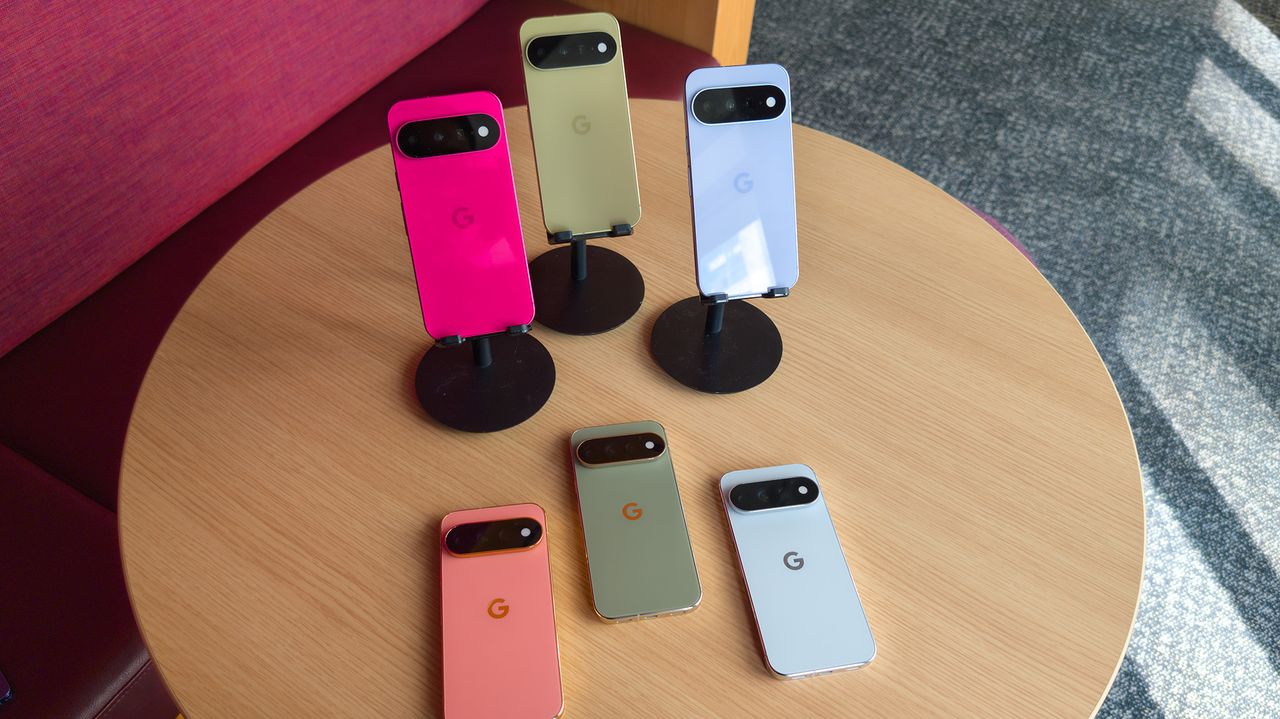
The Google Pixel 10 marks a full decade of Pixel phones, representing the evolution of Google from primarily a service and software provider to a company that delivers a full stack of products, including brilliant hardware.
Google's Pixel line of phones continues to gain popularity in North America, where Google offers the most exclusive services of any region. While we're not expecting the Pixel 11 to be a "revolutionary" release, we have seen several leaks and rumors pointing to a more notable entry than the Pixel 10 was.
Looking forward to Google's latest phones? Here's everything we know so far about the expected summer 2026 release.
Google Pixel 11: Price and availability
The Google Pixel 11 family is expected to be announced at the 2026 Made by Google event, scheduled for August 12 at 6 pm ET. At the event, we're expecting to see the debut of the Google Pixel 11, Pixel 11 Pro, Pixel 11 Pro XL, and Pixel 11 Pro Fold. The Pixel Watch 5 and a few other items may also make an appearance. Google traditionally releases its phones a few weeks after the announcement, so expect a late August commercial debut.
Google is expected to drop the 128GB models for each phone, meaning Pixel 11 models will be available in 256GB, 512GB, and 1TB storage configurations. While we're not expecting a price hike for the 256GB model compared to the equivalent Pixel 10 (which started at $899), this technically means the Pixel 11 and Pixel 11 Pro will start at a higher price, since the cheaper 128GB model won't be available.
But we are expecting actual price hikes for some models. Here's what we're expecting for starting prices for each model, based on rumors so far:
- Pixel 11 256GB : $899 / €999
- Pixel 11 Pro 256GB : $1,099 / €1,199
- Pixel 11 Pro XL 256GB : $1,299 ($100 more) / €1,399 (€100 more)
- Pixel 11 Pro Fold 256GB : $1,899 ($100 more) / €1,999 (€100 more)
Google Pixel 11: Design
Google's Pixel 11 series is expected to look identical to the Pixel 10 series in every way but one: the rumored Gemini Glow, or Pixel Glow, feature. While we're not certain of the final name yet (or even what it actually is), rumors and leaks have shown an array of LED lights lining the outside of the Pixel camera bar.
The 2026 Google Home Speaker launched with a similar light array at the bottom that activates whenever you talk to Gemini or receive a notification. The Pixel Glow feature on Pixel 11 phones is expected to offer similar functionality, making it clear when you're chatting with the virtual assistant on your phone rather than another person, though its exact implementation is still unknown.
Upcoming Googlebook laptops also sport a similar LED strip.
It's also been said that this alleged bar can serve various other functions, including special notifications (similar to the Nothing Phone's Glyph Interface) or simply lighting up constantly to look cool. Leaked hardware tests show that the LEDs support 8 base colors, which should allow them to display any color you want.
Pixel 11 cases are already hitting the market and show camera bar changes that leave room for additional LED strips around the bar. All Pixel 11 models are said to have this new feature, so you won't need to upgrade to a Pro model to enjoy it. Google may have even teased it at I/O in May, giving us the first real-life look at Pixel Glow.
Google Pixel 11: Performance and specs
We've seen ample evidence pointing to a 2nm upgrade for Google's Tensor G6 chipset, which will likely power the Pixel 11 series. TSMC's smaller 2nm manufacturing process will allow Google to deliver faster chips that stay cooler under heavy processing loads, two problems Tensor chips have faced for years.
More specifically, the Tensor G6 processor is rumored to chip with a 1+4+2 core design. This should include one ARM C1-Ultra core at 4.11GHz, four ARM C1-Pro cores at 3.38GHz, and two extra C1-Pro cores at 2.65GHz. Google is said to be using the five-year-old PowerVR C-Series CXTP-48-1536 GPU, which is severely underpowered compared to rivals, but at least includes Vulkan 1.4 support for newer games.
The idea is that Google is saving on budget by using an older GPU, so it can spend more on CPU and NPU upgrades, which are said to deliver 15% faster CPU performance and 30% better power efficiency. Given the company's massive focus on photography and AI features, CPU and NPU upgrades are more important for its unique focus than GPU upgrades would be.
It's also said that Google will ditch Samsung Exynos modems this year in favor of MediaTek M90 modems. This will upgrade the potential download speeds from 11Gbps to 12Gbps, increase upload speeds by 20%, enable better satellite connectivity, and even include MediaTek's AI-powered traffic engine.
This last part is the real year-over-year upgrade, as MediaTek has shown an 18% reduction in power consumption with its latest AI modem technology. Pixels have long had poor battery life, in part due to Google's poor choice of modems, and this could finally solve a huge problem with the company's phones.
Category |
Google Pixel 11 |
Google Pixel 11 Pro |
Google Pixel 11 Pro XL |
|---|---|---|---|
Colors |
Midnight Haze (black), Light Sterling (gray), Moss (green), and Fuchsia (pink) |
Midnight Haze (black), Light Fog (white), Pine (green), and Dune (pink) |
Storage options |
256GB, 512GB |
256GB, 512GB, 1TB |
256GB, 512GB, 1TB |
RAM |
8GB/12GB |
12GB/16GB |
12GB/16GB |
Display |
6.3-inch 120Hz AMOLED |
6.3-inch 120Hz LTPO AMOLED |
6.8-inch LTPO AMOLED |
Processor |
Google Tensor G6 |
Google Tensor G6 |
Google Tensor G6 |
Battery |
4,840mAh |
4,707mAh |
5,000mAh |
Additionally, separating the modem from the main SoC is better from a security standpoint. Vulnerabilities in the past have raised this problem, and this could help Google market the Pixel 11 series as its most secure yet.
Last year, Google added Qi2 wireless charging with built-in MagSafe-style magnets and slightly boosted charging speed. So far, we haven't seen any rumors pointing to major battery capacity or charging speed upgrades for the Pixel 11 series, though.
What we want to see
The Pixel 10 marked a bit of a display spec upgrade: a new accessibility feature to help PWM-sensitive users like myself. The problem, if you've been keeping up with display tech, is that Google's new setting doesn't go far enough to help sensitive users.
The Pixel 10 gives users the choice between 240Hz and 480Hz PWM rates, but PWM-sensitive users need PWM rates in the thousands of hertz, not the hundreds. We hope that Google will continue to work on this feature so it can compete with phones like the OnePlus 15 and Honor Magic 8 Pro, which see PWM rates go as high as 4320Hz (not a typo).
We're also hoping for better video recording quality natively on the Pixel 11. During the Pixel 10 unveiling, Google talked about how good the Pixel 10's video quality was and how it outperforms other Android smartphones. While we applaud Google for the progress it has made in recording quality, much of the highest-quality video from Pixels only appears after it's been uploaded to Google's cloud and given additional processing.
We'd love to see the Pixel be able to do this on the phone instead of needing to upload it to a cloud server and requiring a more expensive phone or subscription to get the job done.
The Pixel 10 features the largest battery in any Pixel phone to date, a trend that's continued for several years as Google tries to shed the stigma of Pixels being slow and having poor battery life. Google could do even better if it switched to silicon-carbon battery tech, but we haven't seen any rumors suggesting this is a reality.
This tech stems from electric cars and allows phones to pack in up to 35% denser batteries, charge faster, and keep a charge longer in extreme climate conditions. We also want to see much faster charging for the smaller Pixel 11 phones, as the Pixel 10 Pro XL is still the only model that charges faster than 30W.
Google made huge strides with the Pixel 10, and we're excited to see the company further improve pain points on its line, as well as further differentiate Pixel phones from the rest of the smartphone pack with bespoke AI features and a very Google-like style.
Google Pixel 10 Pro XL
The fastest-charging Pixel
The Pixel 10 Pro XL is the fastest-charging Google phone ever, supporting 39W speeds with a cable and 25W wirelessly. Full support for magnetic Qi2.2 chargers will give users great compatibility with accessories and chargers for years to come.
For more news and information on Google's latest phones, check out our Ultimate Guide.


