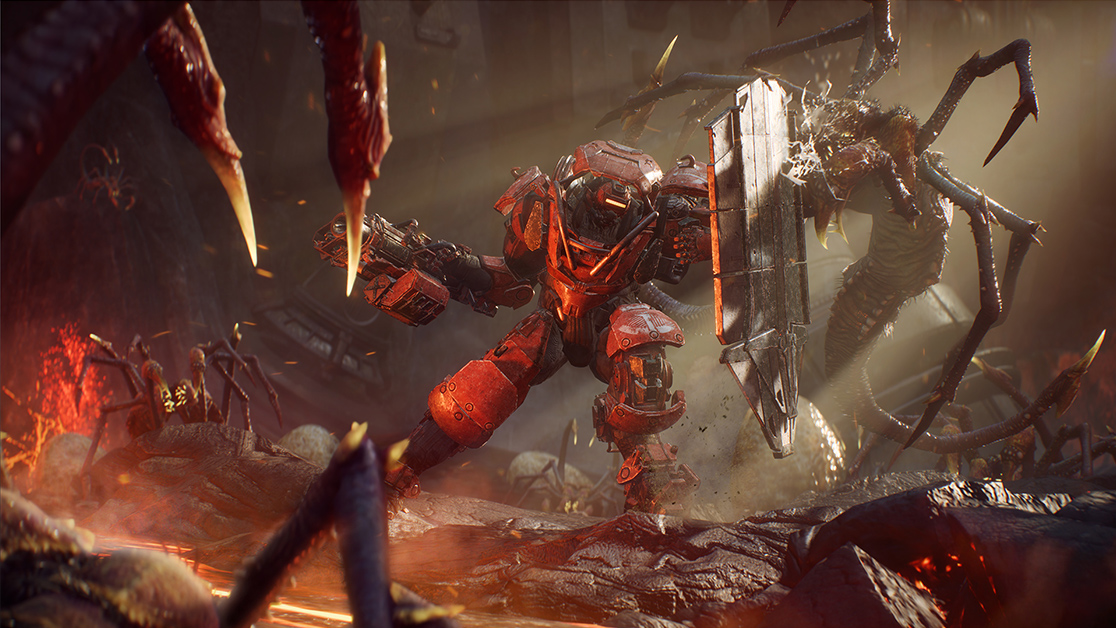
The death of Anthem, BioWare's maligned live-service RPG, comes as the Stop Killing Games initiative has put increased pressure on developers to create end-of-life plans that would keep these sorts of games available in the future. GOG's managing director, Maciej Gołębiewski, knows a thing or two about the practical realities of preservation, and he hasn't arrived at a clear answer yet.
"Game preservation is a very complicated riddle," Gołębiewski tells Eurogamer. Giving old games official, legal re-releases – as GOG does – requires tracking down IP holders, patching the games to work on modern hardware, and making sure all this work is commercially viable. "No one can do it for goodwill because this is not how salaries are being paid," he says.
That's certainly true from the perspective of a business like GOG, but sometimes this kind of work is done with pure goodwill – as is the case with the custom community server project for The Crew, the now-dead Ubisoft racing game that kicked off the Stop Killing Games effort in the first place. But certainly, you can't count on fans to bring back every dead multiplayer game, especially when these projects are always at risk of being shut down by IP holders.
"Resurrecting and bringing back multiplayer titles is something that's very complex, something that's very difficult, but it's very visibly becoming a matter of discussion among gamers, among regulators and publishers as well," Gołębiewski says.
The key objective for Stop Killing Games is to, through EU legislation, force publishers to implement end-of-life plans for online games that would keep them playable even after official servers shut down. Some publishers have already started making steps in this direction. Suicide Squad: Kill the Justice League got an offline mode as part of its final update last year. Knockout City arguably provided a gold standard for multiplayer preservation in 2023, with the devs offering players all the tools they need to host their own private servers.

It seems even Anthem had some form of local server infrastructure during development, but there's no telling how much time and effort it would've taken EA and BioWare to implement that back into the flagging game.
"What is a fair end-of-life cycle for a game?" Gołębiewski muses. "Should it just be buried and killed and no one can access it any more, and people who spent five or seven years working on it cannot really look at their creation any more because the service turned off? There is a very interesting and very complicated discussion that Stop Killing Games probably kick-started out of frustration."
Gołębiewski reiterates that GOG's mission is to "make games live forever," but he – like many in the industry – fears regulatory restrictions might restrict the types of games publishers will fund. That'll leave publishers saying, "'Okay now I need to put up the funds to create it, promote it, and then upkeep it for 10 years, 20 years, because the regulator said so,'" as Gołębiewski puts it. "That might in turn cause there to be fewer cool games for gamers."
But Stop Killing Games is explicitly not asking for decades of support from publishers – the effort wants offline modes or private server functionality to be provided to the community so that players can have access to the important parts of the games they've previously bought. At that point, the game is out of the publisher's hands. Whether that's a financially viable solution for every live-service game is the big question/
"I don't have the perfect answer yet," Gołębiewski concludes, "but it's good that the discussion is taking place."