Get all your news in one place.
100's of premium titles.
One app.
Start reading
The Economic Times
The Economic Times

Global Market Today: Asian stocks fall on Korean chip selloff, oil dips

Asian stocks fell for the first time in four days after a selloff in chipmakers revived concerns that the artificial intelligence-driven rally may have gone too far, too fast.

South Korea’s Kospi — home to many companies involved in AI infrastructure buildout — fell almost 6%, pulling the MSCI Asia Pacific Index down 1.2%. SK Hynix Inc. and Samsung Electronics Co. each fell more than 8% in Seoul, while Kioxia Holdings Corp. tumbled 14% in Japan after a blistering rally that had sent the stock up more than 650% this year. Also hurting Korean chipmakers is news that Apple Inc. is in negotiations to purchase chips from two Chinese semiconductor makers.
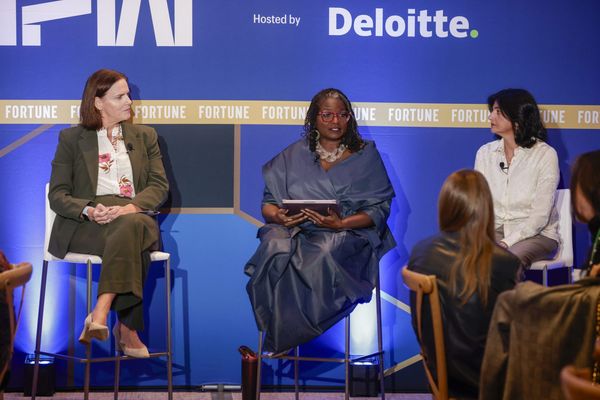
The moves came after Wall Street benchmarks dropped on Wednesday and a gauge of semiconductor stocks sank 6.3%. US equity-index futures fell 0.2%, indicating more losses are in store for the S&P 500 and the Nasdaq 100 indexes.

Markets found some stability as crude oil extended its decline, with Brent falling 0.8% to $71 a barrel, the lowest level since Feb. 26, as flows through the vital Strait of Hormuz climbed. Treasuries held their losses, while gold rose for a second day after Federal Reserve Chairman Kevin Warsh said price risks have come down in recent weeks.

Warsh repeated his determination to bring inflation back to the US central bank’s 2% target. Speaking at the European Central Bank’s annual forum in Sintra, Portugal, Warsh said inflation expectations had moderated over the past month. He also reiterated the Fed’s commitment to restoring price stability, reinforcing expectations policymakers are in no rush to raise interest rates.

Several new developments weighed on the technology sector.

News that Meta Platforms Inc. is developing plans for a cloud infrastructure business that would sell access to AI computing power and models fueled concerns the company may have overbuilt its capacity.

Also, Apple’s negotiations to purchase chips from two Chinese semiconductor makers raised concerns that the competitive edge enjoyed by Samsung Electronics and SK Hynix may be eroding.

While the selloff in semiconductor stocks continued to drive sentiment in the equities market, investors took some comfort from Warsh’s comments and other central bankers suggesting inflation risks have become more balanced. Attention now shifts to the US jobs report on Thursday for fresh signals on the policy outlook after Warsh’s remarks damped expectations of a July rate increase.

“At a minimum, his comments provided no fuel for speculation on a near-term July rate hike, and in our view suggest the new Fed chair – while keeping all options open meeting by meeting – does not currently see cause for an immediate hike,” said Krishna Guha at Evercore.

Meanwhile, US manufacturing expanded for a sixth straight month in June as the war-driven surge in input costs eased, adding to signs the economy remains resilient. Printing, electrical equipment and textiles led gains, while paper products, furniture and wood products contracted.

“Overall, the report points to continued resilience in the manufacturing sector and supports our view that the US economy is reaccelerating, with growth remaining on track to reach approximately 2.4% this year,” said Eugenio Aleman, chief economist at Raymond James.

Elsewhere, US negotiators Steve Witkoff and Jared Kushner held positive discussions in Qatar and progress is being made on technical talks with Iran, according to a senior administration official, as the countries seek to turn an interim peace deal into a permanent end to the war.

Working groups have been formed by Tehran to discuss the implementation of the current agreement and negotiate a final peace deal, though no talks have taken place yet, the state-run Islamic Republic News Agency reported, citing Deputy Foreign Minister Kazem Gharibabadi.

“We are on the optimistic front on geopolitics,” said Mohit Kumar of Jefferies. “It is not that we feel that we will have a comprehensive deal. It’s likely to be more of a fudge. But as long as the Strait remains open and oil keeps flowing, market is likely to get de-sensitized around geopolitics.”

Sign up to read this article
Read news from 100's of titles, curated specifically for you.
Already a member? Sign in here
Related Stories
Top stories on inkl right now
One subscription that gives you access to news from hundreds of sites
Already a member? Sign in here
Our Picks
Fourteen days free
Download the app
One app. One membership.
100+ trusted global sources.