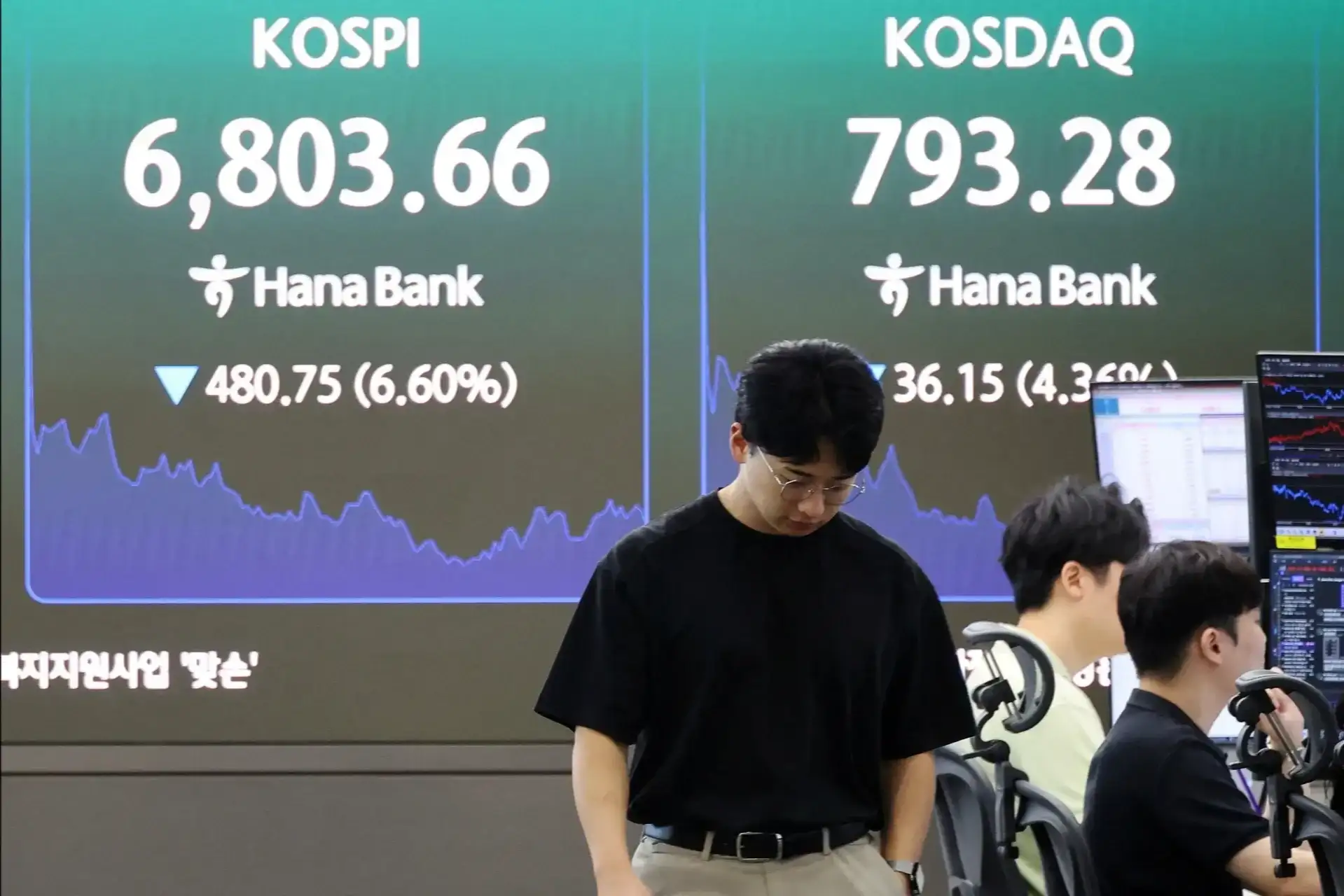
Asian bonds tracked Treasuries lower as elevated oil prices stemming from the US-Iran standoff revived inflation concerns and bets on further Federal Reserve interest-rate hikes.
Government bonds fell in New Zealand, while futures pointed to losses in Japan and South Korea. Australian debt was little changed ahead of the Reserve Bank’s policy decision later Tuesday. The moves followed a broad Treasury selloff that sent yields to multi-decade highs.

Earlier, the benchmark 10-year Treasury yield climbed as much as 11 basis points to 5.27%, a fresh 19-year high, before paring the advance. The 30-year rate jumped to 5.55%. Shorter-dated yields also rose as traders braced for the Fed to keep tightening policy to rein in inflation.
Weighing on sentiment, US oil rose 0.6% to $93.12 a barrel as optimism for an imminent diplomatic breakthrough in the Middle East faded. Brent settled Monday near $105 a barrel. A Bloomberg gauge of the dollar rose and gold fell almost 4% to about $4,120 an ounce in the prior session.
Equity-index futures for Asia were mixed, while contracts for US stocks edged higher after the S&P 500 erased its advance for the month and the Nasdaq 100 fell 1.1%.
Elevated oil prices are adding to pressure on global bond markets by keeping inflation risks alive and complicating the outlook for interest rates. In the US, stronger business activity and concerns over government debt have added fuel to the biggest Treasury selloff since President Donald Trump’s April 2025 tariff rollout rattled markets.
“The broader market hasn’t been able to gain much traction because of rising yields and oil prices,” said Chris Larkin at E*Trade from Morgan Stanley. “And with the Fed focused on the inflation side of its mandate, unless this week’s labor-market data is a major surprise, it will likely play second fiddle to interest rates and energy.”
Iran and the US remained far apart on a ceasefire and reopening the Strait of Hormuz, with Tehran sticking to a proposal Trump has rejected. Trump denied an Axios report that he’s willing to offer sanctions relief and release frozen Iranian funds in exchange “for concrete nuclear concessions.”
Iranian officials have also privately expressed pessimism about reaching an agreement to end hostilities and reopen the strait before the US midterm elections in November, according to people familiar with the matter.
“Our expectations remain that the conflict will be with markets for the foreseeable future and the global economy will continue adjusting to the realities of the supply disruptions,” said Ian Lyngen at BMO Capital Markets.
Investors will also be watching a packed slate of US economic data this week for signs the economy remains strong enough to support further Fed tightening. Consumer confidence and August JOLTS figures are due Tuesday, followed by consumer-spending and inflation data and then payrolls on Friday.
“If economic resilience and investment demand remain intact, there may still be scope for yields to move higher,” said Seema Shah at Principal Asset Management.
In currencies, the yen will remain in focus after edging lower in New York following an earlier rally sparked by another warning from Japan’s currency czar over its weakness.
Atsushi Mimura, Japan’s top currency official, told Reuters on Monday that the country’s prime minister and finance minister, along with the US, had recently sent a “very clear” message about currency depreciation. The yen traded around 157.40 per dollar early Tuesday.
“Ongoing policymaker discomfort with yen depreciation will reinforce the market’s tendency to self-police around the 160 level,” said Pat Locke, a currency strategist at JPMorgan in New York.