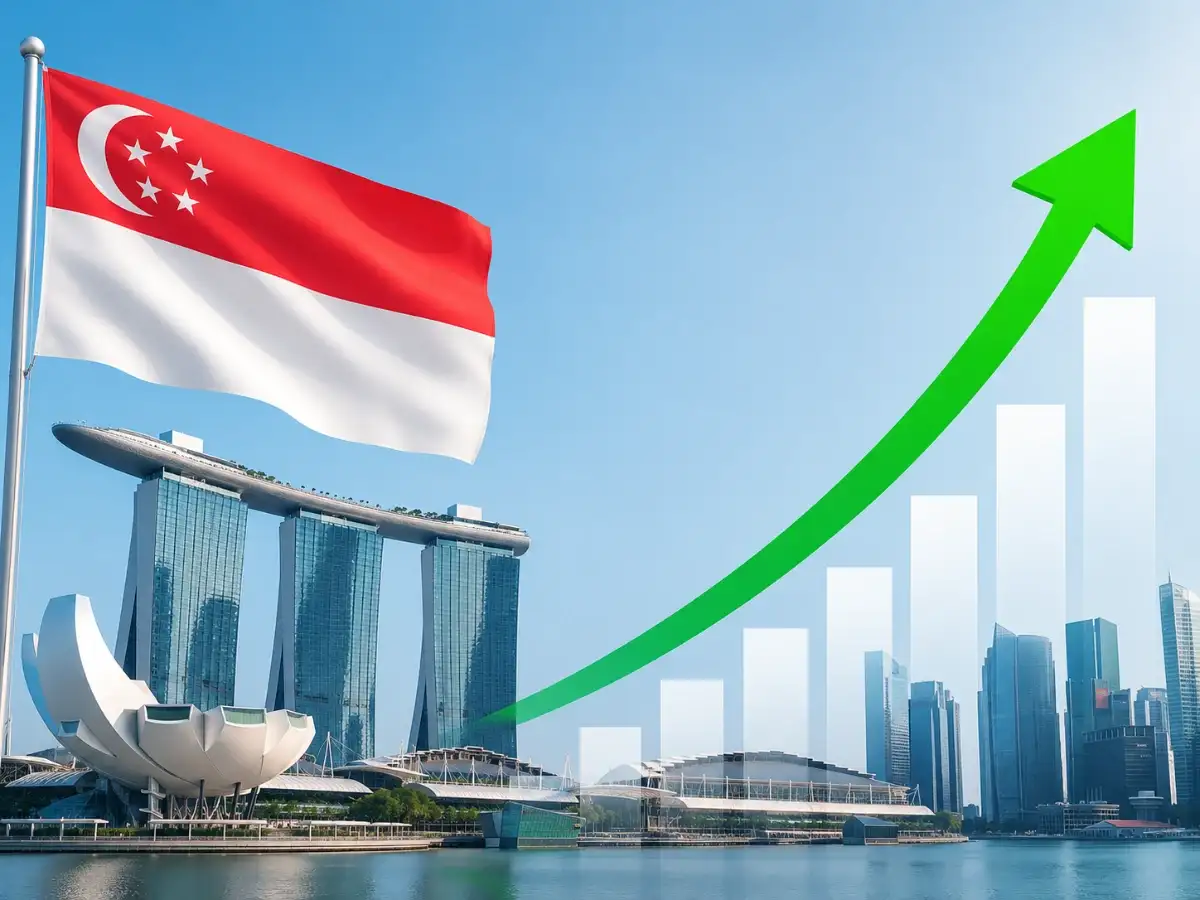
Singapore raised its economic growth forecast for 2026 on Tuesday, citing stronger-than-expected global investment in artificial intelligence and a milder-than-feared impact from the Middle East conflict, Reuters reported.
The trade ministry now expects the economy to expand by 4.5%-5.5% this year, up sharply from its previous forecast of 2.0%-4.0%, after second-quarter gross domestic product grew 5.9% from a year earlier. The latest reading was above the government's advance estimate of 5.7%.
According to Reuters, the ministry said the fallout from the Iran war had been less damaging than initially anticipated, while the global surge in AI-related investment had exceeded expectations.
Singapore's economy expanded 6.1% in the first half of 2026, while GDP grew 1.4% in the April-June quarter from the previous three months on a seasonally adjusted basis, beating the advance estimate of 1.1%.
The improved outlook is particularly benefiting sectors tied to the global technology cycle, although industries exposed to supply disruptions linked to the Middle East conflict remain under pressure, the ministry said.
The government also does not expect the 12.5% U.S. tariff on Singaporean exports to have a significant impact on the economy, according to trade ministry permanent secretary Beh Swan Gin.
Economists expect the combination of strong AI investment, safe-haven capital inflows and higher construction activity to support economic momentum through the second half of the year. Maybank economist Chua Hak Bin said the economy could potentially outperform the government's upgraded forecast.
Enterprise Singapore separately raised its 2026 forecast for non-oil domestic exports to 14%-16%, from its earlier projection of 3%-5%, citing stronger-than-expected global economic resilience and sustained AI-related demand and capital spending.
The Monetary Authority of Singapore has also indicated that growth is likely to remain firm through the rest of the year, although it has identified the sustainability of the AI investment boom as a key risk.
The central bank unexpectedly tightened monetary policy in late July, citing persistent inflation risks as the Middle East conflict continued to put pressure on energy costs.
To cushion households and businesses from higher energy prices, the government announced a S$900 million support package last month, following almost S$1 billion in assistance unveiled in April.
Singapore's central bank had raised its 2026 forecasts for both core and headline inflation in April to 1.5%-2.5%, from 1.0%-2.0% previously. Annual inflation stood at 1.6% in June, with the central bank expecting price pressures to increase and remain elevated through the first half of next year. July inflation data is due later this month.
(Disclaimer: Recommendations, suggestions, views, and opinions given by experts are their own. These do not represent the views of The Economic Times.)