Get all your news in one place.
100's of premium titles.
One app.
Start reading
The Economic Times
The Economic Times
Anupam Nagar

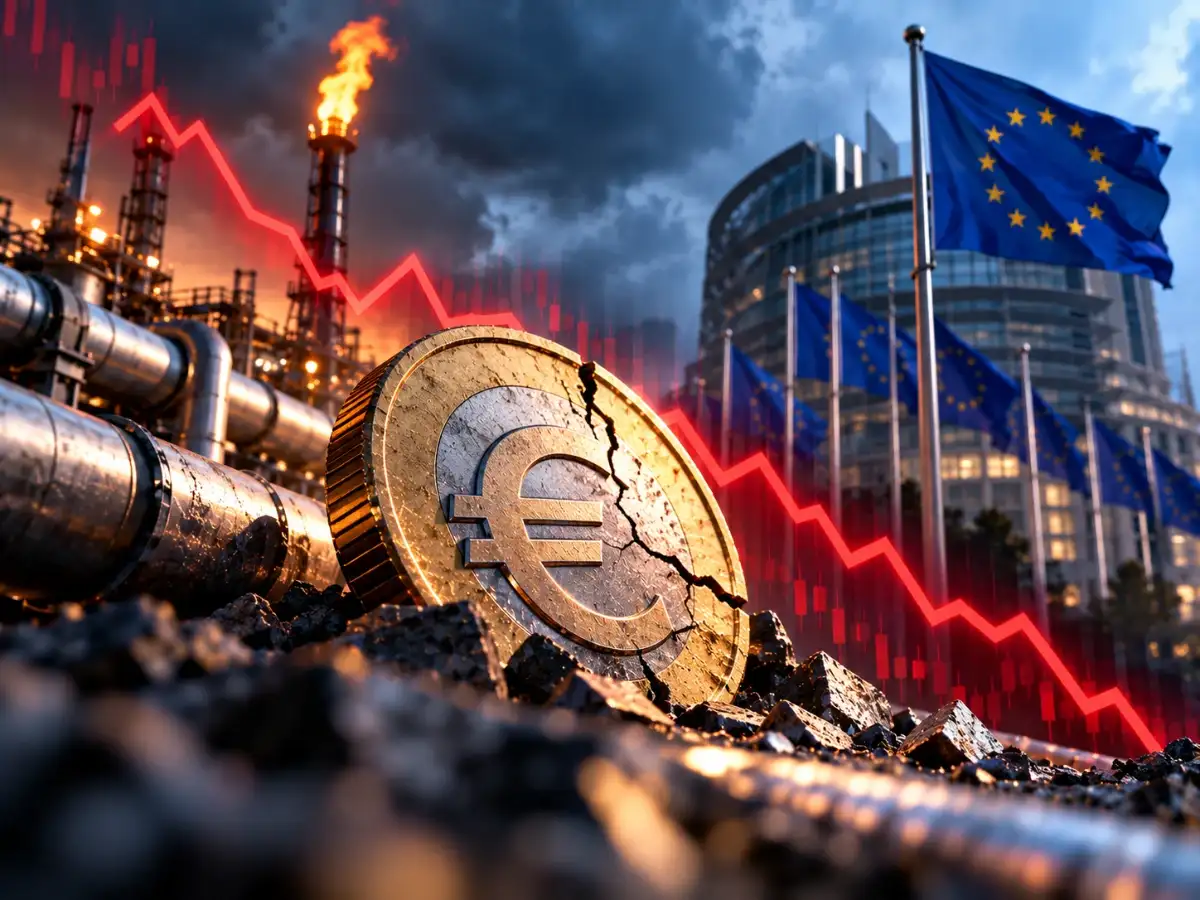
Global Market: Euro under pressure from energy shock and political risks

The euro is trading close to its lowest levels of the year against the dollar as a global energy shock, rising political risks and concerns over Europe's economic outlook weigh on the single currency, according to a report by Reuters.

The euro had been approaching $1.20 in August but has fallen about 2% in September, touching two-month lows just below $1.14. It was last trading around $1.137.

According to the report, the euro's decline has been compounded by a stronger dollar after a U.S. rate increase reinforced expectations that the Federal Reserve will maintain a firm stance on inflation. At the same time, renewed increases in energy prices and political uncertainty have clouded the outlook for the euro zone.

Also Read | Global Market: RoboTechnik slides below IPO price in weak Hong Kong debut

Political risks add to pressure

Germany and France are emerging as key sources of political uncertainty for investors.

German Chancellor Friedrich Merz is facing pressure after strong gains by the far right in recent state elections. According to Reuters, the results could make it more difficult for Merz to pursue his planned economic reforms, Reuters reported.

France is also facing increased market scrutiny because of concerns over its high debt burden and political gridlock ahead of the 2027 presidential election.

The growing gap between French and German government borrowing costs highlights investor concerns. The premium investors demand to hold 10-year French government bonds over triple-A-rated German debt has risen above 110 basis points.

Bank of America strategists estimate that every additional 10-basis-point widening in the spread could be associated with a 0.4% decline in the euro against the dollar.

Also Read | Global Market: Nikkei falls as oil surge, global bond selloff rattle markets

Energy prices threaten economic resilience

High energy prices are another major challenge for the euro zone.

The region's economy has performed better than expected, helping support the euro earlier this year. But the renewed surge in energy costs has raised concerns about whether that resilience can continue through the winter and into next year.

Reuters reported that the conflict in Iran has disrupted liquefied natural gas shipments through the Strait of Hormuz, pushing European gas prices above 80 euros per megawatt-hour this month, their highest level since late 2022.

Analysts expect European gas prices to remain elevated. Forecasts cited by Reuters put prices in a range of roughly 85-100 euros per megawatt-hour, raising the risk of further pressure on the euro.

Oil prices could deepen growth concernsA further rise in oil prices could add to the euro's challenges by increasing inflation and weakening economic activity.

ING currency strategist Francesco Pesole said, according to Reuters, that oil prices approaching $115 a barrel would increase concerns about economic growth. A possible U.S. ban on diesel exports could also add pressure, although analysts do not regard that as their main scenario.

Higher energy costs could create a difficult environment for the European Central Bank, as policymakers would have to balance persistent inflation pressures against weaker growth.

Rate outlook offers some support

Despite the risks, the euro still has some support from expectations for European monetary policy.

According to Reuters, financial markets are pricing in at least one more euro zone rate increase this year, while the region's economic performance has remained relatively resilient.

A continued hawkish stance from the ECB could limit the euro's downside by supporting European yields and reducing the interest-rate advantage of the dollar.

Options markets, however, are showing increasing caution. Three-month euro-dollar risk reversals recorded their biggest weekly decline since the start of the Iran war last week, indicating growing demand for protection against a weaker euro.

ING continues to expect the euro to reach $1.16 by the end of the year, Reuters reported, while forecasts from other analysts suggest that a sustained period of elevated European gas prices could push the currency closer to $1.12.

For now, the euro's direction is likely to remain closely tied to developments in energy markets, European politics, central-bank policy and the trajectory of the dollar.

(Disclaimer: Recommendations, suggestions, views and opinions given by the experts are their own. These do not represent the views of The Economic Times)

Sign up to read this article
Read news from 100's of titles, curated specifically for you.
Already a member? Sign in here
Related Stories
Top stories on inkl right now
One subscription that gives you access to news from hundreds of sites
Already a member? Sign in here
Our Picks
Fourteen days free
Download the app
One app. One membership.
100+ trusted global sources.