Get all your news in one place.
100's of premium titles.
One app.
Start reading
The Economic Times
The Economic Times
Anupam Nagar

Global Market | ECB may need more rate hikes as Iran war raises inflation risks: Kazaks

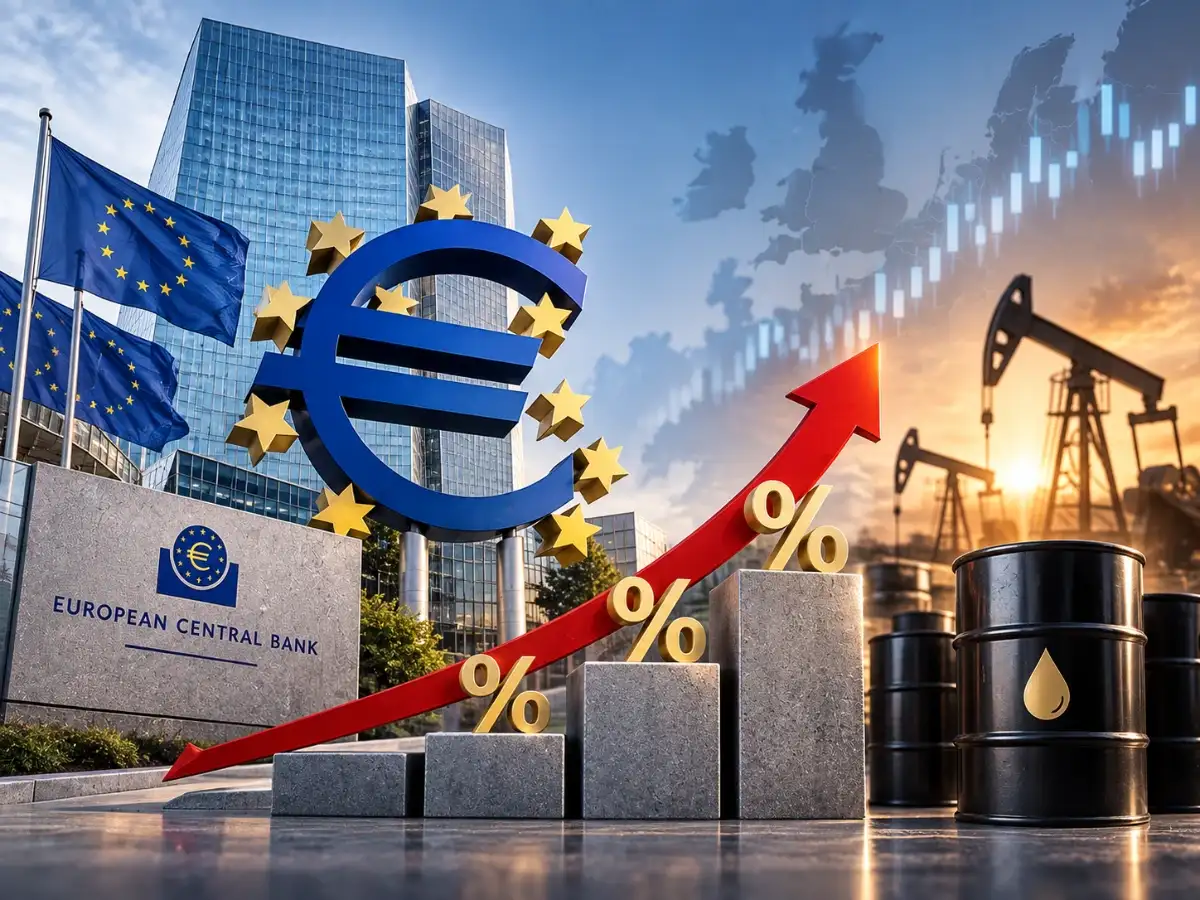
The European Central Bank may need to gradually raise interest rates further to contain inflation before higher fuel costs caused by the Iran war feed into wages and broader prices, ECB policymaker Martins Kazaks told Reuters.

The ECB raised its key interest rate to 2.5% from 2.25% on Thursday, marking its second hike this year. The central bank also warned that inflationary pressures stemming from the conflict in Iran could prove persistent, strengthening expectations for further monetary tightening as early as October.

Read more: Global Market: Japan stocks fall as AI concerns hit tech shares; Nikkei down 1.6%

More tightening may be needed

Kazaks, who is also governor of Latvia's central bank, said there was scope for additional incremental rate increases as energy prices and underlying inflation remain elevated.

He indicated that the ECB's 2.5% rate, which the central bank considers the upper end of its estimated neutral range, should not be treated as a ceiling. Rates could move into restrictive territory if needed to bring inflation under control, Reuters reported.

Eurozone inflation reached 3.3% in August, while the ECB expects price pressures to increase further over the coming months.

Read more: Global Market: South Korean shares fall as AI concerns weigh; won strengthens

ECB can move gradually

Kazaks did not say whether he expects the ECB to raise rates at its October meeting. However, he said policymakers could continue tightening monetary policy in a gradual and measured manner.

Kazaks believes previous policy decisions have given the ECB room to respond without rushing into more aggressive moves.

The policymaker also highlighted the eurozone's economic resilience, noting that the economy is operating close to capacity. This could increase the likelihood that higher energy costs are passed on to consumers through prices and wages.

Energy costs pose wage and price risks

Kazaks warned that a narrowing output gap could strengthen the transmission of higher energy costs into consumer prices and wages, creating an additional upside risk to inflation.

The ECB expects inflation to average 3.6% in the final quarter of this year. Kazaks said inflation was still not sufficiently prominent in the daily decisions of consumers and businesses, but that could change if essential goods such as fuel and food become significantly more expensive.

Higher prices for frequently purchased items could make households more sensitive to inflation, particularly if price growth begins to outpace wage increases.

Wage growth remains moderate

Negotiated wages in the euro zone rose 2.44% year-on-year in the three months to June, slowing from a 2.56% increase in the first quarter.

The moderation in wage growth provides some relief for the ECB, but policymakers remain concerned that a prolonged surge in energy prices could eventually generate broader inflationary pressures.

With the Iran conflict adding uncertainty to the energy outlook, the ECB faces a difficult balancing act between containing inflation and avoiding excessive tightening that could weaken economic growth.

(Disclaimer: Recommendations, suggestions, views, and opinions given by experts are their own. These do not represent the views of The Economic Times.)

Sign up to read this article
Read news from 100's of titles, curated specifically for you.
Already a member? Sign in here
Related Stories
Top stories on inkl right now
Our Picks
Fourteen days free
Download the app
One app. One membership.
100+ trusted global sources.