Global equity markets remain firm, supported by strong momentum in US futures, which have been hovering near record highs. However, market participants are increasingly cautious about the narrow breadth of the rally, which is being powered by a limited set of large-cap stocks rather than a broad-based participation across sectors.
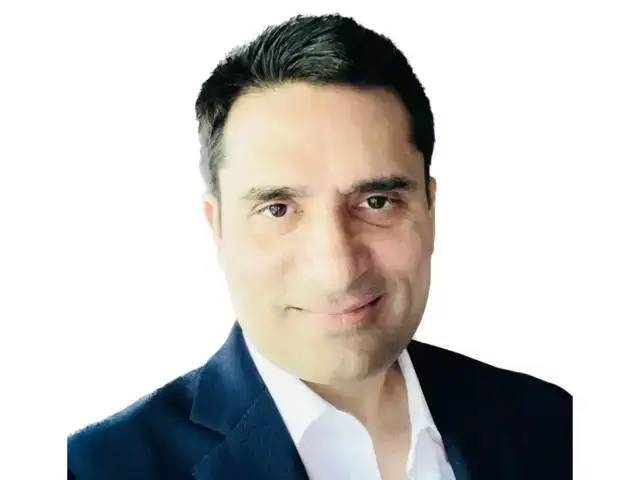
Speaking to ET Now, Anurag Singh, Managing Partner, Ansid Capital noted that while headline indices such as the S&P 500 are scaling new highs and levels around 7400–7500 appear impressive, the underlying structure of the market tells a more complex story. He pointed out that the current rally is unusually concentrated, with a small group of mega-cap stocks dominating overall performance. He said, “Everybody sees 7400–7500 on the S&P and all-time highs, which is great. But the market is extremely concentrated.”

He further highlighted that this level of concentration in top stocks is historically unusual and raises structural concerns for investors looking beyond index levels. According to him, sector participation remains uneven, with weakness visible in areas such as healthcare and discretionary consumption. He remarked, “In no time in American market history has the market been as concentrated in the top 10 stocks.” He also added that broader segments of the market have been under pressure, saying, “Healthcare is weak, discretionary is weak. Even retail like Walmart has corrected.”
Singh described the current environment as a “tale of two markets,” where index performance is masking underlying divergence. He cautioned that such heavy reliance on a handful of stocks is not a sustainable portfolio construct over the long term. “Beyond a point, 40–50% in 10 stocks is not a portfolio,” he said. Despite these concerns, he remained cautiously optimistic on overall index levels, suggesting that earnings support justifies current valuations. “S&P at 7200–7300 looks fair based on earnings,” he noted, while adding that the market still lacks a clear, broad-based headwind.
On global fund flows, Singh observed that capital allocation across markets has become increasingly momentum-driven rather than valuation-driven. He said investors are largely chasing performance, with flows rotating into markets like Korea, Taiwan, and the US, which are currently showing strong momentum. In contrast, he noted that India has temporarily lost favour in global allocation trends. “Nobody knows where flows go. Everyone is chasing momentum,” he said. He also pointed out a shift in domestic investor behaviour, where large-cap stocks are seeing relatively lower participation compared to mid- and small-cap segments, stating, “Nobody is buying largecaps; everyone is in mid and smallcaps.”
He added that liquidity continues to play a major role in supporting markets globally, with momentum itself attracting further flows. According to him, “Momentum is in Korea, Taiwan, US. India is out of flavour for now.” Singh also remarked on the muted urgency around foreign institutional investor flows in India, suggesting that policy attention has not been strong enough in recent months.
On the inflation outlook, Singh drew a clear distinction between India and developed economies. He said India’s inflation is largely supply-driven, primarily influenced by oil and import-related pressures, rather than domestic demand conditions. “India does not have demand inflation, mostly supply-led due to oil,” he said, adding that the situation remains relatively manageable.
For the United States, he argued that inflation risks are less severe than in previous cycles, supported by stable wage growth and structural changes in the labour market. He noted that wage pressures remain contained, stating, “Wages are below 3.8%, so pressure is limited.” He also highlighted the role of artificial intelligence and labour participation trends in keeping inflation subdued, saying, “AI and labour participation are keeping wage inflation contained.”
He further observed that central banks are now focusing more on core inflation, which remains relatively stable, reducing the urgency for aggressive policy tightening. Concluding his view, Singh said that while regions like the UK and Europe continue to struggle with persistent inflation challenges, India remains largely stable. “India is fine. UK and Europe still have inflation problems,” he said.
Overall, the commentary suggests that while global equity markets continue to benefit from strong momentum, especially in the United States, the underlying structure remains uneven, with concentration risks, shifting global flows, and divergent inflation trends shaping the broader market narrative.