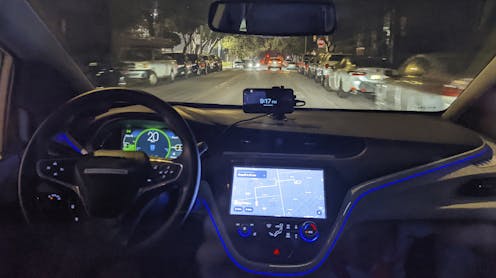
Ideally, artificial intelligence agents aim to help humans, but what does that mean when humans want conflicting things? My colleagues and I have come up with a way to measure the alignment of the goals of a group of humans and AI agents.
The alignment problem – making sure that AI systems act according to human values – has become more urgent as AI capabilities grow exponentially. But aligning AI to humanity seems impossible in the real world because everyone has their own priorities. For example, a pedestrian might want a self-driving car to slam on the brakes if an accident seems likely, but a passenger in the car might prefer to swerve.