
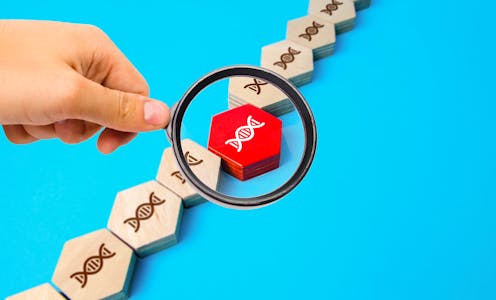
Most of the roughly 40 trillion cells of your body have nearly identical copies of your genome – the DNA inherited from your parents, containing instructions for everything from converting food to energy to fighting off infections. Healthy cells become cancerous through harmful mutations in the genome. If a cell’s genome is damaged by ultraviolet light, for example, it can result in mutations that tell the cell to grow uncontrollably and form a tumor.
Identifying the genetic changes that cause healthy cells to become malignant can help doctors select therapies that specifically target the tumor. For example, about 25% of breast cancers are HER2-positive, meaning the cells in this type of tumor have mutations that cause them to produce more of a protein called HER2 that helps them grow. Treatments that specifically target HER2 have dramatically increased survival rates for this type of breast cancer.













