
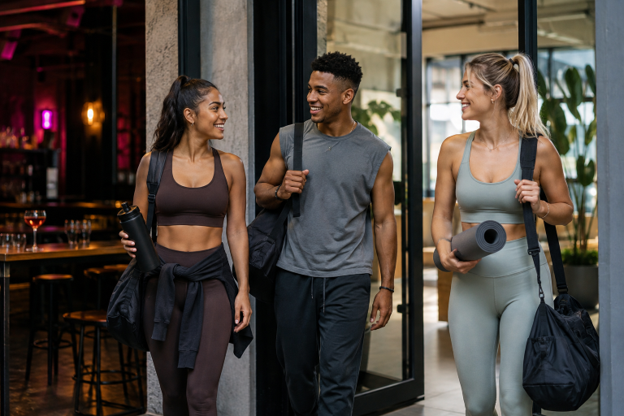
Alcohol has anchored American social life for generations, from the after-work happy hour to a beer at the game. That routine is unraveling faster than at any point on record. U.S. alcohol consumption fell to its lowest level in 90 years in 2025, and Gen Z, the generation now coming of age, is driving most of that decline.
Market data mirrors what Gen Z is actually doing. Total U.S. alcohol volume fell 5% in 2025 and declined in 49 of 50 states, while Gen Z spending on fitness grew nearly three times as fast as spending at bars, and gym membership among 18- to 24-year-olds reached the highest rate of any age group in the country.
Gen Z Is Leading the Alcohol Pullback
The decline is concentrated in the youngest age groups. Gen Z and young millennials are pulling away from alcohol faster than any other generation, and the numbers show up in both what they drink and how they plan to drink going forward.
Only 50% of 18- to 34-year-olds drank alcohol in 2025, compared with 63% of 35- to 54-year-olds. The generational gap shows up across intent and spending data, too:
- 65% of Gen Z said they planned to drink less in 2025.
- 39% of Gen Z said they intended to stay completely dry throughout 2025.
- Gen Z card spending on alcohol fell 15% in January 2025 compared with two years earlier, according to Bank of America.
- 58% of Gen Z cutting back cited improving mental health as the reason, up 45% from the previous year.
Taken together, the numbers point to something more permanent than a passing health kick. Gen Z appears to be planning around a lower-alcohol lifestyle rather than cutting back only in the moment, and the mental health framing behind the shift ties the decision to how the generation wants to feel on a daily basis.
The Same Money Is Moving Into Fitness
Bank of America's generational spending data shows where that alcohol money is landing. Gen Z fitness spending grew roughly 9% year over year through January 2026, compared with about 3.5% growth at bars. Millennials showed a similar split, with fitness spending outpacing flat bar spending.
Gym data backs up the pattern:
- 47% of new gym joins in 2025 came from Gen Z, per ABC Fitness.
- 5% of Gen Z adults aged 18 to 24 belonged to a fitness facility in 2025, the highest penetration of any age group.
- 77% of U.S. Gen Z said in 2026 they were more focused on wellness than a year earlier, according to Mintel.
- 80% of Gen Z consume functional beverages at least every two weeks, compared with 40% who drink alcohol that often.
The pattern looks less like Gen Z swapping one indulgence for another and more like a broader reset in daily habits, with fitness, sleep and functional nutrition treated as things worth spending on regularly rather than occasional extras.
Weekends Look Different Now
A 2026 Harris Poll of more than 4,000 U.S. adults found 50% of Gen Z work out at a gym on at least half their weekends, and 48% play a sport or do an outdoor activity, compared with 44% who go to bars or nightlife that often. Asked how they unwind, 46% of Gen Z men said exercise, versus 23% who said alcohol. That time spent training is showing up in the closet, too: Gen Z and millennial women now direct more of their athleisure spending toward women's athleisure than men's and children's categories combined, according to Grand View Research, and BCG found Gen Z increasingly treats activewear as self-expression rather than purely workout clothing.
"Athletic clothing used to signal a trip to the gym, but now it signals identity," says Jaylin, founder of Sodalemon. "Our customers wear the same pieces to train, to run errands, and to meet friends, because fitness has become part of how they define themselves, not something they change in and out of."
Given an extra $100 for the weekend, 47% of Gen Z said they would put some toward a wellness or fitness activity, compared with 19% of Gen X and 13% of boomers. And 73% of Gen Z said they wish more social settings existed where alcohol isn't the main event, with 65% saying they feel more socially connected in wellness-focused settings than in traditional nightlife.
A Trend With Room to Run
The pattern extends beyond Gen Z. U.S. gym membership reached an all-time high of 81 million people in 2025, up 5.2% from the year before, and the Sports & Fitness Industry Association recorded 250 million Americans taking part in at least one sport, fitness, or leisure activity, the broadest participation figure on record.
Gen Z is still early in its adult spending years, and most of the data so far reflects intent and early behavior rather than a full generation moving through decades of habits. Whether the pullback from alcohol and the move toward fitness hold as Gen Z ages will shape how large the shift ultimately becomes, and how much further categories like fitness apparel and wellness products can grow around it.
[END]
About Sodalemon: Sodalemon is a global wholesale activewear platform supplying boutique owners and retailers with performance athleisure, yoga wear, and active sets, with private label and dropshipping options available worldwide.
Sources
U.S. Drinking Rate at New Low as Alcohol Concerns Surge
US beverage alcohol consumption drops -5% in volume during 2025 - IWSR
81 Million Americans Were Members of a Fitness Facility in 2025, New HFA Report Finds
What Percentage of Americans Drink Alcohol?
Alcohol Statistics 2025: Sober Curious Nation & Beverage Trends | Circana
Younger generations move from barstools to barbells
ABC Fitness 2025 year-end Wellness Watch report reveals that nearly half of all new gym joins in 2025 came from Gen Z
81 Million Americans Were Members of a Fitness Facility in 2025, New HFA Report Finds
Gen Z consumers swap bar tabs for gym memberships - Los Angeles Times
Wellness trends shaping the future of beverages. | EY - US
The Gen Z Weekend Report
SFIA Releases the 2026 Topline Participation Report
Activewear Market (2026 - 2033)
Walk, Lounge, Sweat: How the Generations Are Redefining Activewear














