Thailand is set to leverage hosting of Gastech 2026, one of the world's largest gas exhibitions and conferences, as a platform to attract international investment and strengthen its liquefied natural gas (LNG) businesses.
Scheduled for Sept 14-17, the event is expected to bring together investors across the energy value chain, from upstream exploration to downstream operations, while showcasing Thailand's growing role in the global LNG trade.

"This is the biggest international event of the year, judging by the more than 50,000 projected participants," said energy permanent secretary Prasert Sinsukprasert.
The conference features ministers and state representatives from over 30 countries, alongside more than 1,000 speakers and 1,000 leading companies from 150 nations, all focused on shaping the future of energy security.
This marks the second time Thailand has hosted Gastech, the last time nearly two decades ago.
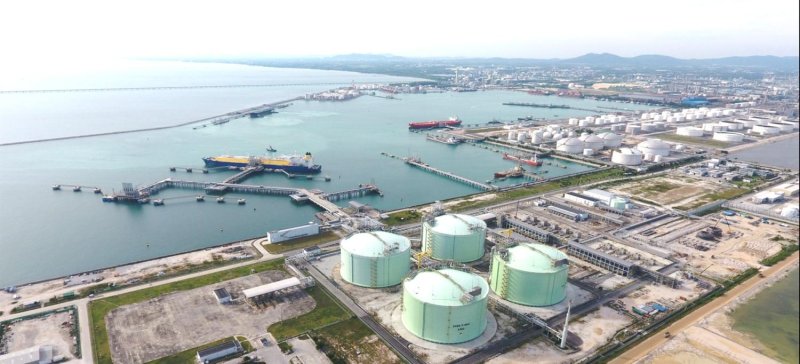
Thailand wants to highlight its LNG structure as a prime investment opportunity. The country operates three LNG receiving terminals with a combined capacity of 27 million tonnes per year, all located in Rayong, part of the Eastern Economic Corridor.
The Map Ta Phut LNG Terminal 1, operated by PTT Plc, has a capacity of 11.5 million tonnes annually. Nong Fab LNG Terminal, co-invested by PTT and the Electricity Generating Authority of Thailand, offers another 7.5 million tonnes.
A third terminal, jointly developed by PTT and Gulf Development Plc, is designed to handle 8 million tonnes per year.
These facilities are expected to support new gas-fired power plants planned for southern Thailand, said Mr Prasert.
Electricity demand in the South has surged due to booming tourism in the Andaman provinces.
The government is drafting a new power development plan, set for completion in September, determining the long-term balance between gas and renewable energy.
This plan is expected to guide future investment decisions and ensure sufficient electricity supply to meet rising demand.
In another development, energy authorities are finalising details of a pilot direct power purchase agreement scheme.
This initiative allows private investors to build renewable power plants and directly supply electricity to industrial users -- a significant policy shift as peer-to-peer power trading has previously been prohibited.