I review running shoes for a living, and one of the first questions people tend to ask me about them is how long they last. My answer is always the same — it depends — because different factors will determine how long a shoe lasts for you.
For one, different types of running shoes offer different levels of durability. The best running shoes for daily training will be more durable than the best carbon plate running shoes for racing, for example, because they’re built to handle more mileage rather than just be very fast.

The other big factor is the runners themselves, because I’ve noticed that people go through shoes at different rates depending on things like their running style, weight, foot size and shape, and the terrain they run on.
So to work out how long running shoes last for you, the best thing you can do is track it yourself, and the updated gear tracking feature on the best Garmin watches will help you do just that.
How to use Garmin’s gear tracking feature

It’s been possible to track the use of your gear in the Garmin Connect app for several years, but the feature recently got a big update that adds more types of gear and makes it easier to select the equipment, shoes, or apparel you're using on your watch.
However, you do still have to initially set up your gear in the Garmin Connect app. Go to More/Gear to see the items you have set up and create new ones.

Part of the recent update was adding lots of new categories of gear, including skis, snowboards and rackets, but the most important one for me is shoes.
You can set these up by selecting from Garmin’s pre-made list of models from popular brands, or enter your own details if you can’t see your model — the pace of running shoe releases means that I suspect Garmin will often be behind, and I had to manually create three models I’m testing right now.
You also set a target mileage for the shoes, which is automatically set at 650km (just over 400 miles). I bumped this up to 800km / 500 miles for training shoes, and left it for a racing shoe I’m testing.

It’s also worth adjusting which activities the shoes will appear for on your watch by default. So you can select all running activities or, if you use modes like trail run, select the specific ones you’ll use the shoes for.
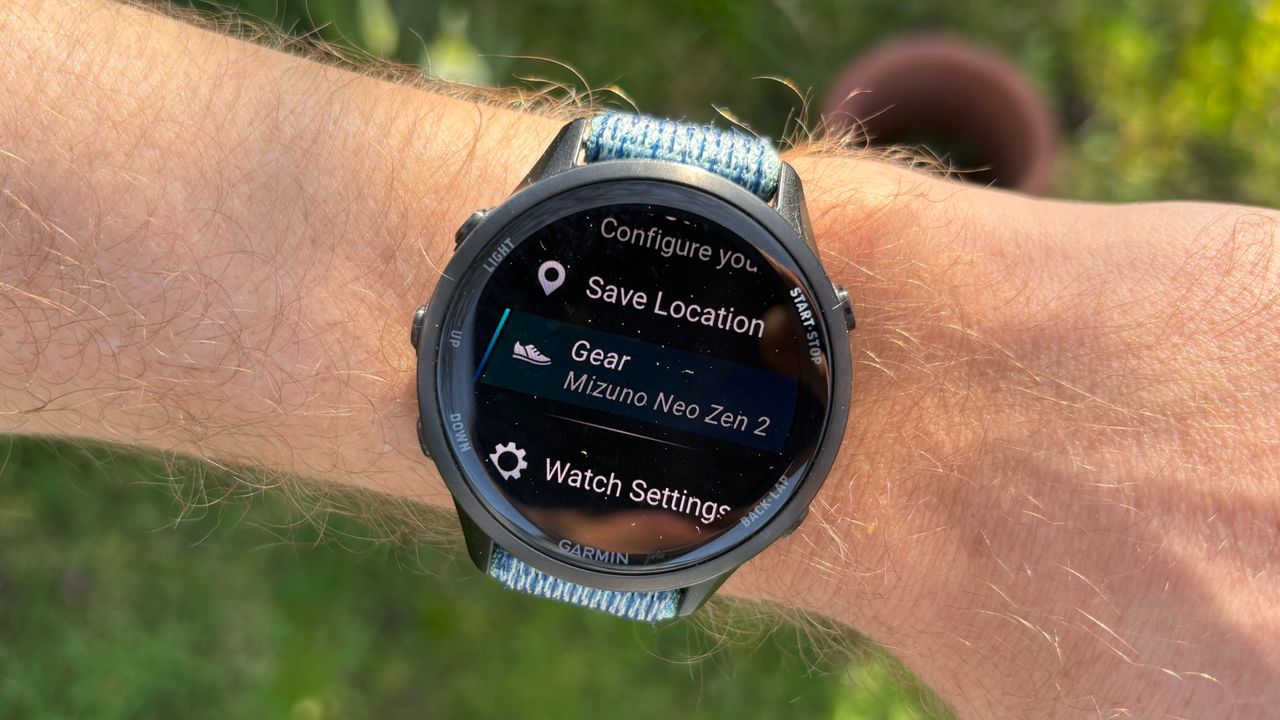
Once you’ve set up the shoes, they’ll appear on your watch in the list of settings in the start run screen, where you can choose the shoes you’re using and also see how many miles they have on them already.
If you forget to do this pre-run, something I do regularly, you can assign the right shoes to the run in the Garmin Connect app after you’ve finished, so you don’t miss out on the mileage.
How to tell when your running shoes need replacing

As mentioned, running shoes last different amounts of time depending on the shoe and the runner, but as a general rule, you can hope for 500 miles of use from a general trainer, though this can rise to over 800 miles in my experience with really tanky shoes.
There will be visible signs of wear that can indicate a shoe is past its best, such as the outsole wearing away or holes appearing in the upper.
The harder sign to spot is the midsole foam compressing and losing its bounce, which can happen gradually over time. This is why tracking the mileage of your shoes can be useful, because it indicates when you need to start looking out for this.
If the midsole feels firmer when poked and squeezed than it used to, or seems flatter and harder when running than it did when new, the foam might well be past its best.
You might also notice small niggles crop up after using the shoes, indicating they’re not cushioning the body as well as they used to.
It’s not an exact science, but by tracking the lifespan of the shoes you use over the years, you will start to get a good idea of when they usually begin to break down for you.
For example, as a fairly light runner with a narrow foot and a high-cadence, low-impact running gait, the same shoe might last me longer than someone with a wide foot and a harder-hitting running style.

Follow Tom's Guide on Google News and add us as a preferred source to get our up-to-date news, analysis, and reviews in your feeds.