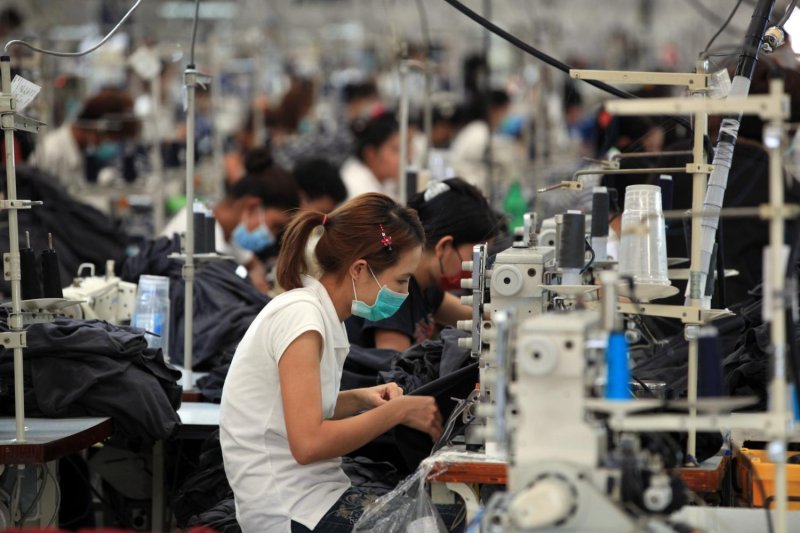
The garment industry should prioritise R&D and target the premium market to remain competitive amid global trade pressures, says an industry veteran.
Yotsaton Kijkuson, adviser to the Thai Garment Manufacturers Association, told the Bangkok Post the key to the industry's survival lies in moving away from price competition and focusing instead on higher-value, premium garments.
Roughly 90% of Thai garment exports are produced under original equipment manufacturer contracts, which yield slim profit margins of only 5-7%.
He suggested Thai garment producers follow the Italian model by pivoting towards the premium segment, which prioritises craftmanship over low prices.
"This shift is necessary as Thailand's labour costs are no longer competitive compared with neighbouring countries," said Mr Yotsaton.
To support this transition, he said Thailand must increase investment in R&D, enhancing competitiveness by developing functional textiles and fibres with specialised properties.
Mr Yotsaton also urged the government to address the labour shortage in the industry, which employs about 400,000 workers but requires 40,000 more.
He said no new Thai workers have entered the industry in recent years.
To maintain the industry's competitiveness, Mr Yotsaton suggested the government improve the efficiency of recruiting migrant labour through memoranda of understanding with neighbouring countries, including Myanmar and Laos.
Regarding the US's new tariffs for goods produced using forced labour, he insisted none of the association's more than 200 members employ forced labour.
Thailand has more than 800 garment factories, according to data from the Industry Ministry.
EXPORT MARKETS
The US is Thailand's largest export market for garment goods, accounting for nearly 40% of exports, while Japan is another major market.
In 2025, Thailand exported US$2.02 billion worth of garments, up 5.61% year-on-year, according to the Office of Industrial Economics.
Mr Yotsaton said Thailand should expand export markets through free trade agreements (FTAs).
The industry is monitoring the FTA negotiations between Thailand and the European Union.
"We hope there will be a provision that allows the use of raw materials from Asean countries, or other FTA partners with the EU," he said.
"This provision would ensure Thai garment exporters are not disadvan- taged compared with competitors such as Vietnam."
In Asean, the EU has FTAs with Vietnam and Singapore, and it finalised FTA negotiations with Indonesia in September 2025 and is negotiating FTAs with Thailand, the Philippines and Malaysia.
The bloc aims to conclude a deal with the Philippines later this year and Malaysia next year.
Thailand expects to finalise its trade deal with the EU by the end of this year.