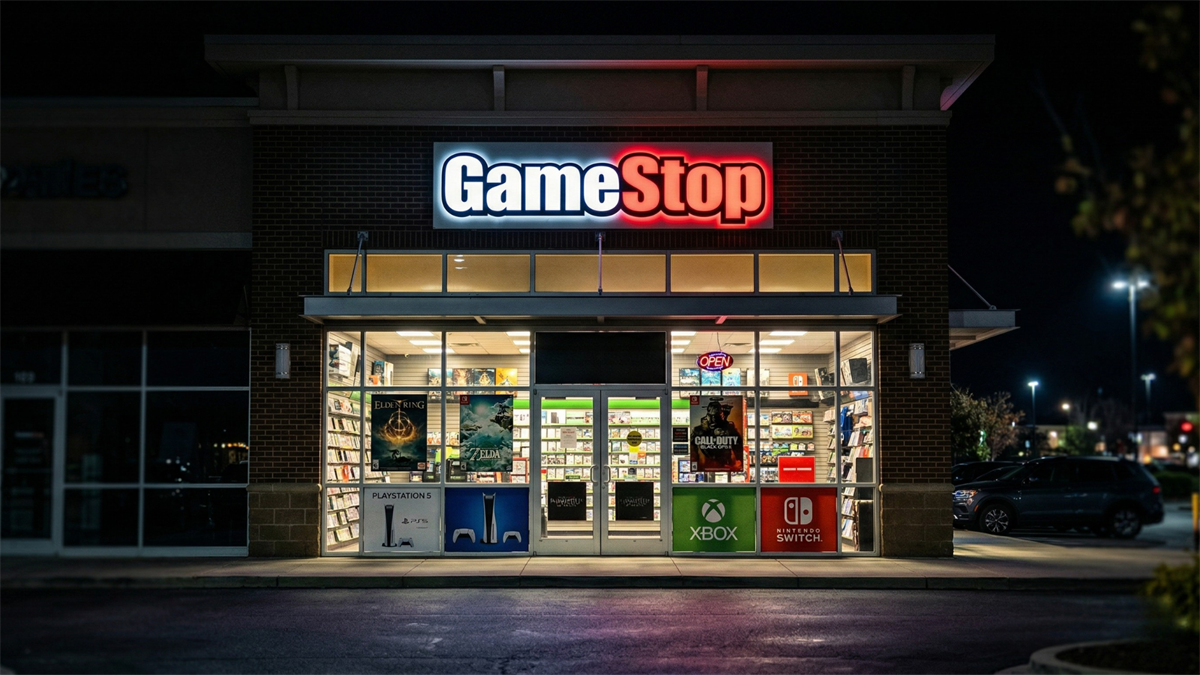
GameStop (NYSE: GME) issued what would otherwise be a very bullish $2 billion buyback announcement, but investors should be more than skeptical.
The company sold those shares not too long ago, building capital for its next move. Assuming it follows through on the purchases, investors can only be left to wonder what’s going on.
The reality is that GameStop’s board is trying to game the market, trigger a short squeeze, and get its price back in action.
$2 billion is a lot of money, worth more than 20% of the early June market cap, and a resounding signal of board confidence. GameStop also ended the quarter with $8.4 billion in cash (including cash equivalents and marketable securities), so it clearly has the balance sheet capacity to execute a sizable buyback.
However, with eBay (NASDAQ: EBAY) still (unwittingly) on the table, using $2 billion to repurchase shares appears out of step with the company’s broader strategy. Analysts are already doubtful the company can effect a takeover. As it stands, eBay’s board rejected the bid, but GME CEO Ryan Cohen is going after it anyway. What started as a 5% stake in February 2026 has grown to about 7.8% ownership through stocks and options.
The irony is that investing in eBay is among Mr. Cohen’s best moves as GameStop’s CEO. The stock is up approximately 30% from its February average, driven by its impressive turnaround. eBay is aggressively integrating AI, driving increased engagement, ads, and ad revenue, while focusing on its most lucrative niche markets, including collectibles. It benefits from increased exposure even if GameStop is unsuccessful.
Assuming success, the question then becomes execution, which is another questionable part of this story that could result in both companies' failures. So, $2 billion in share buybacks is a good thing, but only if they follow through.
GameStop Returns to Growth, Collectibles Leads
GameStop posted a decent fiscal Q1, with revenue up 14% to over $835 million, which beat analyst estimates of $767 million. The strength was driven entirely by collectibles, as the core hardware and software businesses continue contracting.
Hardware sales fell by over 3%, led by a 13% decline in software sales, while collectibles grew by 65%. Collectibles accounted for nearly 42% of the revenue and will be the critical segment moving forward. Gaming hardware is unlikely to become extinct, but games are shifting toward more cloud-based applications, meaning a reduced market size for legacy products, hardware, and software.
Margin news is the shining star of the report. GameStop’s revenue improvement was compounded by operational efficiencies, resulting in substantial bottom-line strength.
Core earnings grew by a triple-digit amount to set a company record, even when adjusted for one-offs. Looking forward, the company will likely sustain profitability, raising yet another question. If GameStop is on track for sustained improvement, why does it need eBay, other than to get more exposure?
The balance sheet brings more good news. The solid quarter led to positive cash flow and an increase in the capital reserve. Total company liquidity, excluding any credit lines, is approximately $9.7 billion, roughly equal to the company’s market cap. Debt is also up, but remains very low, at less than 1x equity.
A Short-Squeeze Is Possible
Analysts, institutional, and short-interest data suggest a short-covering rally, if not a squeeze, is possible.
Analysts' coverage remains virtually non-existent, with only two tracked by MarketBeat. With one Sell and one Hold rating, the consensus rating is Reduce, but there was some optimistic chatter following the fiscal Q1 earnings release.
Skepticism about share buybacks was offset by comments on unexpected revenue and earnings strength and what they may mean for future quarters.
Institutional data is more obviously bullish, with them owning approximately 30% of the stock and accumulating shares. Low ownership or not, accumulation is a bullish sign that can put pressure on short sellers.
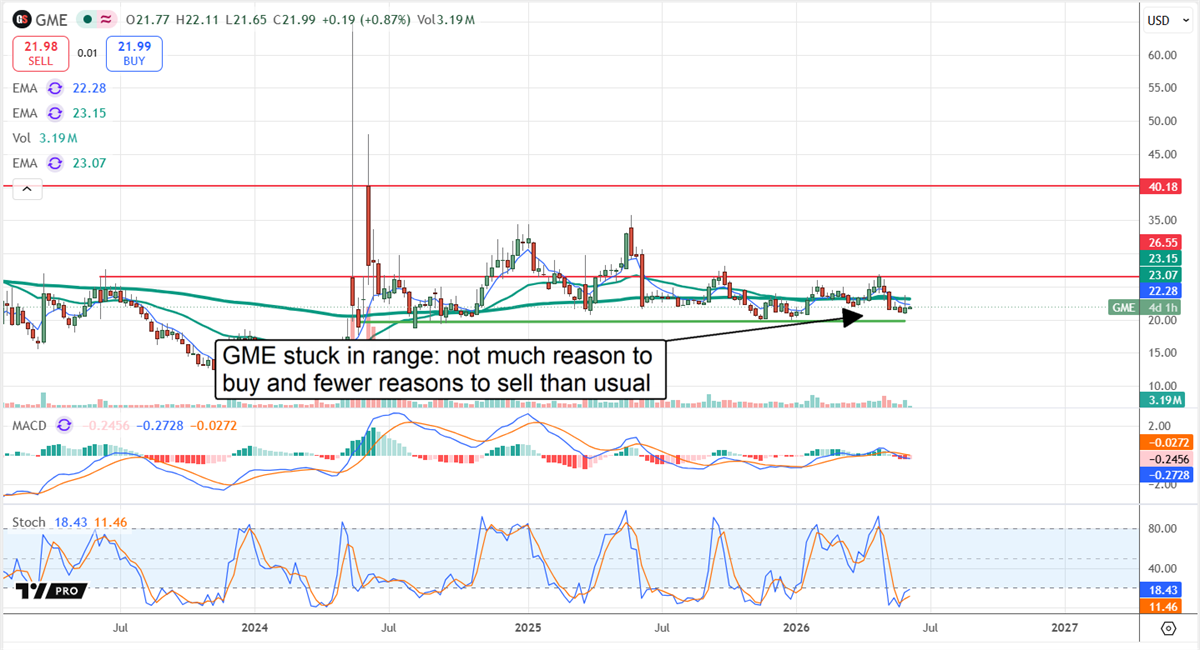
Short interest is the critical factor. It remains elevated around 14% as of early June, sufficient to cap gains in the absence of a bullish catalyst. The fiscal Q1 results provide such a catalyst and may lead to covering in upcoming quarters. Until then, GME shares are more likely to trade within the established trading range as clarity on company goals, strategy, and execution develops.
Risks for GameStop include eBay and its turnaround. A larger, more effective competitor, its established business has regained traction. It can dominate the collectibles market and has AI to help it. If GameStop can’t buy eBay or develop a plan to compete, the stock price will remain under pressure until something else changes.
Catalysts include advancing the eBay plan, continued traction in the core business, and a rebound in Bitcoin. Down more than 40% since purchase, Bitcoin’s performance has a significant impact on the company’s total value and the return it received on its capital. The cash balance is enormous but came at the cost of shareholder value; BTC losses erode the value.
The article "GameStop’s $2 Billion Buyback Sends a Confusing Signal to Investors" first appeared on MarketBeat.