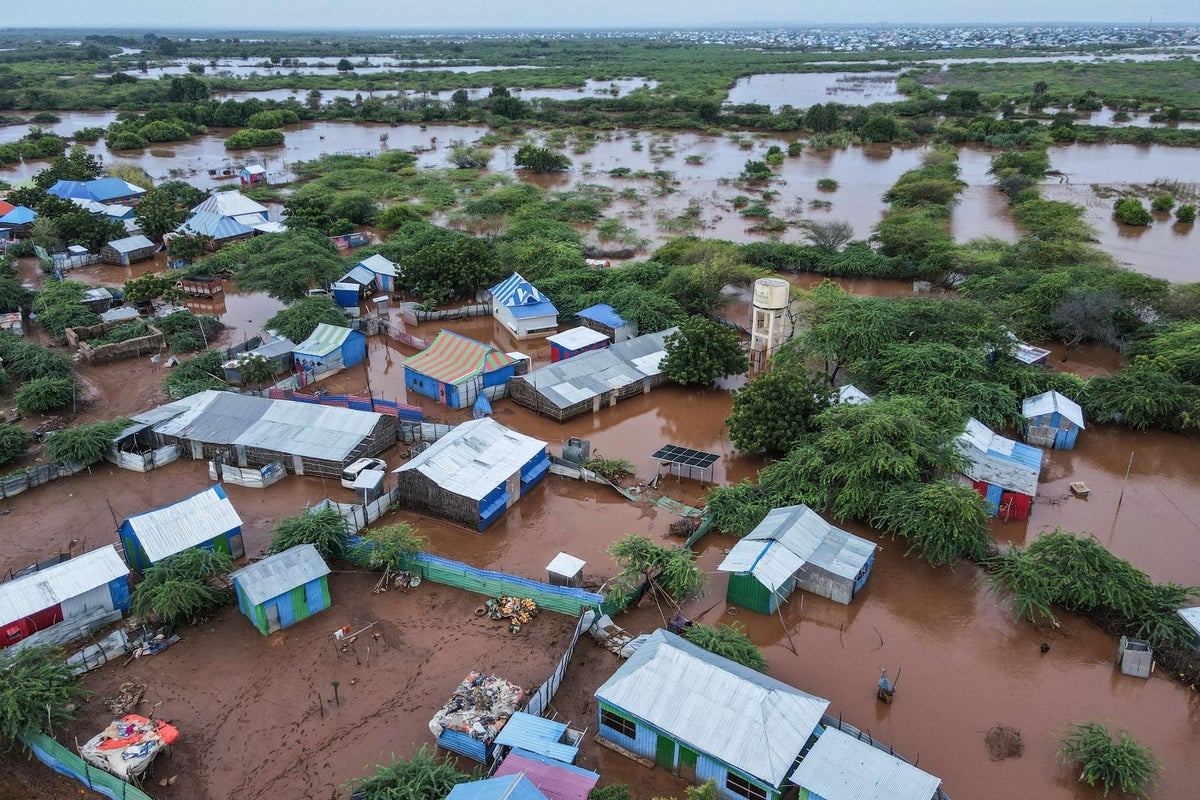
My country, Somalia, is on the frontlines of the climate crisis. Today, an acute climate-driven drought is expected to affect around five million people. Without a major increase in adaptation and resilience support, climate-related floods and droughts could inflict up to $100 billion in losses and damages by 2050.
Yet Somalia receives just over $300 million (£223m) in climate-related funding each year – less than one per cent of what is needed. By contrast, more than $1 billion flows into the country annually in humanitarian aid.
This imbalance exposes a flaw at the heart of the global climate system: it is easier to help countries recover after crises than it is to invest in preventing them.
Somalia is not alone. Many of the world’s most climate-vulnerable countries are also grappling with conflict or struggling to rebuild after it. They are among the lowest emitters yet face the steepest climate risks — risks that deepen insecurity, displacement and economic fragility.
Despite this, in 2022 these countries received just 10 per cent of global climate finance. This is the blind spot governments must confront as they consider how to act on the outcomes of Cop30 in Brazil.
There are a few reasons for this gap. On the supply side, climate funds see fragile countries as too "high risk" to invest in. And on the demand side, these same states often struggle to navigate funds’ rigid application requirements and slow timeframes. Although several global institutions are working hard to address these, reforms are moving far too slowly for countries already living with accelerating climate shocks.
Yet there is some meaningful progress. In 2024, Somalia, with a group of countries launched the Improved and Equitable Access to Climate Finance Network, or the IEACF Network. It is the first climate network to be led by countries affected by conflict, fragility and high levels of humanitarian need. Its mission is simple but overdue: to provide a unifying voice for countries facing the double vulnerability of conflict and climate change, and to push for system-wide reform.
At Cop30, this coalition made it clear that incremental change is not enough. My country is also stepping forward with new ambition. Somalia is the first country on the African continent to submit its third nationally determined contribution (NDC) – which lay out a countries future climate action – to the United Nations Framework Convention on Climate Change (UNFCCC). We are working with bilateral, multilateral and international financial institution partners, including the IMF to strengthen economic institutions and build resilience to climate shocks. And this year, the government established a National Climate Fund to coordinate and attract climate finance – a significant milestone for a country long excluded from major climate flows.
These steps are more than technical achievements. They are a signal to the world that even the most climate-vulnerable nations are prepared to lead with ambition, courage, and vision.
For Somalia — and countries like it — transparent, accessible and predictable climate finance is not a luxury. It is the difference between resilience and ruin. No nation should be forced to live one climate shock away from disaster.
To support countries on the frontlines, climate funds must adopt more risk-tolerant investment policies that recognise the urgency of climate adaptation in conflict-affected settings, rather than using risk as a reason to exclude them.
Humanitarian, development and peacebuilding agencies must also work together with the Somali government on programmes that address climate and conflict risks in tandem, strengthening community resilience and national stability.
Now is the time to act. If we don't invest now, we risk locking countries into an endless cycle of coping with crises – leaving them with no resources to prepare from the next storm. In an increasingly conflict-affected world, the international climate community can no longer afford to ignore countries like Somalia.
Hassan Sheikh Mohamud is the president of Somalia
This article has been produced as part of The Independent’s Rethinking Global Aid project
2025 is set to be in the top three hottest years on record, scientists warn
Firefighter killed as out-of-control bushfires destroy homes in Australia
Endangered wild dog pups die in Zimbabwe as Trump’s aid cuts leave them unprotected
What’s behind the massive death toll in floods across Asia
Stress from rapidly warming climate is visible in polar bears’ DNA
Warming oceans made Asia’s deadly floods far worse, scientists say