Get all your news in one place.
100’s of premium titles.
One app.
Start reading
The Times of India
The Times of India
World
TOI World Desk

Nepal election results: Balendra Shah’s RSP ahead in early trends as vote counting begins

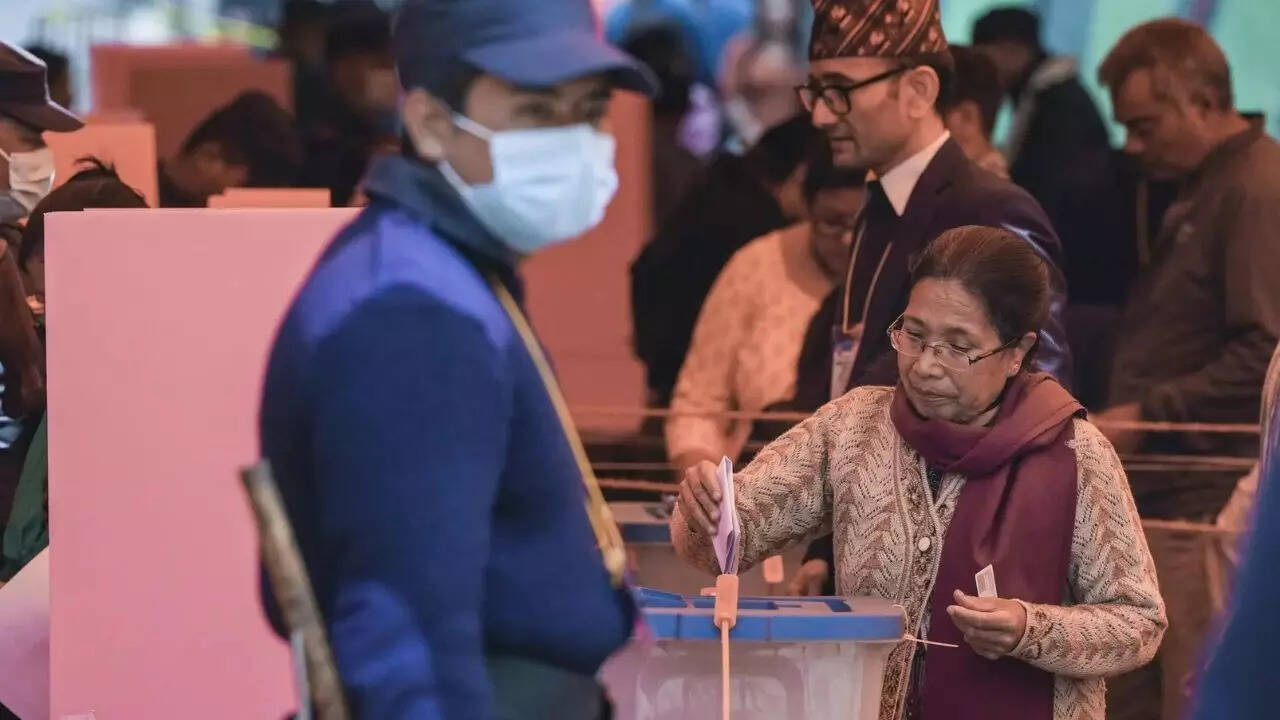
Vote counting began across Nepal on Friday after a closely watched parliamentary election held months after a large protest in 2025 forced the government to step down and led to the formation of an interim administration.

Early trends suggest that the newly formed Rastriya Swatantra Party (RSP), led by former rapper and Kathmandu mayor Balendra Shah, is ahead in several constituencies.
According to the party, the RSP had won three seats and was leading in 45 of the 57 constituencies where counting was underway by Friday morning. It also claimed victories in Kathmandu-1, Kathmandu-7 and Kathmandu-8, though the Election Commission had not officially confirmed these results.

Meanwhile, former prime minister K P Sharma Oli’s Communist Party of Nepal (UML) was leading in five seats. The Nepali Congress, now led by Gagan Thapa, was ahead in four seats, while former prime minister Pushpa Kamal Dahal ‘Prachanda’ was leading in two constituencies.

Election Commission spokesperson Prakash Nyupane said counting was continuing “in a peaceful manner” across the country.

How are the elections going

Nearly 60 per cent of voters participated in Thursday’s election. More than 3,400 candidates contested 165 directly elected seats in the 275-member House of Representatives. Another 110 seats will be filled through proportional representation.

The election has become a contest between established political parties and newer leaders promising change.

Balendra Shah, who first became popular as a rapper before entering politics, has attracted support from younger voters. His campaign has focused on corruption, governance and job opportunities.

Results are expected to continue through the day. Even after the results are declared, negotiations to form a government may be required if no party wins a majority.

What led to the election

The election was called after nationwide protests in September 2025 forced the government to resign. Since then, Nepal has been run by an interim administration led by former chief justice Sushila Karki, which organised the polls to restore a full government.

The 2025 protests began after a temporary social media ban, but quickly expanded into a wider movement against corruption and economic problems.

The demonstrations were largely driven by young people and became known as Gen Z protests. The unrest turned violent in several areas, with at least 77 people killed and government buildings set on fire. The protests eventually forced the resignation of the Oli-led government.

Sign up to read this article
Read news from 100’s of titles, curated specifically for you.
Already a member? Sign in here
Related Stories
Top stories on inkl right now
One subscription that gives you access to news from hundreds of sites
Already a member? Sign in here
Our Picks
Fourteen days free
Download the app
One app. One membership.
100+ trusted global sources.