
Get all your news in one place.
100's of premium titles.
One app.
Start reading
Bangkok Post
Bangkok Post
National

Funding roadmap for energy projects gets nod

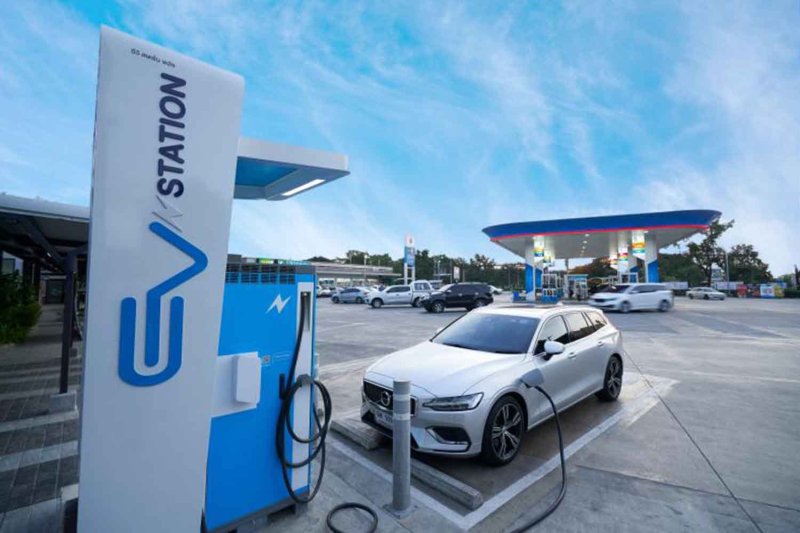
An electric vehicle receives a charge at a PTT petrol station. Photo: PTT Oil and Retail

The Finance Ministry has approved a funding framework for Thailand's energy transition projects, which aim to cut fossil fuel use, promote electric vehicles (EVs) and upskill workers.

Vinit Visessuvanapoom, director-general of the Fiscal Policy Office and the ministry's spokesman, announced the framework after a meeting of the committee overseeing spending under the emergency decree.

This decree authorises the Finance Ministry to borrow funds to address the nation's energy crisis and support the country's transition to green energy.

The meeting, chaired by finance permanent secretary Lavaron Sangsnit, established the criteria for evaluating projects under the second phase of the borrowing programme, with an emphasis on transparency, accountability and compliance with regulations.

The first category covers projects that reduce fossil fuel consumption, improve energy efficiency, expand renewable and alternative energy generation, cut greenhouse gas emissions and create carbon-credit income.

Eligible projects must reduce fossil fuel use, cut reliance on imported energy, expand renewable energy and improve efficiency.

Qualifying schemes include self-consumption renewable power systems, community smart grids, microgrids and technologies that enhance energy management.

The second category focuses on supporting the transition from internal combustion engine vehicles to EVs and other clean-energy vehicles. It also includes investment in charging stations, battery-swapping facilities and related infrastructure.

Projects must involve the conversion of government, public transport or privately owned vehicles to cleaner alternatives and incorporate technologies that enable smarter energy management.

The third category consists of upskilling and reskilling programmes for the public, workers and entrepreneurs to help them adapt to economic changes linked to the shift towards clean energy.

Mr Vinit said the framework would ensure projects remain aligned with the decree's objectives of easing the impact of the energy crisis while supporting long-term structural change.

The committee also approved the appointment of a subcommittee to assess project suitability and funding requirements. Members include independent experts and officials from the Office of the National Economic and Social Development Council, the Budget Bureau, the Comptroller General's Department and the Energy Policy and Planning Office.

Sign up to read this article
Read news from 100's of titles, curated specifically for you.
Already a member? Sign in here
Related Stories
Top stories on inkl right now
One subscription that gives you access to news from hundreds of sites
Already a member? Sign in here
Our Picks
Fourteen days free
Download the app
One app. One membership.
100+ trusted global sources.







