Fuel deliveries have resumed at a vital oil refinery in County Cork, Ireland, after police successfully cleared a days-long blockade by protesters.
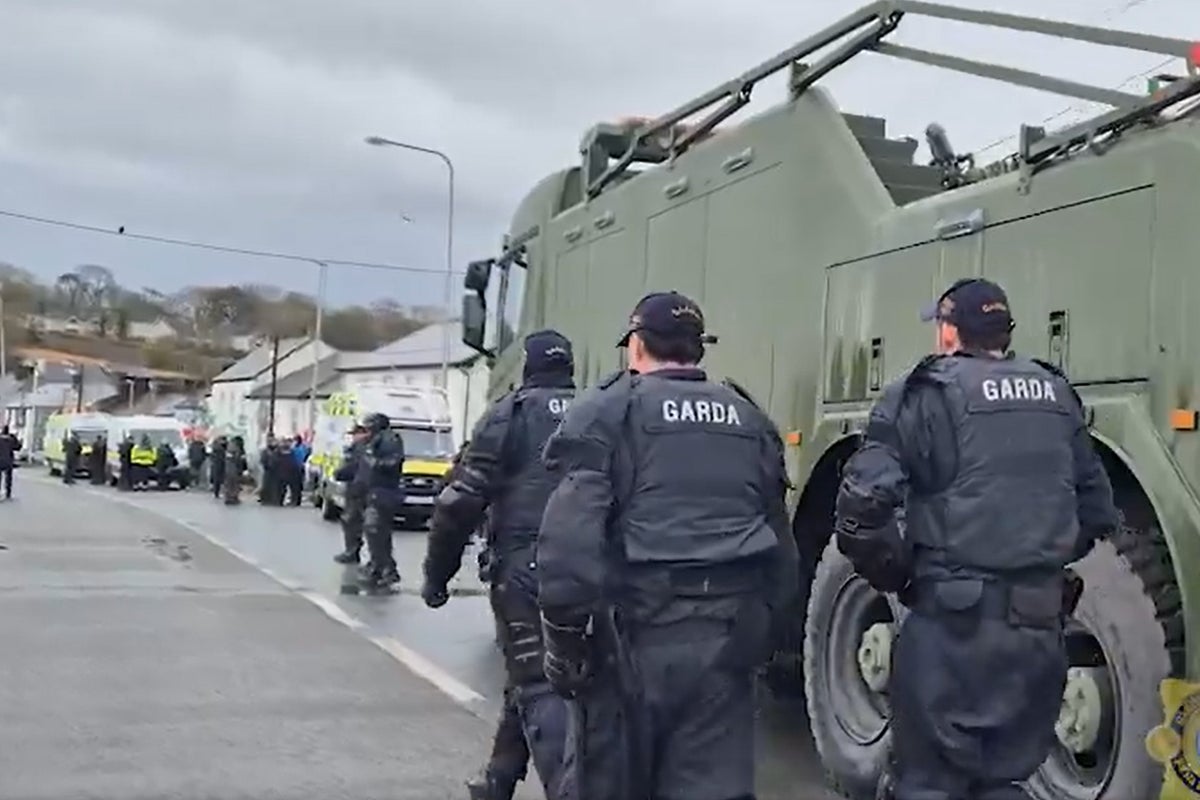
A major operation, involving numerous gardai and the Public Order Unit, saw large tractors obstructing the Whitegate refinery entrance removed.
The hour-long intervention included physical clashes between officers and demonstrators, with pepper spray deployed.
The Irish Defence Forces were on standby with a heavy-lift recovery truck, requested by An Garda Siochana for potential removal of protest vehicles.
The national police service had declared an "exceptional event" to enable this large-scale response, ensuring all members were available for duty.
The reopening of Whitegate is expected to alleviate concerns about potential fuel shortages across the country, following days of blockades at the Cork facility and depots in Limerick and Galway that severely disrupted the distribution network.
The blockades are part of nationwide protests by hauliers, farmers and agricultural contractors who are urging the Government to take action to reduce fuel costs which they say are at unsustainable levels and will lead to people going out of business.
A Garda Operation is ongoing at Whitegate Refinery to ensure critical supplies of fuel to maintain critical emergency public services, including Ambulance and Fire Services.
— An Garda Síochána (@GardaTraffic) April 11, 2026
Garda Public Order Units have been deployed.
Blockaders must comply with Garda directions. pic.twitter.com/SukFEMiDWX
The protests have also seen slow-moving convoys and outright stoppages on the motorway network as well as the establishment of a large blockade on Dublin city’s main thoroughfare, O’Connell Street.
Meanwhile, Government ministers re-entered talks with established representative organisations for the transport and agricultural sectors aimed at defusing the protests.
The recognised bodies in the meetings are not responsible for organising the distinct protests around the country but are also working to secure reductions in operating costs.
Protesters had sought their own engagements with Government and expressed anger at being excluded from the talks.
The development at Whitegate came after Fuels for Ireland chief executive Kevin McPartlan said around 600 of the 1,500 filling stations around the Republic of Ireland had run dry.
He had predicted that the number “would grow quite dramatically” if the blockades on Whitegate, Galway and Foynes, Co Limerick, continued.
Elsewhere, Rosslare Europort is expected to hit capacity by Sunday evening or Monday morning.

Operations at the port, run by Irish Rail, have been affected by a blockade of fuel protesters in the nearby town of Kilrane, Co Wexford.
A spokesperson for Irish Rail said the port will soon be at capacity and will not be able to take in any more freight – resulting in ships having to wait on anchor or be diverted to another port if possible.
Blockades have resulted in full closures of parts of the M50 ring road around Dublin, as well as the M4, M6, M7, M8, M9 and M20.
Transport Infrastructure Ireland, which is responsible for motorways, said there is “significant disruption” to its network affecting counties Clare, Limerick, Tipperary, Laois, Offaly, Kildare, Galway, Cork, and Dublin.
It said it was working closely with gardai in managing traffic distribution.
The protests have caused disruption to some bus routes across Ireland and within the capital, where Luas Green Line tram services are also affected.

Participants say the Government needs to take urgent action on fuel prices or they will go out of business.
There have also been concerns about fuel shortages leading to the curtailment of emergency services and the delivery of vital goods, while the National Emergency Coordination Group urged people to only buy the fuel they need.
Health Minister Jennifer Carroll MacNeill told the Irish Medical Organisation AGM in Co Kerry on Saturday that “all of our ambulances have been refuelled successfully”.
Taoiseach Micheal Martin warned that Ireland is on the “precipice of turning oil away from the country”, describing the situation as “unconscionable”, “illogical”, and “difficult to comprehend”.
A commitment from the coalition on Friday night to deliver a “substantial” package of measures on fuel costs was not enough to dissuade protesters from continuing blockades.
Christopher Duffy, a spokesman for the grouping in Dublin city centre, said the protest would continue until there was a “serious reduction in our costs”.

Talks between Government departments and representative bodies reopened at lunchtime on Saturday, with a view to finalising what deputy premier Simon Harris said would be “substantial and significant” measures for affected industries.
The president of the Irish Road Haulage Association, which is not organising the protests, said he was “hopeful” that there would be a resolution by Saturday evening.
Speaking before a meeting at the Department of Transport, Ger Hyland said: “Certainly nobody is going to get everything what we want – we put a raft of proposals to Government last Wednesday.
“That’s what we’re coming in to negotiate on today. We’re coming in with an open mind, there’s no red lines.”
Police in Northern Ireland said they were “maintaining an ongoing assessment” in relation to social media posts calling for similar planned protests there.
A PSNI spokeswoman said: “A policing response has been prepared, if needed, to ensure public safety and to help minimise any potential disruption to the wider community.”
Irish police clear demonstrators to reopen refinery as fuel protest causes chaos
Protesters removed by police during Palestine Action demonstration
All we know about Canary Islands bus crash as British pensioner, 77, killed
Ukraine war live: Easter ceasefire in doubt after four killed in Russian attacks
Russian strikes kill two ahead of 32-hour ceasefire
Hungary elections live: Orban fights to remain in power as voters take to polls