Get all your news in one place.
100's of premium titles.
One app.
Start reading
Fortune
Fortune
Sasha Rogelberg

From the Trump administration to Kevin O’Leary, there’s a new narrative that China is to blame for plummeting data center popularity

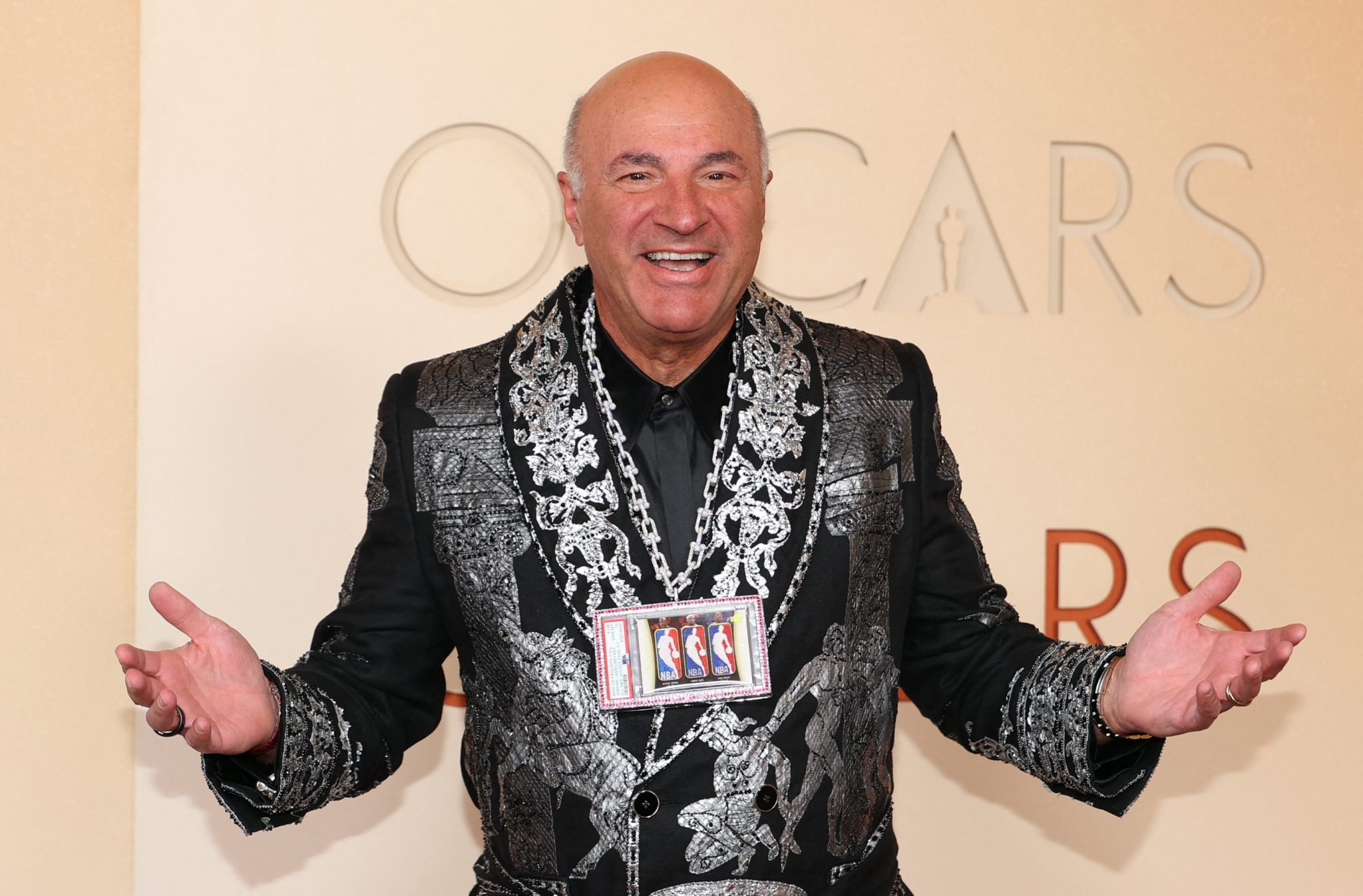
Kevin O'Leary wears a silver and black suit with a chain of basketball cards around his neck. (Credit: ANGELA WEISS—AFP/Getty Images)

As negative sentiment toward data center construction reaches a fever pitch, some AI advocates are blaming China for emerging narratives around the rapid growth of the technology’s infrastructure—and the increased negative public attitude surrounding it.

One of the people blaming China is billionaire investor Kevin O’Leary, who is backing a $100 billion data center project in Utah. Last month, the Shark Tank investor said he received an influx of “tens of thousands” of Instagram and X comments from the same batch of IP addresses, as well as “nefarious accounts from out of the country.” Additionally, some of the accounts, he claimed, were connected with Neville Roy Singham, a left-wing activist with alleged ties to the Chinese Communist Party. O’Leary claimed he reviewed public IRS tax filings that indicate Singham’s Shanghai-based connections funded anti-data-center organizations like Alliance for a Better Utah and Arabella Advisors.

“There’s a war going on, I guess, a PR war,” O’Leary said in a social media video explaining how he believed foreign agents were fueling anti-AI social media campaigns.

Regardless of how those comments came to land on his social media posts, Mr. Wonderful said China’s role in stoking AI data center discontent in the U.S. is obvious. “I’m not suggesting it,” he said. “It’s an irrefutable fact.”

His comments come at a crossroads for tech researchers, who said that kind of rhetoric is doing more harm than good when it comes to building out that AI infrastructure in the first place. Instead, where AI proponents see an enemy, researchers of the politics surrounding data center construction see the potential for a convenient scapegoat.

“China is a common and comfortable boogeyman in American politics, for right or for wrong,” Flavio Hickel, an assistant professor of political science at Washington College, told Fortune.

China as a scapegoat

Data centers have indeed been plummeting in popularity over the past several months. A poll from Heatmap Pro last week found seven in 10 Americans now oppose data centers being built near their homes. While AI infrastructure was most unpopular among Democrats, young people, and residents of rural areas, researchers saw a decline in popularity among Americans more broadly.

The Utah data center O’Leary is backing would use more electricity than the entire state does annually. Preconstruction, the 9-gigawatt project is already contentious, drawing crowds of protesters despite Box Elder County commissioners unanimously voting to advance the project last month. But last week, citing “alarm surrounding this project,” O’Leary announced the 40,000-acre data center footprint would be slashed in half, though said the negative environmental risks associated with its construction were overstated.

The Trump administration has doubled down on similar claims about China’s role in U.S. data center sentiment.

“Any place that’s trying to build data centers is getting bombarded with foreign-directed propaganda to try to block these from being built,” Interior Secretary Doug Burgum said in a recent Fox Business appearance. “This is just another attack on the U.S. and our ability to be competitive.”

Neither O’Leary nor Burgum offered concrete evidence to support their claims. Other think tanks like the Bitcoin Policy Institute and the American Energy Institute have issued reports with similar assertions, but have spotted connections between U.S. progressive environmental groups and overseas relationships and funding as opposed to direct connections between these entities and Chinese benefactors.

O’Leary and the Department of the Interior did not immediately respond to Fortune’s requests for comment.

China’s AI advancements

By some metrics, China has taken a bite out of the U.S.’s AI advantage. According to the Stanford Institute for Human-Centered Artificial Intelligence (HAI) 2026 AI Index report, the relative performance of Chinese AI models, such as Dola-Seed 2.0, has closed in on the U.S.’s top model, OpenAI’s GPT-4. China also bests the U.S. in number of publication citations in AI research, as well as industrial robot installations.

Rather than China’s AI advancements being cause for the country to launch an offensive against the U.S. in the so-called AI race, Hickel said it’s more likely AI advocates and the Trump administration—which has pushed for the government to take ownership stakes in AI companies—are wanting to use China as a means of dismissing AI discontent.

Hickel noted that President Donald Trump’s support base, typically very tight-knit and loyal, has begun to see fractures on issues surrounding AI. A recent Gallup poll shows that while 75% of Democrats somewhat or strongly oppose data center construction, that figure is still around 63% for Republicans.

“Trump has really railed against China, their unfair practices with regard to the economy, and fentanyl production,” Hickel said. “Trying to blame some of the rhetoric on China could work politically for them.”

This week, the Pentagon accused Alibaba, Baidu, and BYD—among China’s largest companies—of supporting the Chinese military, reiterating its argument that China’s corporate entities present a danger to U.S. national security.

The argument around China’s role in negative data center sentiment comes ahead of midterm election season. According to analysts, some of the administration’s recent moves—including threatening Brazil with tariffs over its alleged illegal deforestation practices—have been a means of garnering support from Democrats and others outside of the administration’s immediate group of supporters.

Organic AI data center sentiment

Ben Green, assistant professor of information at the University of Michigan, told Fortune there’s meanwhile abundant signs that antagonism toward data centers is real and organic. “Anyone who doubts it should just show up to any of the communities where people are actually fighting data centers,” Green said. “Show up to a town hall, show up to a city council meeting, and you will just very clearly see that these are people who live in this community [and] are clearly very upset about this.”

The public’s ire toward data centers is just one ingredient in an otherwise perfect storm of anxiety around AI-related job displacement; environmental concerns around water usage and noise pollution; as well as a general disdain toward tech leaders touting the growth of AI amid these concerns, Green suggested.

“There’s a broader sense of class politics in this,” he said. “They are these facilities which bring really close to zero benefits to [the] community, are extracting natural resources, and all of the benefit here is just going to these tech companies and billionaires.”

Green also poured cold water on the argument that China is fueling data center discontent, arguing the campaign would require immense amounts of resources and coordination from an adversary to the U.S. that would be better spent on issues outside of AI infrastructure.

“If China is that good at creating that level of change in public opinion across pretty much every facet of society, that’s just a pretty incredible level of influence,” he said. “I would say, if they could do that, then they would probably be weaponizing that for other things beyond data centers.”

Sign up to read this article
Read news from 100's of titles, curated specifically for you.
Already a member? Sign in here
Related Stories
Top stories on inkl right now
One subscription that gives you access to news from hundreds of sites
Already a member? Sign in here
Our Picks
Fourteen days free
Download the app
One app. One membership.
100+ trusted global sources.