
Get all your news in one place.
100's of premium titles.
One app.
Start reading
What Hi-Fi?
What Hi-Fi?
Technology
Harry McKerrell

From Technics’ iconic turntables to JBL’s Classic standmounts – discover five of the best hi-fi product revivals

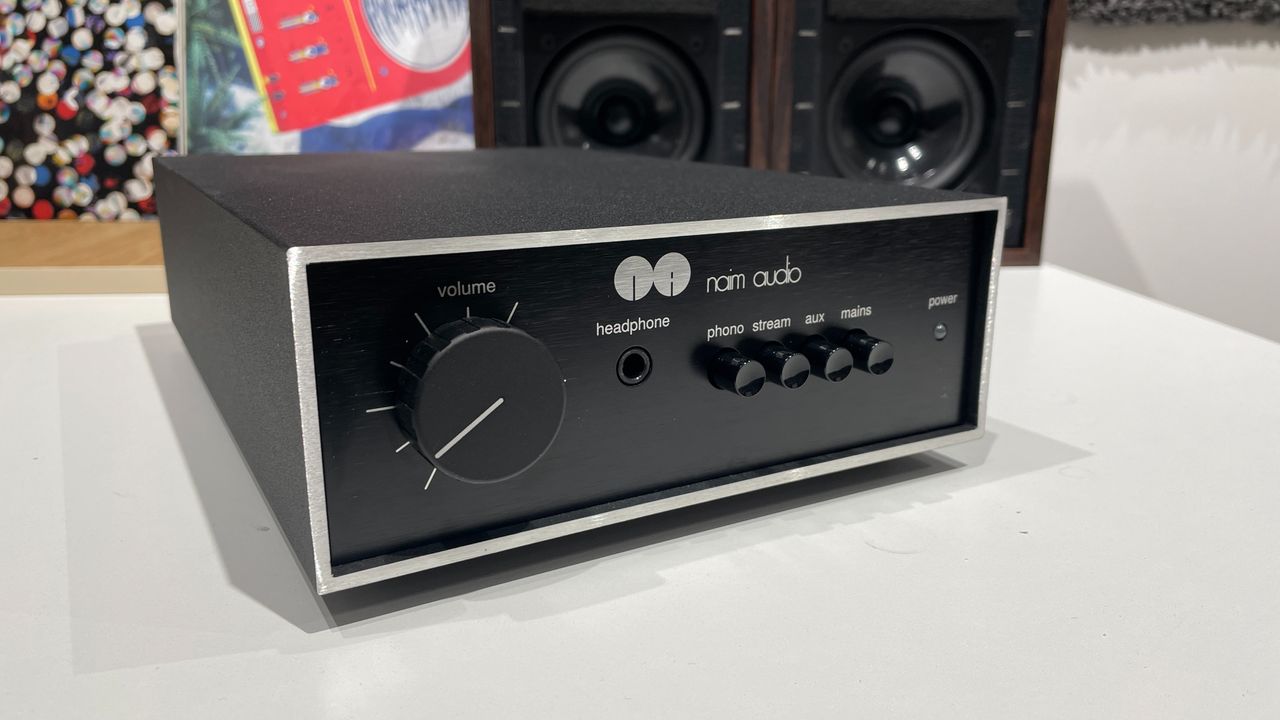
Naim Nait 50 amp on desk with records and speakers in background.

Sometimes, you just can’t let a good thing go.

Whether it’s a great TV series that just refuses to be cancelled – see Futurama, Frasier and Scrubs – or that pop star who desperately clings to relevancy with just one more comeback tour (we’ll let you decide for yourselves whom that could be), it can be hard to step away from the limelight when you know you’ve had a good thing going.

It’s the same with hi-fi. When a brand strikes gold, it’s natural to want to keep on mining that rich vein of ore for ever. And, while there are always new products to make and new areas to explore, sometimes you just can’t help but resurrect, revive and revisit the legends that helped to make your name.

From limited-run anniversary editions to full-scale revivals of beloved classics, these are the hi-fi revivals that proved that lightning can strike at least twice.

The Technics SL-1200 series turntable

(Image credit: What Hi-Fi?)

Technics’ SL-1200 turntable series is one of the most famous ever made.

Launching in 1972 and then refined in 1979 through the SL-1200MK2, the direct-drive design became a perennial favourite for professional DJs and DIY mixers thanks to its ease of use, hardy construction and faithful sonic reproduction. It also happened to look really cool, and didn’t cost an absolute arm and a leg.

So revered was the SL-1200 series that Technics’ parent company Panasonic just had to bring it back for the 21st-century listener. Technics relaunched two ‘Grand Class’ models in 2026 as part of its revived SL-1200 series, just two years after Technics itself returned as a brand, with What Hi-Fi? travelling to Las Vegas’s CES show to witness the much-anticipated rebirth of an icon.

Externally, Technics didn’t deviate much from the classic SL-1200 design for its 2016 SL-1200G reboot, opting for a three-layered construction with a gleaming brass top and heavyweight aluminium platter mounted above the direct-drive motor.

Back was the vertical pitch control, sleek metallic chassis and left-mounted on-off button, all signatures of a company harking back to its impressive hi-fi heritage.

From vinyl collectors to almost every DJ who has ever spun a record, everyone knows about Technics and its iconic SL-1200 decks.

Read our Technics SL-1200g review

JBL L100 Classic loudspeakers

(Image credit: JBL)

The L100 loudspeakers are as integral to the image and heritage of JBL as the SL-1200 series of turntables is to Technics.

When we visited JBL’s Los Angeles headquarters in early 2026, a pair of the L100A were proudly displayed within their own themed booth as part of the US brand’s 100th anniversary celebration showcase. These are speakers of which JBL is, quite rightly, extremely proud.

When JBL revived them in the shape of the L100 Classic in 2019, the new standmounts were designed specifically to emulate their predecessor’s appearance and size, once again sporting that iconic ‘waffle’ foam grille and boxy aesthetic that had been such a staple of the originals.

Inside, JBL did make significant changes to its revived units, bringing in a 13cm midrange unit coated with a polymer for improved resonance-control, alongside a titanium-dome tweeter for crisper, cleaner highs. Titanium tweeters weren’t so much of a thing back in the 1970s.

The original L100 speakers had been born entertainers – the famous Maxell ad of the time showed a man nearly being blown away by his pair – a spirit which was fully revived with the powerful, full-scale approach of the reborn Classics.

Five stars, and plenty of envious glances, soon followed.

Read our JBL L100 Classic review

Musical Fidelity A1 amplifier

(Image credit: What Hi-Fi?)

The A1 was not Musical Fidelity’s first amplifier, but it was the one that really helped the company establish its reputation.

When the A1 launched in 1985, it cost an enviably modest £189, putting it in direct competition with the Cyrus Two amplifier and, as you’ll see below, the iconic Nait 1. The A1 distinguished itself from its competitors, however, via its Class A-biased circuit, designed by the legendary engineer Tim de Paravicini, alongside its wide, distinctive casework.

At the time, not much else looked like the A1, and not much sounded like it, either. Musical Fidelity truly harnessed the power of Class A amplification with its trailblazing amp, resulting in a sound that suffered from minimal distortion and left most of its competitors struggling to keep up.

When Musical Fidelity brought the A1 back in 2023, Class A amplification was a must. Like its 1980s namesake, the newer A1 also runs very hot, but as we wrote in our review, it does a fine job in echoing the spirit of the original “by sounding wonderfully expressive and fluid in a way that eludes most modern alternatives”.

Musical Fidelity also resurrected that iconic casework for the new iteration, resulting in a modern amplifier that does its utmost to capture the look and sound of an icon. It needs care with partnering, and features are somewhat thin on the ground, but the revived A1 gives you a taste of classic hi-fi combined with the reliability of a new product.

Read our Musical Fidelity A1 review

Naim Nait 50 integrated amplifier

(Image credit: What Hi-Fi?)

The original Naim NAIT (later called the Nait 1) is a legend in its own right.

Launched in 1983, the Nait was seen as something of an oddity when it landed, sporting a relatively modest power rating and marking itself out as Naim’s first-ever integrated stereo amplifier. This, then, was the first time that the British brand had combined power and preamplification into a single unit.

Naim celebrated its 50th anniversary in 2023 and, to mark the occasion, gave the world the revised, limited-edition Nait 50 to pay homage to 1983’s original Nait 1. While some brands seek to reinvent or repackage a product for general release, the Nait 50 was limited to just 1973 units, each priced at a not-inconsiderable sum of £2699.

As a celebratory product designed to honour a legend, the Nait 50 shares many of the quirks of the original, and while it’s not perfect, its hugely entertaining, somewhat flavoured sound captures the deeply musical spirit of the Nait 1.

We had the pleasure of getting one of the Nait 50 amps into our test rooms a little after Naim announced its release, so if you’re interested in really digging into the nitty-gritty of the revised Nait 50, we strongly recommend giving our in-depth hands-on a read.

Read our Naim Nait 50 hands-on review

Wharfedale Linton Heritage speakers

(Image credit: What Hi-Fi?)

The Linton were a big deal for Wharfedale. Making their debut in 1965, the three-way standmount speakers continued to run for several iterations throughout the 1970s, helping to establish Wharfedale’s reputation for quality sound wrapped up in an equally dependable package.

The original Lintons were 25-30cm across, depending on the specific model you picked, producing a big, open sound from their large front baffle and the sizeable drivers that could be held within the cabinet.

When you think of standmounts these days, you will probably be thinking of more compact specimens that could perhaps perch on your desktop or nestle into a bookshelf, but the Lintons were full-blooded standmounts with real presence.

The revised Heritage version continue to honour that legacy. Launched in celebration of Wharfedale’s 80th birthday, they followed the overall design language and general template of their progenitors, albeit with larger cabinets, bigger drive units and upgraded components.

The result was worthy of any 80th birthday celebration. As we wrote in our review: “We get a brilliant sense of scale and space from the Lintons. We play John Williams’s The Raiders March – the main theme from the Indiana Jones films – and get a thrilling sense of these speakers’ dynamics.”

They won’t be for everyone, but as we enthused at the time, 2020’s updated Linton are “the best of old hi-fi combined with the best of the new”. A revival done right.

Read our Wharfedale Linton Heritage review

MORE:

The end of an era: the Marantz CD6000 series is one of modern hi-fi’s greatest hits – we look back through the evolution of this budget CD player range over the past two decades

What Hi‑Fi? turns 50: read all of our 50th anniversary features

15 legendary hi-fi brands that are still going strong today

Sign up to read this article
Read news from 100's of titles, curated specifically for you.
Already a member? Sign in here
Related Stories
Top stories on inkl right now
One subscription that gives you access to news from hundreds of sites
Already a member? Sign in here
Our Picks
Fourteen days free
Download the app
One app. One membership.
100+ trusted global sources.