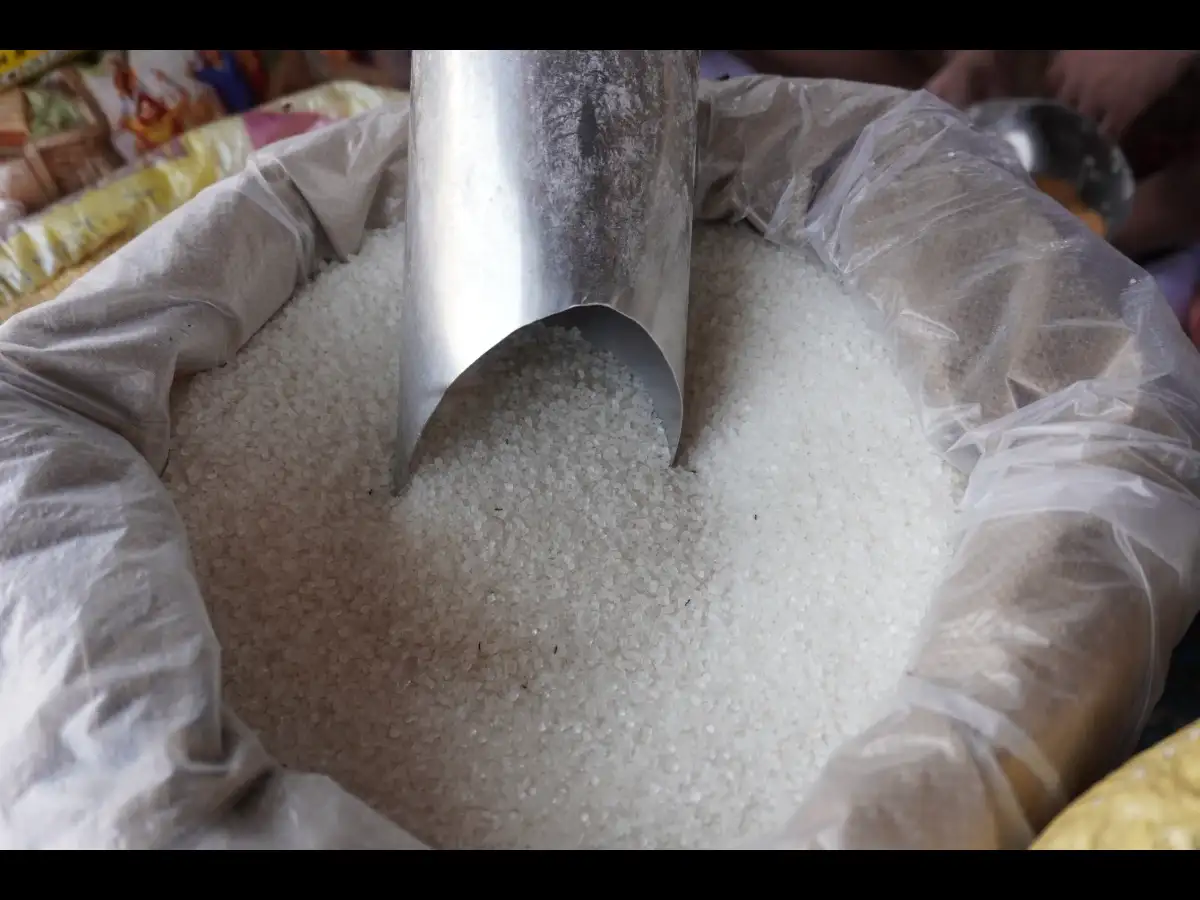
The government on Thursday allowed, for the first time in nearly a decade, the duty-free import of 1 million tonnes of raw sugar until October 31 in a bid to cool record sugar prices ahead of the upcoming festive season.
This marks a sharp U-turn in the government’s sugar policy. Just nine months ago, in November 2025, the government approved 1.5 million tonnes of sugar for export, later increasing it to 2 million tonnes, amid the expectation of a bumper crop. However, even before the trade barely moved, with only 800,000 tonnes shipped, the government curbed exports as domestic stocks tightened. The policy reversal has now raised questions over the estimate for sugar production and stock in 2025-26.

According to a senior industry executive, warning signs had emerged by early 2026. “Yet, in February, when the crushing season was already several months old, the government permitted an additional 500,000 tonnes of exports over and above the earlier 1.5 million tonnes,” he said.
He said the episode suggests the system was “misled” into believing fundamentals were strong, even as production lagged consumption.
“We have information that the crisis in supplies started in March itself, when mills were struggling to meet their monthly domestic sale quota. The alarm bells should have started ringing then when prices were inching upwards,” the executive said.
In two months, sugar prices in the domestic market have jumped by nearly 40%. Ex-mill prices across the country, led by Maharashtra, are currently at Rs 5,400-5,560 per quintal, with S-grade at Rs 5,750 and M-grade at Rs 5,850-5,900, excluding GST, by market estimates.
Following the government’s recent action, which signifies a major shift in its sugar policy, the debate now centres on the wide gap between the initial production forecasts and subsequent estimates.
The Indian Sugar & Bio-energy Manufacturers Association (ISMA), in its initial forecast issued on July 31, 2025, projected India’s production at 34.90 million tonnes for the sugar season 2025-26. But subsequent estimates were sharply lower. On March 6, 2026, the All India Sugar Trade Association (AISTA) lowered its net sugar output forecast by 4.4% to 28.3 million tonnes.
Former Agriculture Secretary Siraj Hussain said the divergence raises questions about the reliability of production forecasting. “What it shows is that agri-tech is still not able to make a credible assessment of production,” he said.
The industry executive quoted earlier said the eventual production was below 28 million tonnes, with around 3 million tonnes of sucrose diverted towards ethanol and other uses. That, he argued, meant the sugar balance was considerably tighter than what the industry and policymakers had assumed at the beginning of the season. He said the higher initial production estimates had also influenced the decision to permit exports. “The fundamental problem was, therefore, a combination of an incorrect production estimate and a lack of timely policy action,” he said.
Meanwhile, Hussain said, “The assessment of production did not prove to be accurate, but the data of stock and exports is not incorrect. Allowing export under the circumstances of lower production may have been a case of wrong judgement.”