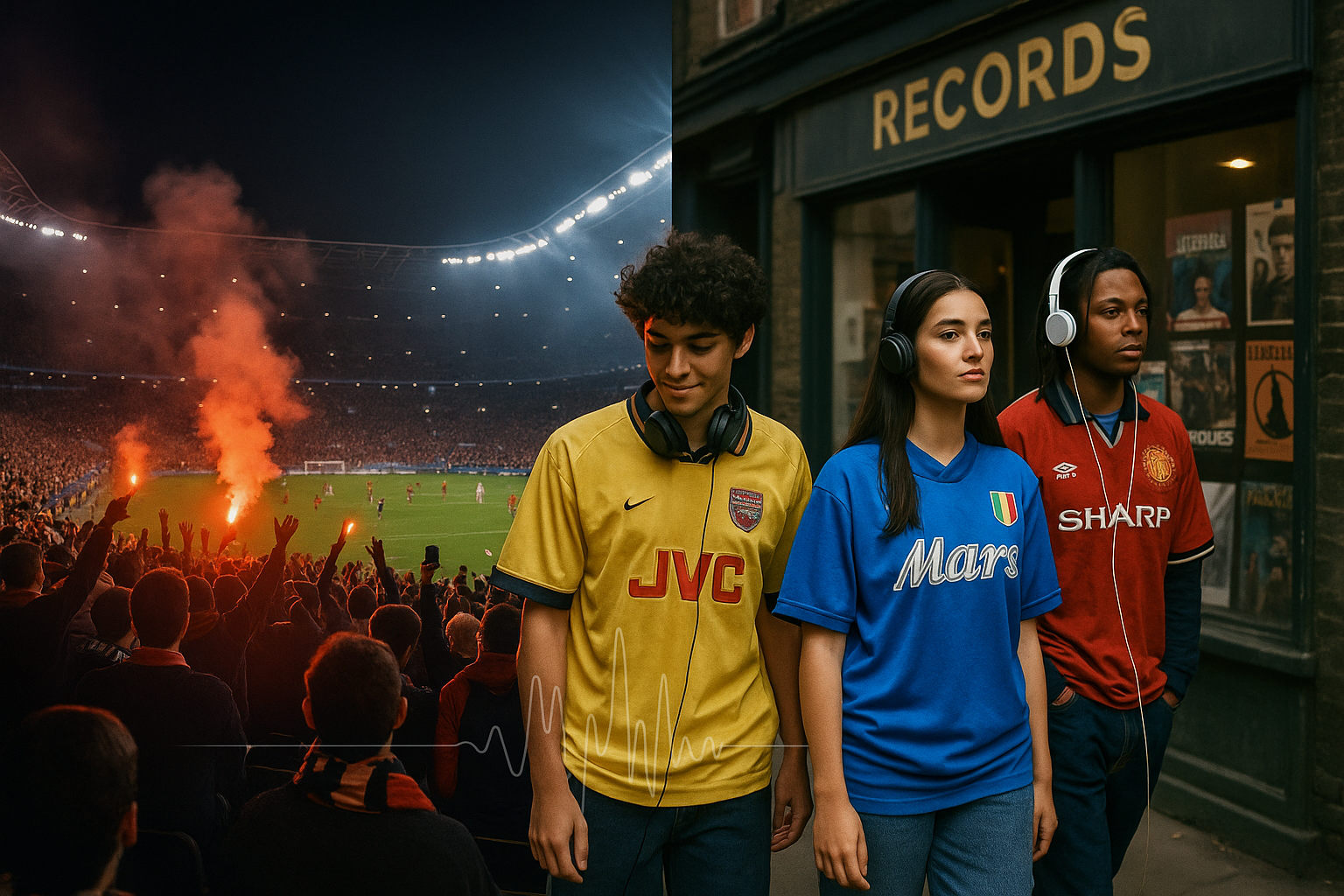
The ball may still be the excuse, but around it an entire culture keeps reinventing itself. From grime tracks that borrow the language of the terraces to vintage shirts sold out in minutes, football is one of the strongest engines behind what global youth wear, listen to, and share. In an era when 73% of people worldwide say they follow the game in some form, it is hardly surprising that football has become a template for identity, not just a weekend pastime.
Chants, Beats, and the New Stadium Soundtrack
Music and football have always felt ritualistic. Today, it’s through playlist and festival stages as much as through terrace chants. Stormzy, a very committed Manchester United fan rapper from England, uses managers and players in his lyrics and fronts campaigns with the club, turning tactical frustration and loyalty into hooks that land on the radio as well as in the Stretford End. Elsewhere, artists from Drake to Bad Bunny pose in club kits or reference stars in videos, using football as visual shorthand for swagger, ambition, and belonging. The result is a feedback loop: players borrow from hip‑hop aesthetics, while rappers treat Champions League nights as part of their own mythology.
Shirts, Scarves, and Streetwear Codes
Dedicated football and culture sites have tracked how shirts migrated from turnstiles to runways over the last decade, with high‑end labels and streetwear brands collaborating directly with clubs. Palace’s work with Juventus and adidas, or collections that echo classic Arsenal or Ajax designs, have shown how easily a kit can become a limited‑edition drop rather than just a piece of equipment. At the mass‑market end, analysts estimate that football merchandise was worth more than US$11 billion in 2024 and is on track to almost double by 2035, driven largely by younger fans buying replica shirts and lifestyle pieces.
Young fans do not treat these garments as uniforms but as modular parts of an outfit. A Real Madrid away shirt with jeans, a vintage Boca Juniors top over a hoodie, and a club scarf knotted onto a backpack all become a way to signal fandom while still fitting into local streetwear codes.
Global Youth, Digital Fandom and Blockcore Aesthetics
The sheer scale of football’s young audience explains why style moves so quickly through the game. A 2022 global survey found that 25- to 34-year-olds were the single largest segment of football fans, with 16- to 24-year-olds close behind, and that the World Cup, Champions League, and Premier League dominate their attention. Researchers looking at Generation Z have even coined the term “Blockcore” for a micro‑trend that blends retro football graphics, baggy silhouettes, and urban nostalgia into a coherent aesthetic. When these images hit TikTok or Instagram Reels, the team badge is often almost incidental; what matters is the grain of the fabric, the font on the sponsor logo, the overall mood of a photograph shot outside a floodlit ground.
At the same time, younger supporters are deeply digital. Recent studies on fan behaviour show that under‑34s are far more likely to treat gaming, esports, fantasy leagues, and live sport as a single continuum than older generations.
When the Second Screen Becomes Part of the Ritual
That digital hub increasingly includes betting and casino apps, which sit just a thumb’s reach away from messaging and music players. As friends argue in group chats about line‑ups or next‑scorer markets, they often pivot into placing a few in‑play wagers or spinning a slot while they watch, using the Melbet app (Arabic: كينو مباشرة) as a way to turn passive viewing into interactive entertainment without leaving the same ecosystem. It fits cleanly into the always-on, mobile-first habits that shape how young adults experience football.
The most important second screen for football is not a laptop but the device in a pocket. Young supporters who like having one account for weekend accumulator bets, live casino rooms, and fast games that fill the gap between fixtures often head straight to download Melbet for Android, install the app in a couple of taps, and explore markets or tables in their own language. For a generation already used to streaming matches, watching condensed highlights on YouTube, and following their favourite clubs through short‑form video, this kind of frictionless betting and casino experience feels like an extension of their media diet.
Where Football Culture Goes Next
Football culture will keep mutating because the game itself keeps moving. Shirt designs will chase nostalgia one season and minimalism the next. Merchandising will get more NFC tags, youth micro-trends like Blockcore will remix past and present to something just for this moment. For loyalists, it's as game-shaping as the playlists and wardrobes shaping digital habits. Choosing which shirts you buy, which lyrics you quote, and which apps you trust is part of choosing what kind of football culture you want to live inside. In a world in which the stadium now stretches into every spare pocket of the city, being that consciously selective may be the most radically stylish thing left to do.