The Briefing:
- South Korean President Lee Jae-myung was received at Mexico's National Palace on Thursday, the first time in 16 years Seoul has sent its president to Mexico on a state visit. A 2026-2030 action plan and several memorandums were scheduled for signing.
- The relationship leans toward Korea: Mexico ran a $13.735 billion trade deficit with South Korea from January to July 2026, and Nuevo León holds 47.1% of recent Korean investment.
- Mexican tariffs and the USMCA review shape the summit, and the number of Korean firms in Mexico ranges from roughly 560 to over 2,000 depending on who is counting.
A State Visit 16 Years in the Making
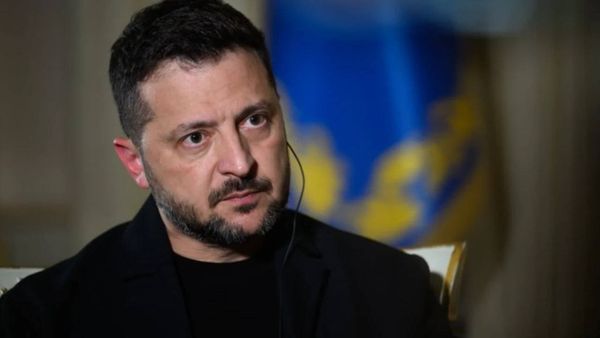
President Claudia Sheinbaum welcomed Lee Jae-myung at the National Palace with full honors and both national anthems, in a ceremony without precedent since 2010 for a South Korean leader on Mexican soil.
Lee had landed the night before at Felipe Ángeles International Airport after addressing the U.N. General Assembly in New York, and was greeted by Foreign Secretary Roberto Velasco.
Thursday's schedule featured a private meeting, an expanded session with both delegations and a gathering with Korean business leaders. The program also foresaw memorandums of understanding, a luncheon and a joint statement.
What the 2026-2030 Action Plan Targets
The plan was negotiated in Seoul in August by the two countries' foreign ministers and covers innovation, artificial intelligence, digital governance and aerospace, along with education options such as a possible scholarship program. Until now, the foreign ministry had not released the full text, only its main pillars.
Sheinbaum put it briefly at her morning press conference: "We will sign a memorandum of understanding on these topics." She added that Korean companies have several investments planned in the country.
Lee told El Universal that there is "ample room" to collaborate on semiconductors, aerospace and electric vehicles, pointing to Kia's electric-vehicle plant in Nuevo León as an example.
A Lopsided Trade Relationship
Two-way trade topped $27 billion in 2025, but the balance favors Seoul. From January to July 2026, Mexico sold $4.004 billion and bought $17.739 billion, a shortfall of $13.735 billion, according to Data México.
On investment, Nuevo León took in $3.2 billion, nearly half of Korean direct investment between 2024 and the first half of 2026, ahead of Mexico City and Baja California. Even so, of the $1.296 billion recorded in 2024, only $3.67 million was fresh capital; the rest was reinvested profit and intercompany loans.
There is no consensus on the size of Korea's corporate footprint, either: El Informador cites about 560 firms, while Mexico's foreign ministry reported in May more than 2,000. Kia in Pesquería and Samsung in Querétaro and Tijuana are the most visible examples.
Tariffs and USMCA in the Background
Since January, Mexico has applied duties of 5% to 50% on more than 1,400 products from countries without a trade agreement, including Korean auto parts and appliances. That raises input costs for plants already operating in Mexico.
In May, Economy Secretary Marcelo Ebrard and South Korean Trade Minister Yeo Han-koo agreed on a strategic dialogue and a working group to modernize trade ties, plus consultations so Korean interests are reflected in the USMCA review. That month Lee urged a quick restart of free trade agreement talks.
Nearshoring completes the picture. A 2024 Bank of Mexico survey found that 41.3% of firms expect relocation to pay off most between 2026 and 2030, though respondents themselves flagged insecurity and inflation as risks.
Security, Defense and Culture
Lee told El Universal he wants tighter coordination against drug trafficking and human trafficking, and Mexico's government proposed sharing databases and intelligence against organized crime. Seoul also sees room in defense, including a possible role in Mexico's military modernization.
On the cultural side, Lee will tour K-Expo México 2026 on Friday, a showcase to promote South Korean companies, products and content.
What Comes Next
On Friday Lee will attend a business forum at the World Trade Center and visit K-Expo, then head back to Seoul on Saturday.
The real test comes later: whether the pledges turn into fresh capital, more Mexican exports and certainty for Korean plants under USMCA, or whether the deficit keeps widening.