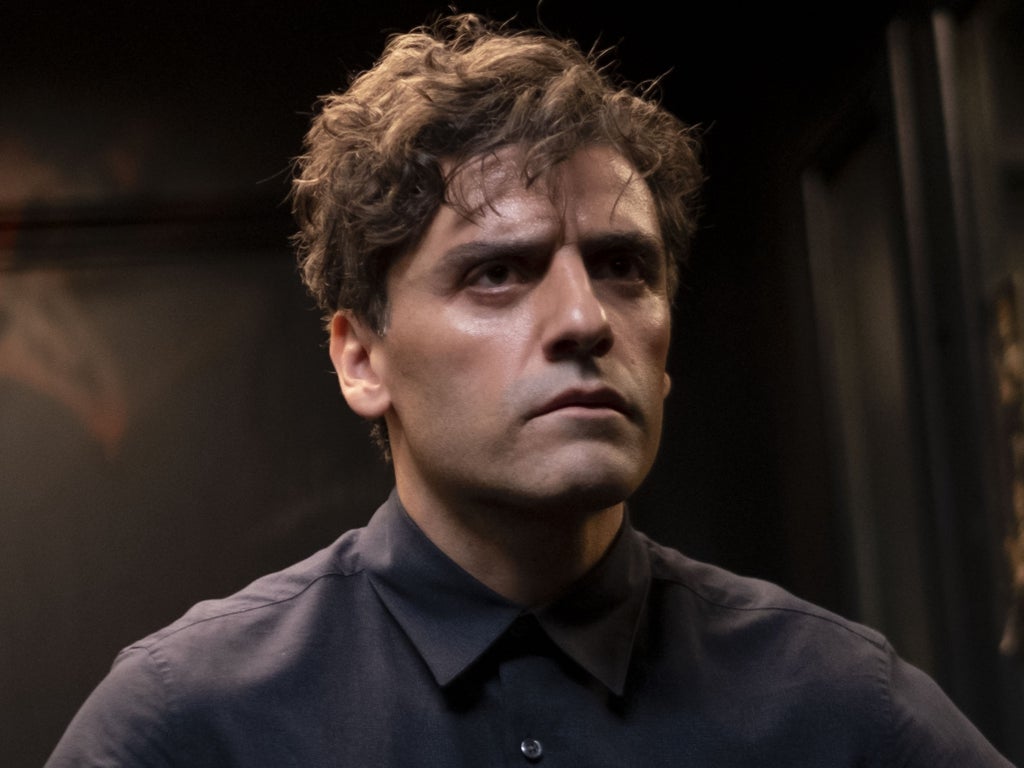
He’s just like a young Al Pacino, they’d say. It’s a phrase that Oscar Isaac has probably heard more than anyone on Earth, bar maybe Pacino’s three children. The comparison was first made when the Guatemalan-born actor broke through in Hollywood in the early/mid-2010s, through compelling roles in films such as Inside Llewyn Davis, Ex Machina, A Most Violent Year, and David Simon’s miniseries Show Me a Hero. Why Pacino? Isaac’s unmistakably Corleone-ish turn in A Most Violent Year certainly fuelled the fire; likewise, Pacino’s history of dabbling with Latin-American roles (most famously in Scarface). But there was also something ethereal to it. The way both actors could chill a room with one reproachful glare; their prodigious, mercurial charisma. Isaac would have been ill-suited for Serpico, just as Pacino would have made an unholy Llewyn Davis – but as far as generational equivalents go, Isaac seemed, for a time, like a talent from a bygone age.
In 2015, the comparison became a little harder to justify. Isaac took on his highest profile role to date, third-wheeling it in a galaxy far, far away as Star Wars: The Force Awakens’ frothy fighter pilot Poe Dameron. A role as a CGI-swaddled villain in the execrable X-Men: Apocalypse followed, as did two more Star Wars sequels. Over the half-decade he was in the Star Wars machine, his smaller work also largely failed to impress. Suburbicon (2017) and Life Itself (2018) were outright detested by critics; his better projects (Annihilation; At Eternity’s Gate) saw him feature only in unshowy supporting roles. After Rise of Skywalker came out, Isaac began speaking more candidly about his frustrations with the franchise, joking that he would only return to Star Wars “if I need another house or something”. “It’s not really what I set out to do,” he said. “What I really set out to do was to make handmade movies and to work with people that inspired me.”