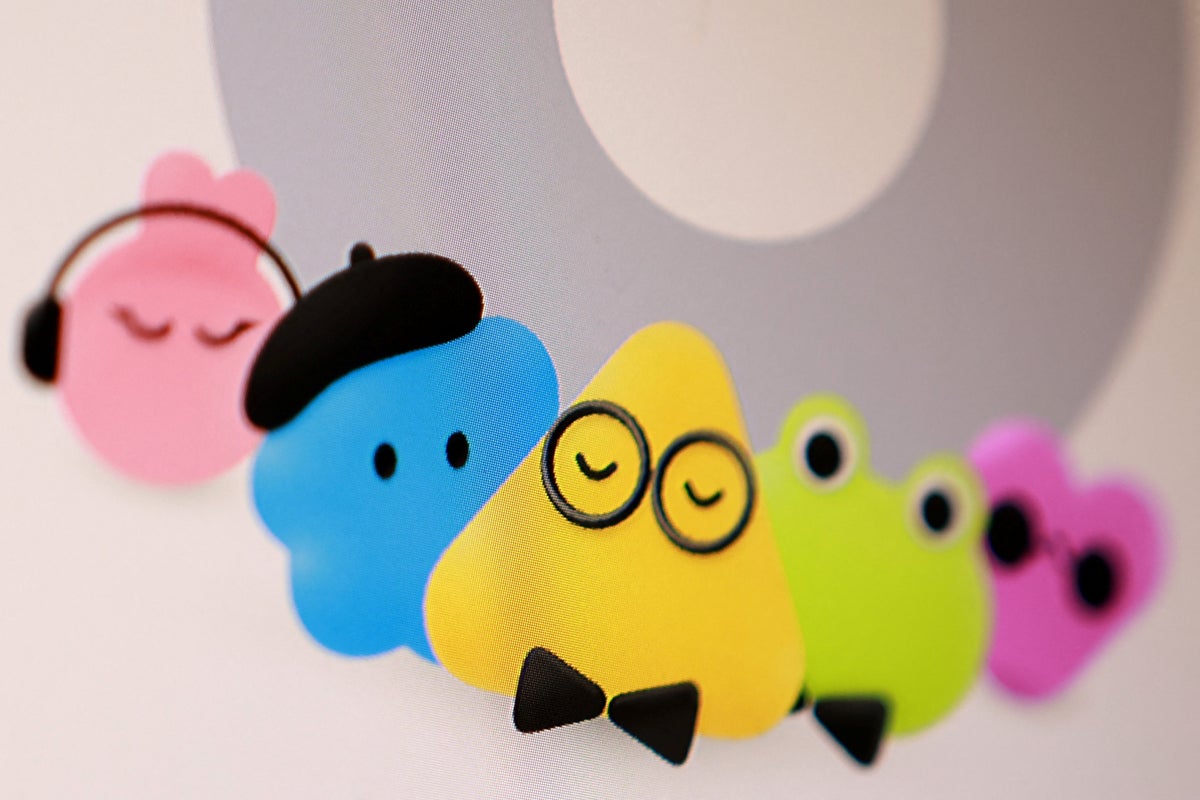
OpenAI has become just the latest company to launch a cuddly, cute new artificially intelligent assistant in its ‘Dots’ tool – and proclaimed it to be the future.
The ChatGPT maker joins Meta, which earlier this month revealed its new “Muse” assistant. Both of the tools are versions of long-promised “agentic” AI, where an artificial intelligence tool is able to take actions on its own, in the real world.

But they are united by than just the technology that underpins them. Both Dots and Muse have mascots that are clearly and specifically designed to be adorable, helping to turn the assistants into characters that make people feel fondly towards them.
The aim is clear: turning an AI agent into a cute and cuddly character works to make them both more understandable and more appealing. They take what could be an abstract and complex technology – code, running on a distant computer, with connections to other online services – and turn them into a character that users are easily able to relate to and trust.
Companies including both OpenAI and Meta have long been promoting personal agents as a key way for users to use artificial intelligence in their daily lives. Because they are both autonomous and able to take action in the real world, users can rely on them to undertake otherwise laborious or painful tasks, such as organising schedules, sending emails or booking appointments, they have suggested.
But the technology underpinning such products is potentially dangerous. Using such a system necessarily requires handing over both vast amounts of data and power to an automated system, and comes amid increasing concern about the ways that AI agents could behave irresponsibly or outright dangerously.
Giving such an AI system a cute design, of the kind used by OpenAI, Meta and others, helps overcome many of these concerns. It allows users to attach a particular physical form to what would otherwise be an impersonal personal agent – and that particular form, often reminiscent of a baby or small animal, naturally means that humans tend to be more drawn towards and trusting of them, and forgiving of any problems.
In 2024, researchers published a study – ‘The role of cuteness on consumer attachment to artificial intelligence agents’ – that argued “baby schema and whimsical cuteness of AI agents drive consumers to develop stronger attachments to their AI agents”. “This is because consumers perceive cute AI agents as being more trustworthy,” the authors noted, which helps explain why bother OpenAI and Meta have adopted cuteness as a key part of their agents’ branding.
That research, published in the journal Research in Interactive Marketing, explicitly encouraged marketers to use that cuteness in their branding. It has the effect of making people feel attached to their AI agents, which in turn made users more satisfied and committed to the product, and suggested that the research could offer ways for marketers to “effectively utilise cuteness in AI agents”.
But that same power could be what makes them particularly dangerous and potentially problematic. Earlier this year, for instance, the University of Exeter’s Tom Roberts published a study suggesting that people understand AI agents to be something akin to a character in a book.
But he suggested after the study was published that the same process could come with a threat. “The danger is that AI fictional characters may seem friendly and convincing, even if they are unreliable, and thus that they may persuade their users to believe things that are false, unjustified, or unethical,” Dr Roberts said.
Muse’s cuddly appearance has been particularly promoted by Alexandr Wang, Meta’s chief AI officer. Since the assistant was released, he has published a number of posts on X that put the character into a range of different situations.
Some of them specifically point to the cuteness of the mascot, while others appear to place it other more edgy memes – or even outright sexualise it.
he’s just so cuddly how could you resist https://t.co/7BRX8JLV9A
— Alexandr Wang (@alexandr_wang) September 26, 2026
Other companies have explicitly rejected the idea that assistants should be endearing. In an interview earlier this month, following the launch of the iPhone Duo and the newly upgraded Siri, new Apple chief executive John Ternus specifically rejected the idea that virtual assistants should be akin to friends.
The new Siri is specifically “not designed to be your friend”, he said in an interview with Canal+, echoing comments from Apple’s software head Craig Federighi earlier this year. He said that human friendships were important as the way “we learn, they're how we grow, they're how we find joy and happiness”.
The design of Apple’s Siri shows those principles. Even as it has become smarter with the new Siri AI upgrades, it is largely resistant to long conversations – and, notably, it does not have any kind of mascot, with Apple actually making the design more greyscale and stripped back with its new updates.