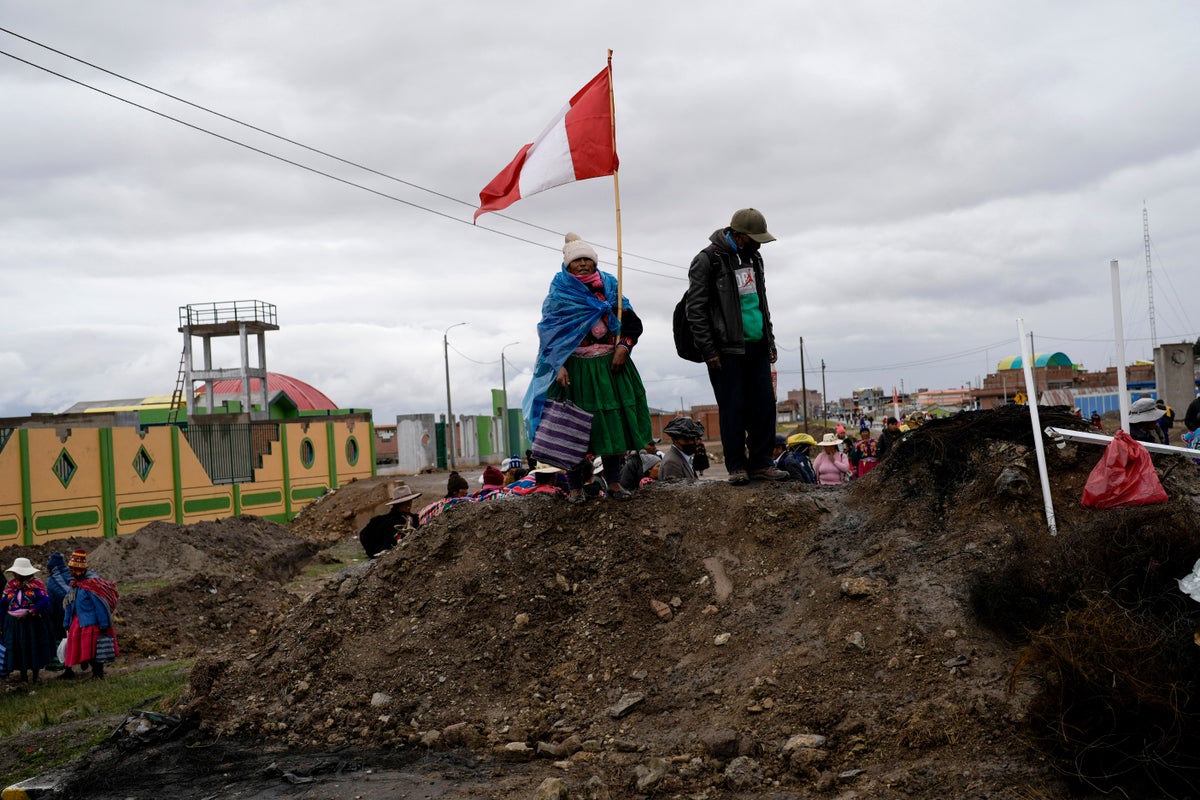
In an industrial corridor of Peru's capital, a dingy stairwell leads to a second-floor safehouse. Dozens of Quechua and Aymara activists lie on mattresses strewn on the floor, resting up for more anti-government demonstrations as volunteers cook a breakfast of donated rice, pasta and vegetables.
Among the makeshift refuge's occupants is Marcelo Fonseca. The 46-year-old watched as a a friend was shot and killed in December as they battled security forces in the southern city of Juliaca. Within hours, Fonseca joined a caravan of demonstrators that descended on the capital, Lima, to demand the resignation of interim President Dina Boluarte.