Get all your news in one place.
100’s of premium titles.
One app.
Start reading
Radio France Internationale
National
RFI

French weather service under fire after winter forecasts miss the mark

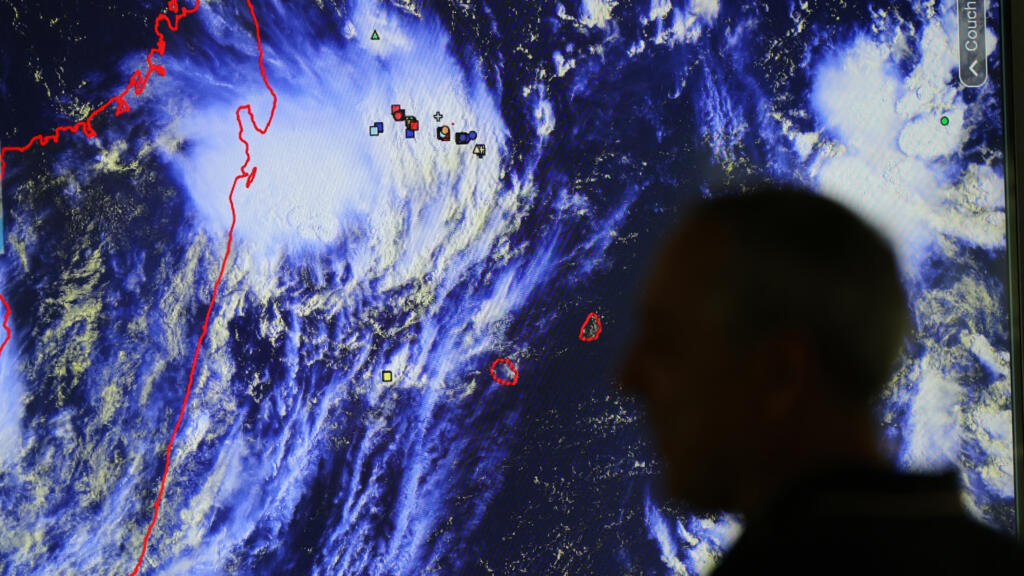
Météo-France meteorologists monitor a cyclone approaching the French overseas department of La Réunion on 26 February 2025. Forecasts are produced using automated software, with staff validating the results and issuing severe weather warnings. AFP - RICHARD BOUHET

France’s national weather service Météo-France is facing renewed criticism after its forecasts underestimated recent winter weather, raising concerns about reliability after parts of forecasting were automated in 2023 and following years of budget and staff cuts.

Transport Minister Philippe Tabarot said that heavy snowfall in northern France on Monday had been “slightly underestimated" by Météo-France.
Similar concerns have been raised before. The mayor of Cannes, David Lisnard, called for an audit of the weather service after severe flooding in the city in September 2024.

Météo-France is a public institution with about 2,600 employees, including around 600 forecasters and some 300 researchers. It uses radars, satellites and other instruments to measure atmospheric pressure, wind and precipitation to produce weather forecasts.

What is France's heatwave warning system and how does it work?

Automation after staff cuts

Data from thousands of weather stations across mainland France and overseas territories is compiled and published for the public, broadcasters and key economic sectors that depend on accurate weather information.

Until 2023, this synthesis was carried out by meteorologists. It is now done by a computer programme called Alpha, although humans validate and adjust outputs and issue severe weather alerts.

The automated system was introduced after years of financial and staffing cuts. Between 2013 and 2022, Météo-France’s public subsidies, its main source of funding, fell by 18 percent.

Between 2012 and 2020, the staffing ceiling setting the maximum number of authorised jobs dropped by nearly 20 percent.

Criticism of forecasts

Trade union representatives say the computer programme can process data faster than humans but lacks nuance and can produce flawed forecasts.

Unions have backed recent strike action by forecasters protesting staff cuts.

“The system is not mature enough to be left to run on its own,” Sébastien Delecray told RFI. He is a Force Ouvrière union representative at Météo-France.

Unions have cited an alleged automated forecast of 28 degrees in Strasbourg on 9 December 2023, in the middle of winter.

Pressure on key missions

“Constraints on staffing and budgets make it very difficult for us to carry out our missions, especially in the context of climate change,” Delecray said.

“For example, forest fires are becoming increasingly widespread. That’s an additional mission to take on, but with fewer staff than before.”

Senator Vincent Capo-Canellas, who has produced reports critical of staff cuts at Météo-France, welcomed the stabilisation of funding and staffing levels in 2023.

He said this was necessary for the service to fulfil its mission, which he described as essential to the economy. Météo-France’s forecasts generate at least three times more economic value than the cost of its annual budget, he said.


This article was adapted from the original version in French by Marius Laffont

Sign up to read this article
Read news from 100’s of titles, curated specifically for you.
Already a member? Sign in here
Related Stories
Top stories on inkl right now
One subscription that gives you access to news from hundreds of sites
Already a member? Sign in here
Our Picks
Fourteen days free
Download the app
One app. One membership.
100+ trusted global sources.