As geopolitical tensions escalate, the energy sector faces a critical juncture. The Strait of Hormuz, a vital artery through which a significant portion of the world's oil supply passes, is facing severe disruptions. With shipping traffic constricted and war-risk insurance costs soaring, energy companies with significant operational exposure to the Middle East are confronting significant uncertainty and potential earnings impacts. This has sent a ripple of caution through the sector, keeping oil prices near multi-year highs.
For investors, this environment creates a complex puzzle. The fundamentals of tight supply suggest a bullish outlook for energy, yet the risk of conflict creates substantial downside. This raises a pressing question: How can investors gain exposure to the sector's upside while mitigating the risks tied to regional conflict? The answer may lie not in avoiding the sector, but in identifying companies that have proactively positioned themselves for resilience. Some firms are looking beyond traditional hotspots and securing long-term growth in regions insulated from the primary sources of global instability.

Halliburton's Argentinian Anchor
In a calculated move away from the geopolitical fray, Halliburton (NYSE: HAL) has solidified its presence in South America. Halliburton's strategy in Argentina's burgeoning Vaca Muerta shale formation provides a compelling case study in risk management and forward-thinking investment, integrating a major contract, a key partner, and advanced technology into a cohesive plan.
The YPF Connection: Powering the Play
The cornerstone of Halliburton's strategy is a multi-billion dollar, multi-year fracturing services contract with YPF Sociedad Anónima (NYSE: YPF), Argentina's primary energy producer. This agreement is significant because it establishes a predictable, long-term revenue stream, an attractive feature for investors during periods of market uncertainty.
The partnership is anchored in the vast potential of the Vaca Muerta, a world-class resource. To put its scale into perspective, the formation is estimated to hold recoverable resources comparable to the Eagle Ford shale in Texas, one of the most prolific unconventional plays in the United States.
YPF is aggressively transitioning its operations to this shale, which now accounts for over 70% of its total production, as it moves away from aging, less productive, conventional wells. YPF has set ambitious targets, aiming to reach $50 billion in annual energy exports by 2031.
While investors should note that YPF reported a net loss in its most recent quarter, this was largely tied to challenges in its legacy business. YPF's future growth, and by extension the value of Halliburton's contract, is firmly rooted in the successful development of these shale assets.
The E-Frac Edge: A Technological Advantage
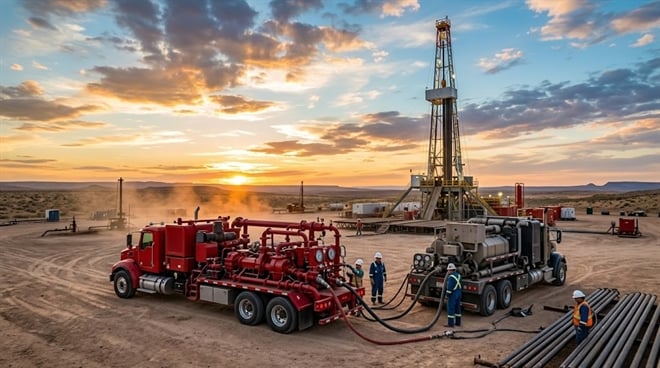
This partnership is about more than just securing work; it is also a showcase for Halliburton's next-generation technology. The deal marks the first international deployment of Halliburton's ZEUS electric fracturing (e-frac) system. This innovation replaces the traditional, truck-mounted diesel engines of a standard frac fleet with mobile electric power units. This provides two key advantages. First, it enhances operational efficiency. Second, it significantly reduces Halliburton's dependence on diesel fuel, insulating operations from volatile fuel prices.
Furthermore, this move aligns with investors' growing focus on Environmental, Social, and Governance (ESG) factors. By reducing emissions and noise pollution compared to diesel fleets, Halliburton's e-frac technology presents a more environmentally conscious solution. Paired with the Octiv digital platform, which automates the fracturing process for greater consistency, Halliburton's technology aims to deliver lower costs and more reliable results, thereby strengthening its value proposition.
Translating Strategy Into Stock Performance
The market appears to be responding favorably to Halliburton's strategic positioning. Halliburton's stock price has increased over 30% since the beginning of 2026, suggesting growing investor confidence. This sentiment is supported by key metrics.
For example, Halliburton has a healthy short interest ratio, suggesting that few institutional investors are betting on a significant decline in the stock's price.
To maintain a balanced view, investors might consider that some company executives have recently sold shares. However, these sales are often part of pre-arranged trading plans and do not necessarily signal a change in Halliburton's long-term prospects.
With an analyst consensus rating of Moderate Buy and a price target near its current trading level of around $37.52, Wall Street seems to view Halliburton as fairly valued after its recent gains. However, recent upgrades have raised Haliburton's high price target to $45, suggesting some analysts believe the company still has room to grow.
A Potential Haven in a Stormy Sector
The current energy cycle presents a dual reality for investors: a landscape of opportunity driven by tight supply, but also one fraught with significant geopolitical risk. Companies heavily exposed to conflict zones may face operational headwinds and earnings pressure.
In this context, Halliburton's calculated expansion into Argentina's Vaca Muerta appears to offer a distinct proposition. The long-term nature of its YPF contract, secured by a technological advantage, creates a clear and durable revenue path that is structurally insulated from the primary driver of today's global volatility. This positioning suggests Halliburton could offer a more risk-managed approach to participating in the ongoing energy upcycle. The key factors to watch are Halliburton's execution on this major project and Argentina's continued economic stability.
For investors looking to build or re-evaluate their energy holdings, Halliburton deserves a place on the watchlist. Monitoring Halliburton's upcoming earnings reports, with a specific focus on margin performance and commentary on its Latin American operations, could provide further insight into the long-term success of this strategic pivot.
Where Should You Invest $1,000 Right Now?
Before you make your next trade, you'll want to hear this.
MarketBeat keeps track of Wall Street's top-rated and best performing research analysts and the stocks they recommend to their clients on a daily basis.
Our team has identified the five stocks that top analysts are quietly whispering to their clients to buy now before the broader market catches on... and none of the big name stocks were on the list.
They believe these five stocks are the five best companies for investors to buy now...
The article "Fracking Halliburton And The Big Bet South Of The Border " first appeared on MarketBeat.