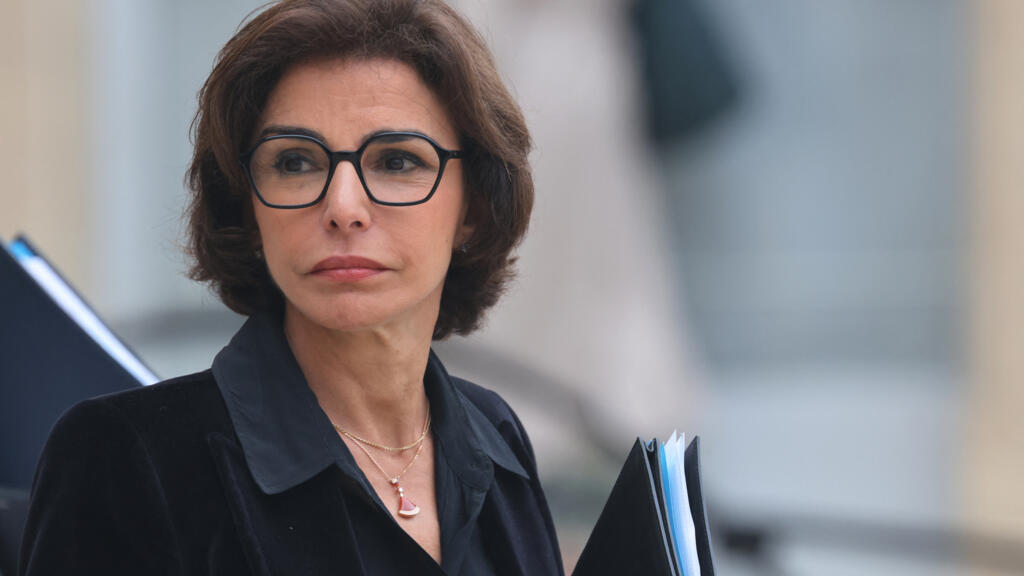
Rachida Dati, a former French culture and justice minister, goes on trial in Paris on Wednesday accused of corruption and influence peddling over €900,000 she received in consultancy fees from a company linked to Renault-Nissan while serving as an MEP.
The case centres on a contract signed in October 2009 between Dati and Carlos Ghosn, then head of the Renault-Nissan alliance. It provided for an annual payment of €300,000 before tax.
The National Financial Prosecutor's Office (PNF), which investigates major financial crime, says the contract was used to disguise lobbying work for Renault in the European Parliament – activity that was prohibited under her mandate.
Dati was charged with "passive corruption" and "benefiting from abuse of power" in 2021. She denies wrongdoing, saying she was paid for legal work that was compatible with her role as an MEP from 2009 to 2019.
Prison and political ban
Dati served as justice minister under Nicolas Sarkozy from 2007-2009 and culture minister under Emmanuel Macron from 2024-2026. She faces up to 10 years in prison for passive corruption and a €450,000 fine for receiving the alleged proceeds.
She also faces up to five years of political ineligibility, putting her position as mayor of Paris's seventh arrondissement at stake.
The contract came to light in 2019 during a search of Renault's headquarters following Ghosn's arrest in Japan in a separate case.
Prosecutors have questioned how much legal work Dati actually carried out, pointing to the "singularly limited" amount of evidence found by investigators given the length of the contract and the level of her pay.
Dati says she worked for Renault on international legal matters involving Morocco, Algeria, Turkey and Iran. She has also said Ghosn did not want to keep the notes she sent him, which would explain why few documents remain.
Lobbying allegations
Prosecutors have also cited three parliamentary questions linked to the car industry and positions favourable to Renault. A note Dati sent to Ghosn at the end of her contract is presented as evidence of wider activity on behalf of the company.
Her lawyers say she worked exclusively as a lawyer for the Dutch company used to manage the Renault-Nissan alliance and that the allegation of influence peddling in the European Parliament is an "artificial intellectual construction" by prosecutors.
Ghosn, who is living in Lebanon, is not expected to attend the hearing. He has asked for the trial to be postponed, saying he was not properly summoned, but says he is willing to appear by video link.
The trial comes just before the High Council for the Judiciary, the body overseeing judges, is due to consider Dati's request to return to the judiciary after resigning as culture minister in February to focus on running for mayor of Paris.
She left the magistracy more than 20 years ago and applied for reinstatement shortly before her trial. The council is expected to examine her case in late September or early October.
Judicial independence concerns
Last week, a collective of lawyers and magistrates wrote an open letter to the High Council's chairman raising concerns that the "prospect of Rachida Dati's reinstatement" while she is being tried for alleged corruption and influence peddling could undermine public confidence in the judicial system.
While acknowledging that she is presumed innocent until proven otherwise, the collective said Dati's name appears in eight ongoing cases or proceedings.
Criminal lawyer Jérôme Karsenti, one of the signatories, told RFI the council's timing was "shocking". He also expressed concern over Justice Minister Gérald Darmanin, who is to submit Dati's request for reinstatement to the High Council.
"It's shocking because there is a clear and unambiguous intention to send a message to the judges... who are about to try Rachida Dati, even though she has been brought before the court on extremely serious charges of corruption and influence-peddling," Karsenti said.
The message, Karsenti said, was: "Be careful, you are about to judge someone who will soon be one of your own."
"In our view, this is extremely worrying in terms of the relationship between politicians and judges, and more broadly, with the rule of law."
The trial runs until 28 September.