
Get all your news in one place.
100’s of premium titles.
One app.
Start reading
Woman & Home
Woman & Home
Lifestyle
Grace Walsh

Forget squats and clamshells - the hip airplane was the exercise that boosted my mobility, strength, and balance

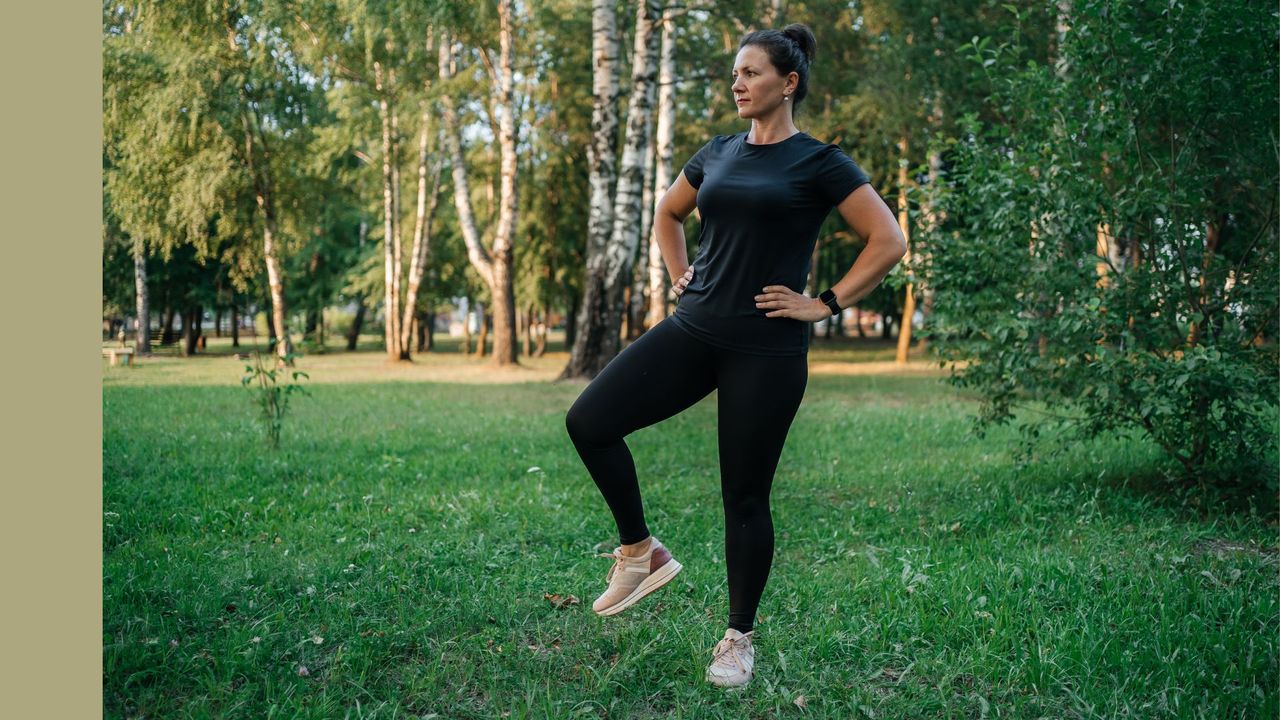
Woman doing hip airplane exercise in activewear standing in green park in the sunshine.

Our hips make up the foundation of the lower body, supporting the glutes, legs, and core in all they do. However, they are often among the most neglected areas in typical strength training and Pilates workouts.

As a runner and regular gym-goer, leg and glute exercises make up most of my workout. It was only when I started doing more hip-strengthening movements that I felt the difference in comfort, mobility, and performance both in and out of my activewear.

Any mobility exercise is good, but one of the most underrated exercises I've done recently is the hip airplane. This exercise can be done with or without weights and does require good balance already, but otherwise it's beginner-friendly. "I recommend doing them two to three times a week, performing around two to three sets of eight to 15 repetitions on each leg as a starting point," says Dr Adam Fujita, a doctor of physiotherapy and endurance athlete who works with Yoga-Go as a physical therapist. "They also work well as part of a warm-up or cool-down routine."

What is a hip airplane exercise?

The hip airplane is a single-leg exercise that involves hinging forward at the hip and then gently rotating from side to side. You can do it as a bodyweight exercise or with dumbbells, depending on your current balance and mobility level.

"They are a great way to improve hip stability and mobility because they train the hip to control rotation while stabilising the pelvis on a single leg," says Dr Fujita.

"Beginners who want to try this exercise but aren't confident with their balance can use a wall or other support. Moving slowly and staying controlled is key, while focusing on maintaining balance and proper alignment throughout the exercise," he says.

How to do the hip airplane

  • Stand with your feet shoulder-width apart, touching a box or wall for support if needed.
  • Extend one leg backwards, pushing through your glute. Keep your hips square to the floor.
  • Soften your other knee, lower your hip and look towards the opposite arm to the raised leg.
  • Rotate up and open your hips towards the side of the raised leg until you look parallel to the wall opposite.
  • Make sure your supporting knee doesn't cave inwards.

Expert tip: "The movement should come from the hip joint rather than the lower back, and keeping your torso steady helps ensure the exercise targets the hip stabilising muscles instead of relying on momentum," he says.

What are hip airplane good for?

1. Building hip stability

“This movement helps activate key stabilising muscles, such as the gluteus medius and minimus, as well as the deep hip rotators, which help keep the pelvis level and maintain proper alignment of the hips, knee, and ankle during the exercise," says Dr Fujita.

You may have heard the words 'stability' and 'mobility' bandied around a lot in discussions about living healthy for longer (longevity) - but it's for good reason. The hips are the anchor for the lower body and help us move in daily life (i.e. climbing stairs, getting up from a chair, and walking)

When the hip joints are strong and stable, it also helps improve our balance, preventing falls, and lower back and knee issues that can limit everyday function. Research from The Johns Hopkins School of Medicine shows that one in four adults over 60 has significant hip pain, which naturally means more time spent sedentary in later life.

2. Boosting strength and balance together

The hip airplane exercise combines strength, balance, and active hip rotation in one exercise. "By practising controlled internal and external hip rotation while maintaining balance, hip airplanes improve functional mobility and joint control, which can then enhance athletic performance and, more importantly, help reduce the risk of lower-body injuries."

When I started doing the exercise alongside my regular glute and quadricep exercises, I experienced a noticeable improvement in my running efficiency and progress in the gym, especially with exercises like deep squats.

3. Efficiency

Other hip mobility exercises and stretches for tight hips shouldn't be underestimated, but when you're short on time (like I am), it's worth finding ones that offer the most bang for your buck. An exercise like hip airplanes certainly does this as it helps to improve mobility, stability, and strength all at the same time.

Can you do hip airplane with weights?

Yes, once you've mastered the hip airplane as a bodyweight exercise, you can "definitely" add weights to your exercise, says Dr Fujita. "Introducing resistance shifts the focus more towards strength training while still challenging hip stability and control," he explains.

“However, hip airplane is already considered an advanced movement, so adding weight is best suited to experienced lifters, athletes, or individuals who have already mastered the bodyweight version with good balance, control, and form."

Dr Fujita suggests using light dumbbells initially to build stability and strength under added pressure, and to hold onto something for support if needed.

Sign up to read this article
Read news from 100’s of titles, curated specifically for you.
Already a member? Sign in here
Related Stories
Top stories on inkl right now
One subscription that gives you access to news from hundreds of sites
Already a member? Sign in here
Our Picks
Fourteen days free
Download the app
One app. One membership.
100+ trusted global sources.







