Get all your news in one place.
100’s of premium titles.
One app.
Start reading
Tom’s Guide
Tom’s Guide
Technology
Dan Bracaglia

Forget smart glasses, I saw the future of smart contact lenses — and they're coming sooner than you think

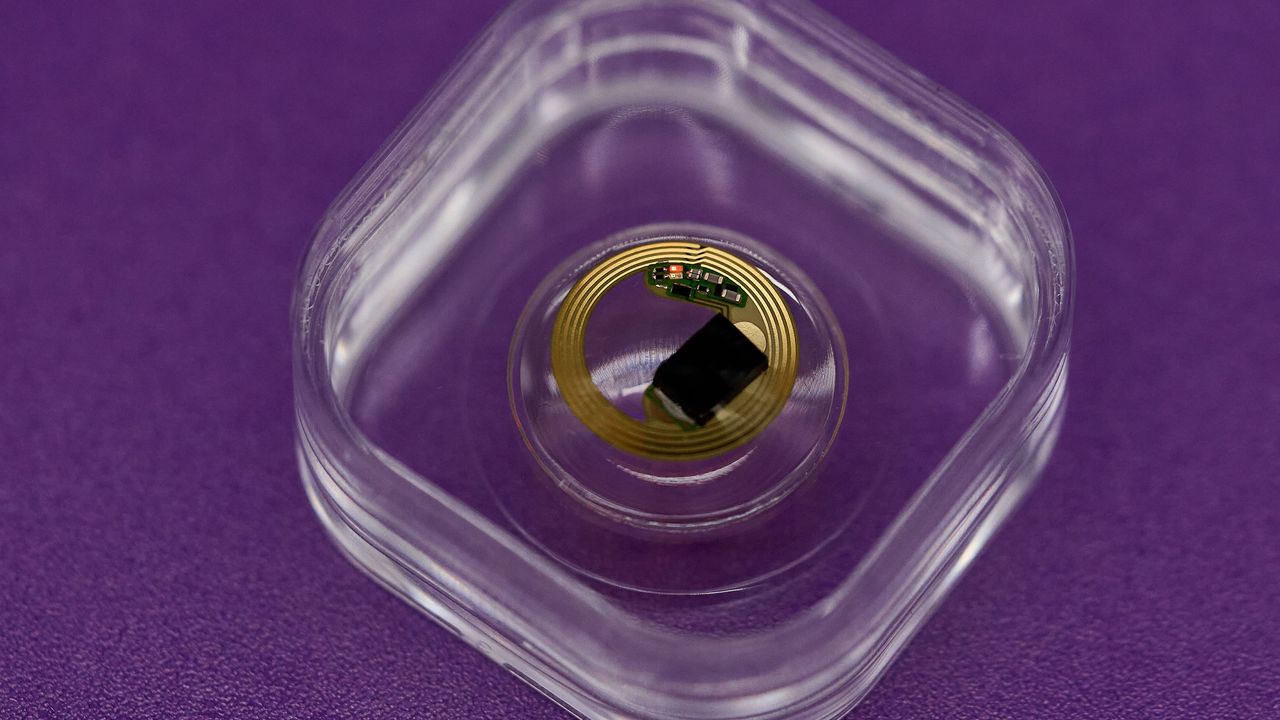
Prototypes of the Xpanceo smart contact lenses.

Have you ever wanted to play Tetris directly on your eyeball? To be honest, the thought never occurred to me. But after seeing a demo of such a usecase via Xpanceo’s next-gen smart contact lenses at Mobile World Congress 2026, Europe’s biggest tech show, I can’t get the thought out of my mind.

Xpanceo is one of the most notable players in the smart contact lens space — I spoke to the founders last year at length about the future of wearable tech — and the brand isn’t just pursuing one concept or application for the technology, but a whole array of them.
From a consumer point of view, the Xpanceo's device that’s most likely to come to market in the next few years combines on-lens displays with 24/7 blood glucose monitoring, making it both a smart and wellness device in one. Don’t worry, in-eye comfort is also a top priority.

(Image credit: Xpanceo)

But how will it be powered? For now, Xpanceo is relying on a companion over-the-ear device to provide power via wireless charging to the smart contact lenses. However, a teeny-tiny battery built into the lenses themself will ensure that users can still utilize the basic features, even when companion power isn’t within range.

The companion device will also handle all of the computational processing needed to operate the smart contact lenses.

While a bulky accessory worn along the side of your face to power Xpanceo’s smart contact lenses isn’t ideal, brand reps assure me that the ultimate goal is to make the lenses a stand-alone device that can be worn without much thought (or additional tech), just like normal contacts.

Harvesting a user’s body heat to power smart contact lenses is one possibility; however, such technology is still likely several years away. Solar-powered contact lenses are another option.

In addition to the over-ear power accessory, Xpanceo is also working on a companion power accessory that takes the form of a helmet, which could make it an appealing option for everyone from extreme sports athletes to astronauts (Xpanceo has already partnered with one space agency).

(Image credit: Xpanceo)

In addition to consumer-oriented smart contact lenses, Xpanceo is also exploring a range of medical-specific use cases, including lenses that can help detect signs of glaucoma early, which could greatly increase a patient’s chances of preserving their vision.

Another concept under active development is a set of smart contact lenses that monitor drug levels in a patient’s system with a level of precision not currently available. This could help, say, cancer doctors, ensure that they're providing just the right amount of treatment to help a patient’s condition without causing unnecessary harm.

Ultimately, with the promise of a working consumer-oriented prototype set for 2027, Xpanceo's smart contact lenses could be in your eyeball before you know it. Which begs the question: Do you really even need a pair of smart glasses?


Follow Tom's Guide on Google News and add us as a preferred source to get our up-to-date news, analysis, and reviews in your feeds.


More from Tom's Guide

Sign up to read this article
Read news from 100’s of titles, curated specifically for you.
Already a member? Sign in here
Related Stories
Top stories on inkl right now
One subscription that gives you access to news from hundreds of sites
Already a member? Sign in here
Our Picks
Fourteen days free
Download the app
One app. One membership.
100+ trusted global sources.