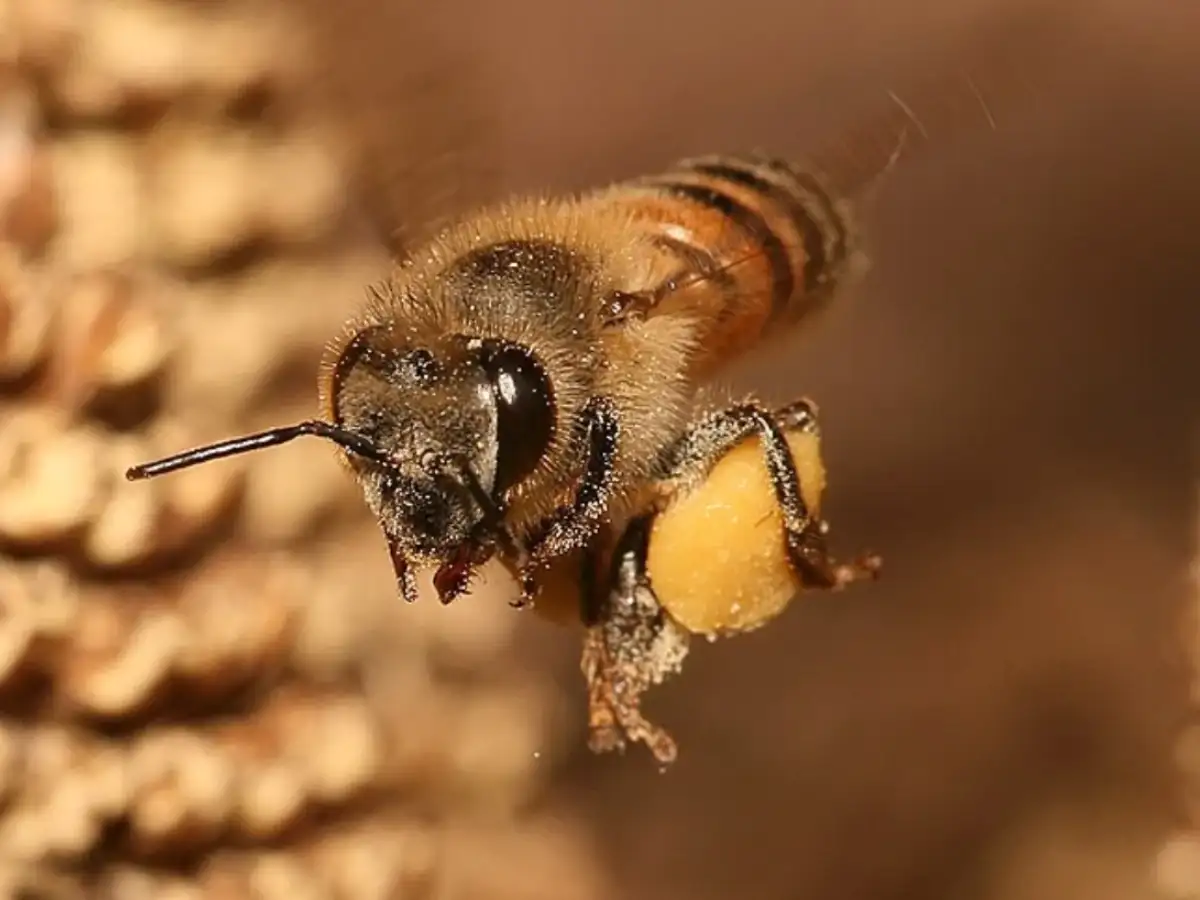
For decades, most people assumed wild honeybees in Europe no longer existed. That assumption has now been turned on its head, and the finding is concerning. A 2026 study published in Conservation Science and Practice by researchers Patrick Kohl and Benjamin Rutschmann shows that free-living colonies of the western honeybee still exist in the wild, but are quickly disappearing. Models used in the study suggest that if beekeeping stops providing new swarms to the wild population, wild populations across Europe could drop by some 56 percent within 10 years. That modeled decline is steep enough that the wild honeybee has now been reclassified as endangered within the European Union on the IUCN Red List, the first time this has happened, according to the Honey Bee Watch coalition that led the reassessment.
Why this news came as a surprise

Honeybees are not a single, uniform group. There are managed bee colonies living in artificial wooden hives under the supervision of beekeepers, and there are wild colonies which live on their own in natural nests like tree cavities, cliffs, or abandoned buildings without any human intervention at all. They are both from the same species, Apis mellifera, but their lives have taken quite different turns. However, for many years, wild colonies remained largely unstudied. It was taken as a fact that they had become extinct due to habitat loss and disease. As there was very little information about these bees available, in 2014, the IUCN classified wild honeybees as data deficient. That began changing when a citizen science collaborative known as Honey Bee Watch, which was created about 2020, began to document colonies of honeybees that are free-living throughout the continent, including in Ireland, the UK, France, Germany, Poland, Italy, and Serbia, according to the coalition's own coordinator writing for The Conversation.