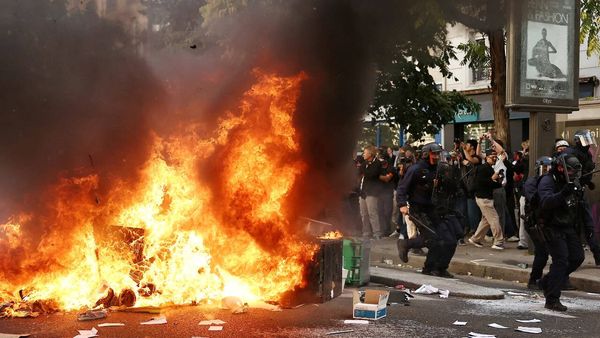
According to UN Secretary-General António Guterres, the earth has entered the era of global boiling. Scorching heatwaves, devastating floods and erratic weather patterns are stark reminders for an urgent need to address the triple-planetary crisis of biodiversity loss, climate change and pollution.
The world is not just grappling with climate change, but also with another silent killer — air pollution. Global health statistics reveal a disturbing scenario with lung cancer claiming 10 million deaths worldwide in 2020, as stated in the World Health Organization (WHO) factsheet published in 2023. This could soar by another 3.2 million by 2050 according to a report, ‘Mapping of global, regional and national incidence, mortality and mortality-to-incidence ratio of lung cancer in 2020 and 2050’, by the Indian National Institute of Health. South Asia, home to two billion people, is also home to nine of the world’s 10 most polluted cities, including Delhi, where the air quality continues to pose a perilous long-term threat putting its inhabitants at risk each day. While policy measures have led to statistical improvements in the Air Quality Index (AQI), the health risks associated with Delhi’s polluted air persist. Delhi is knocked to its knees every winter facing hazardous levels of air pollution.
Lung cancer, cardiovascular disorders, respiratory ailments, and mental health issues continue to destroy lives. Delhi’s air, a lethal mix of SO2 (sulphur dioxide) and NOX (nitrogen oxides), along with high particulate matter concentrations (2.5 or even 10µg/m3), carbon monoxide and ozone, deprive over 30 million residents of their human right to breathe clean air.