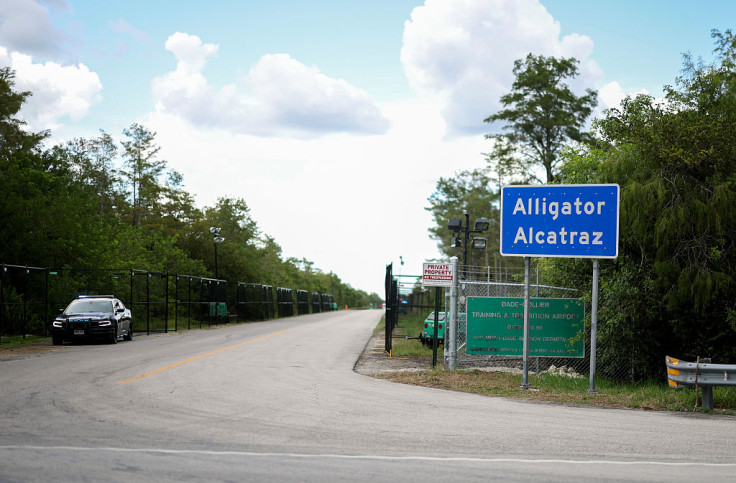
Florida is seeking another $250 million to pay immigration-related bills, including debts to companies that built and serviced Alligator Alcatraz, turning the controversial Everglades detention center into an expensive political aftershock for taxpayers.
The state's Division of Emergency Management has requested the additional money as it faces a growing stack of bills linked to Gov. Ron DeSantis' aggressive push to help carry out President Donald Trump's deportation agenda. The request comes after the state emptied and closed Alligator Alcatraz, the makeshift immigration detention center built at an isolated Everglades airstrip.

In other words, Florida is now asking for more money to pay for a detention facility that is no longer operating.
The $250 million request is not solely tied to Alligator Alcatraz, but the facility is at the center of the state's mounting immigration expenditures. Contractors were hired to rapidly transform the airstrip into a detention site and provide the logistical, operational and support services required to keep it running. Even after detainees were transferred out, those companies remained entitled to payment under state contracts.
That is the core political problem for DeSantis' administration: closing the site did not close the books.
Florida's Division of Emergency Management, or FDEM, has become the state agency most closely associated with the governor's immigration campaign. The division traditionally coordinates disaster response, deploying resources after hurricanes, floods, tornadoes and other emergencies. But DeSantis used an emergency declaration on immigration, first issued in January 2023 and repeatedly extended, to give the agency access to state emergency funds for immigration operations.
The shift has been costly. State records reviewed by WLRN and Florida Phoenix show that FDEM spent $890 million during the fiscal year ending June 30. About $564 million, or 63%, went to immigration enforcement, more than the agency spent on all other emergency missions combined.
Those figures make the new $250 million request less of a routine budget item than a warning that the full price of Florida's immigration experiment is still emerging.
FDEM's immigration-related contracts are valued at roughly $1.01 billion, according to the reporting. The agency had less than $7 million left in the Emergency Preparedness and Response Fund as of July, while it still owed vendors at least half a billion dollars. The contracts include more than the detention center itself, covering services related to the broader state immigration enforcement operation. But Alligator Alcatraz became the most visible, and politically potent, example of how quickly the state was spending.
The site was built and opened with extraordinary speed in the summer of 2025. It drew immediate condemnation from immigrant-rights advocates, environmental groups and tribal leaders, who questioned both the treatment of detainees and the decision to build in a sensitive Everglades area. Litigation over environmental review requirements followed.
Florida officials had argued that the federal government would reimburse the state. But the promised money has not arrived.
Federal officials initially approved a $608.4 million detention-support grant for Florida, yet the funding has been tied up in legal and administrative uncertainty. According to WUSF, Justice Department lawyers said no final FEMA funding decision had been made, despite the earlier grant notice.
That leaves Florida taxpayers in a precarious position. The state moved quickly to construct a high-profile detention center, promised its costs would be covered by Washington, shut it down months later, and now needs more state money to pay the companies left behind.
The new request will likely reignite an argument that has followed Alligator Alcatraz from the start: whether a fund created to respond to hurricanes and natural disasters should be used to finance immigration enforcement, particularly when the federal reimbursement Florida expected remains uncertain.