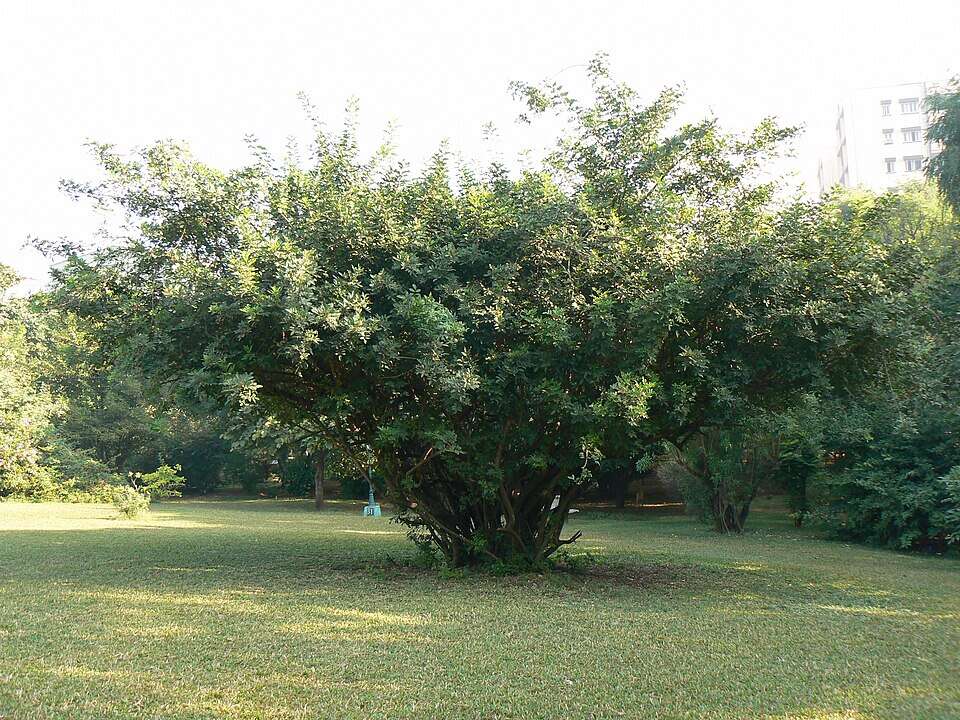
The Brazilian pepper tree, once planted as an ornamental in Florida, is now considered one of the region’s most invasive species. The Brazilian pepper tree is a shrub that originally comes from South America. It was planted as an ornamental tree in the region more than a hundred years ago; however, due to its bright red fruit and green foliage, it soon became widespread in the natural environment.
Get breaking news anytime, anywhere. Download the TOI app now!

Today, thousands of acres of Florida wetlands, forests, and coastal areas are overrun by dense Brazilian pepper trees (Schinus terebinthifolius) that block sunlight and crowd out other plant species.
According to a study published in the journal Heredity in 2007, available through PubMed , the Brazilian pepper tree was introduced into Florida twice as an ornamental from genetically different populations of its native range. Researchers found that the species expanded through a combination of natural spread by animals and human-assisted movement.
The paper further shows that the east and west Florida introductions came from genetically distinct source populations in South America, and that the two lineages later hybridized extensively after they arrived. Using chloroplast and microsatellite markers, the authors found a strong southeast-to-northwest genetic cline and short-range spatial autocorrelation, patterns they say fit diffusive spread from an advancing front, likely aided by birds and small mammals.
Brazilian pepper tree: from landscape plant to invader
Brazilian pepper tree was introduced in Florida at the end of the 19th century, during the period when more and more exotic plants were brought to North America to be used in landscaping. One reason the Brazilian pepper tree was introduced was its decorative appearance, including red clusters of berries that appear in the cold season and brighten the landscape.
Unfortunately for local ecosystems, birds, including both native and migratory species, feed on the berries and distribute the seeds throughout the area. Even small animals may help with the process. Once its seeds escaped gardens, the plant spread through disturbed areas, forests and wetlands, taking advantage of its tolerance for varied conditions and its adaptation to Florida’s hot, humid climate.
According to the US Department of Agriculture National Invasive Species Information Center, the Brazilian pepper tree is a significant invasive species in the southeast region of the United States.
Effects of the plant on the ecosystems
The effects of this invasive species go beyond simply taking up space. The thick covering may deprive native species of sufficient sunlight, thus limiting the number of plants that can grow in the ecosystem. This is a serious problem in Florida because many ecosystems depend on plant communities adapted to local conditions. If the Brazilian pepper tree takes control over such habitats, it may change the structure of the habitat as well as limit food sources for native wildlife that depends on those plants.
In addition, the problem is very acute in coastal and wetland environments, which include the Florida Everglades. These types of ecosystems contain numerous native species and face a lot of threats, including invasive species.
The Florida Fish and Wildlife Conservation Commission (FWC) recognizes the Brazilian pepper tree as one of Florida’s most widespread invasive plants.
Spread was aided by birds in Florida
The Brazilian pepper tree illustrates an important ecological principle: traits that help native plants survive can also help introduced species spread. Native plants rely on birds dispersing their seeds by consuming the fruits. However, if the non-native plant creates an abundance of fruits without many controls, the dispersal will occur much faster. Reportedly, genetic analysis showed short-range spread from initial population sites as well as long-range colonization. Scientists have proposed that birds and small mammals were the agents of short-range spread, while humans were responsible for long-range spread.
The paper stated that after removal, the Brazilian pepper tree could easily recolonize if other populations remained intact.
The elimination of the invasive plant is a challenging process
The Brazilian pepper tree grows quickly and can produce large numbers of seeds. Simply cutting mature trees is often not enough since they can regrow from roots. Invasive species management usually includes mechanical removal, herbicides, and monitoring. Researchers are exploring biological control methods, such as specific insects and pathogens. However, efforts to find means to control this plant without affecting native ecosystems are continuing. Nonetheless, experts underline that the best method of dealing with invasive species is preventing their spread.
The Brazilian pepper tree case serves as an example of how introducing plants from another region can lead to unforeseen results. A plant that seems harmless in a garden can behave very differently when introduced into an ecosystem without natural enemies to keep it in check.
An attempt to make Florida more colorful by introducing an exotic plant became one of the state’s biggest ecological problems.