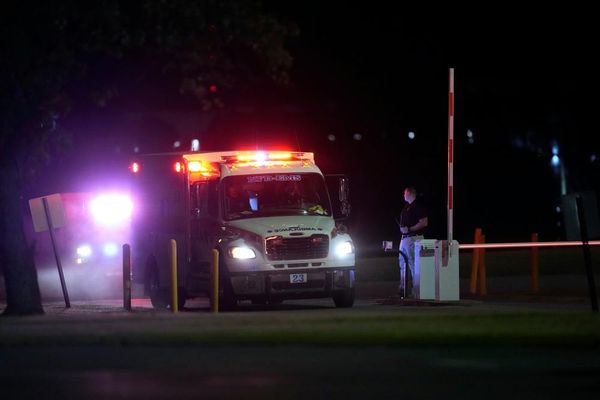
Thousands of South Korean students queued outside school gates on Thursday morning as the country began its annual college entrance exam, known as the suneung or CSAT.
The test, administered once a year by the Korea Institute for Curriculum and Evaluation, began at testing sites across the country in the morning and is scheduled to finish late in the afternoon.
This year 554,174 candidates were registered to sit the examination at 1,310 centres nationwide, the highest number in seven years. According to Yonhap, the number of test-takers is up in part because most people born in 2007, the year of the auspicious Golden Pig that saw an unusually high birth rate, are now in their third year of high school.
For most students, the exam started at 8.40am and ended at 5.40pm. Blind students with severe visual impairments are given 1.7 times the standard testing duration; with the additional foreign-language section, the exam can finish as late as 9.40pm, nearly 13 hours after it began.
There is no dinner break and the exam continues straight through, reported the BBC.
Depending on their subject choices, students answer roughly 200 questions across Korean, mathematics, English, social or natural sciences, an additional foreign language, and Hanja (classical Chinese characters used in Korean).

The sheer scale of the event reflects how deeply embedded the exam is in South Korea’s social fabric. It is not simply an academic hurdle: for many, it represents a gateway to university admission, future job prospects, and even wider social mobility.
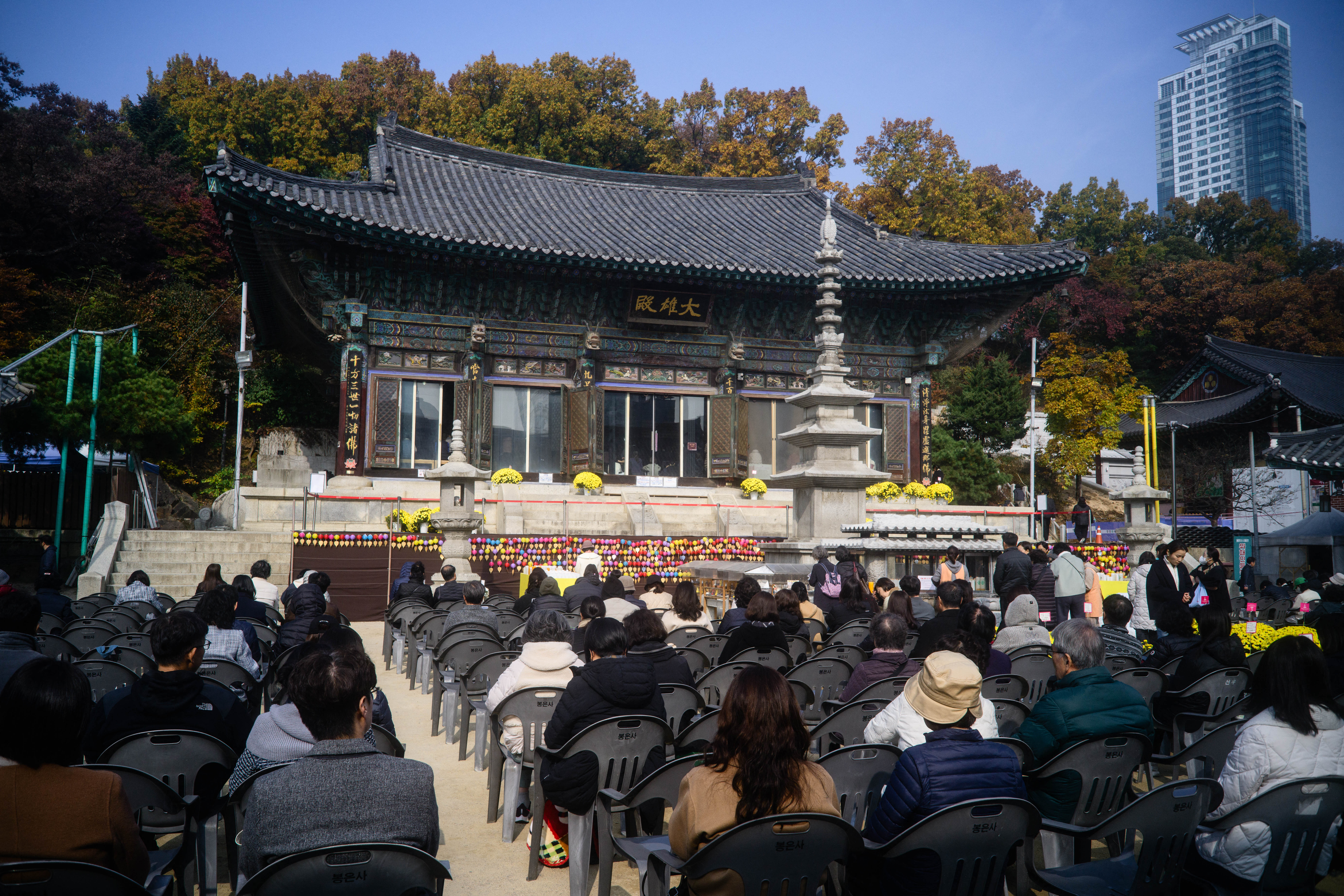
On the eve of the exam churches, temples and neighbourhoods were filled with parents and relatives offering prayers and luck-bringing gifts like sticky rice cakes, rituals that have become a visible part of the lead-up to the day.
Many students deliberately avoid eating miyeok-guk (seaweed soup) for lunch, a dish whose slippery strands are believed to make a student “slip” on the exam.
The scale of the exam is wide enough that the state gets involved in ensuring the day goes as smoothly as possible for students. According to the Korea JoongAng Daily, 10,475 police officers and 2,238 patrol cars have been mobilised nationwide to manage traffic and provide emergency escorts for students who might otherwise arrive late.
Many state institutions and private employers adjust working hours to ease morning commutes for students, and cities re-route heavy vehicles and postpone noisy activities.
Stock markets, which are typically open from 9am until 3.30 pm, opened one hour later to ease morning rush-hour traffic and will close one hour later.
One of the most striking moments occurs during the English listening section: for 35 minutes, aircraft are barred from landing or taking off, drones are grounded, and even construction sites pause so that every test-taker may hear the audio clearly.
A total of 140 flights, including 75 international services, were rescheduled between 1:05pm and 1.40pm to avoid distractions, according to AFP.
A growing concern among educators and health professionals is the rising use of prescription stimulants as a perceived “shortcut” to academic performance. Data from the Ministry of Food and Drug Safety show that prescriptions for ADHD medications in South Korea climbed from 37.71 million in 2020 to 90.2 million in 2024, a 140 per cent increase, with the largest volumes concentrated in high-pressure education districts such as Gangnam District in Seoul.
Lim Myung-ho, a psychology professor at Dankook University, told The Korea Times: “There is no evidence in Korean or international research that ADHD medication improves learning in neurotypical children.”
One private high-school teacher in Seoul added: “Because the medication makes kids appear calmer and more focused, it has spread rapidly among parents desperate to help their children succeed in exams.”