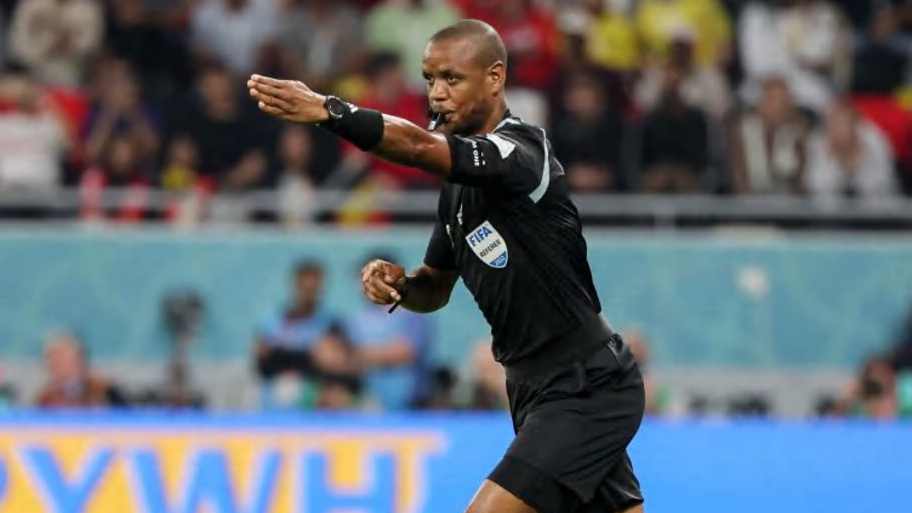
A new rule intended to combat deliberate timewasting and game disruption is expected to be approved ahead of the 2026 World Cup this summer.
It is proposed that players who are treated for an injury and leave the pitch should remain out of action for a full minute before being allowed back on. BBC Sport suggest the International Football Association Board will give the go ahead for the measure to be added to the laws of the game when the annual general meeting is held on Saturday.

The idea is that enforcing a significant absence from the game will stop players from feigning or exaggerating injury to waste time or disrupt an opponent’s momentum.
Players are already made to leave the pitch in the event of medical treatment. However, that does not always dissuade forcing a break for one team’s gain over the other and, up to now, individual competitions have been free to set their own regulations, with a 30-second absence from the pitch enforced when players receive medical treatment in the Premier League. This takes it further.
However, one thing the expected new rule won’t address is a ‘tactical timeout’ during matches, triggered when goalkeepers—understandably immune from having to leave the pitch—request treatment. With matches unable to continue while goalkeepers are assessed by medical staff, it is a poorly guarded secret that some exploit the situation for the rest of the team to receive more detailed instructions from coaches than it is possible to give while a game is ongoing.
Whether that will be a particular issue at this year’s World Cup is not clear, given that FIFA’s addition of enforced three-minute hydration breaks midway through each half will allow coaches close contact time with players at defined intervals in-game anyway.
Other exceptions to the one-minute rule include if there has been a yellow or red card shown to an offending player—in other words it is accepted that injury is not being feigned to stop the game if punishment has been dished out for a foul on them.
Up from 30 seconds in the Premier League, FIFA trialled a two-minute delay to re-entering the game at the most recent Arab Cup in December, and one minute has been put forward as a compromise.
World Cup Countdowns to Speed Up Play
The average ball in-play time at the 2022 World Cup, when FIFA encouraged officials to add significantly more stoppage time at the end of each half, was still just under 60 minutes. In the Premier League in 2022–23 it was only 54 minutes and 49 seconds, up to 58 minutes and 11 seconds during 2023–24. It means fans paying to watch a 90-minute event are being hugely shortchanged.
As such, soccer authorities are also looking other ways to stop games being slowed down.
At the World Cup this year, that will look like five-second countdowns for throw ins and goal kicks, stopping players from delaying restarting play for an unreasonable amount of time, ESPN reports.
Should a team be deemed guilty of deliberate timewasting in such a situation, control of the throw in would be reversed, while goal kicks would be turned into corners.
Also under consideration is a way to discourage teams from timewasting via substitutions. As it stands, players are encouraged to leave the pitch via the nearest touchline when being replaced, but in a new proposal there would be a 10-second time limit placed on them to get off the playing area. Breaching that would result in the game resuming without the replacement player on the pitch—and therefore the team at a numerical disadvantage—allowed to enter the game for at least a minute.
READ THE LATEST WORLD CUP NEWS, PREVIEWS & ANALYSIS HERE
- Road to 2026 World Cup: Mexico’s Four Best Players of the Week—Ranked
- Glaring Omission From Mexico’s February Roster Hints at Major World Cup Decision
- FIFA President Learns Official Verdict on Investigation Into Donald Trump Ties
- Canada’s World Cup Hopes Rocked After Alphonso Davies Injury Scare
This article was originally published on www.si.com as FIFA ‘Considering’ Huge Rule Changes Before 2026 World Cup.