
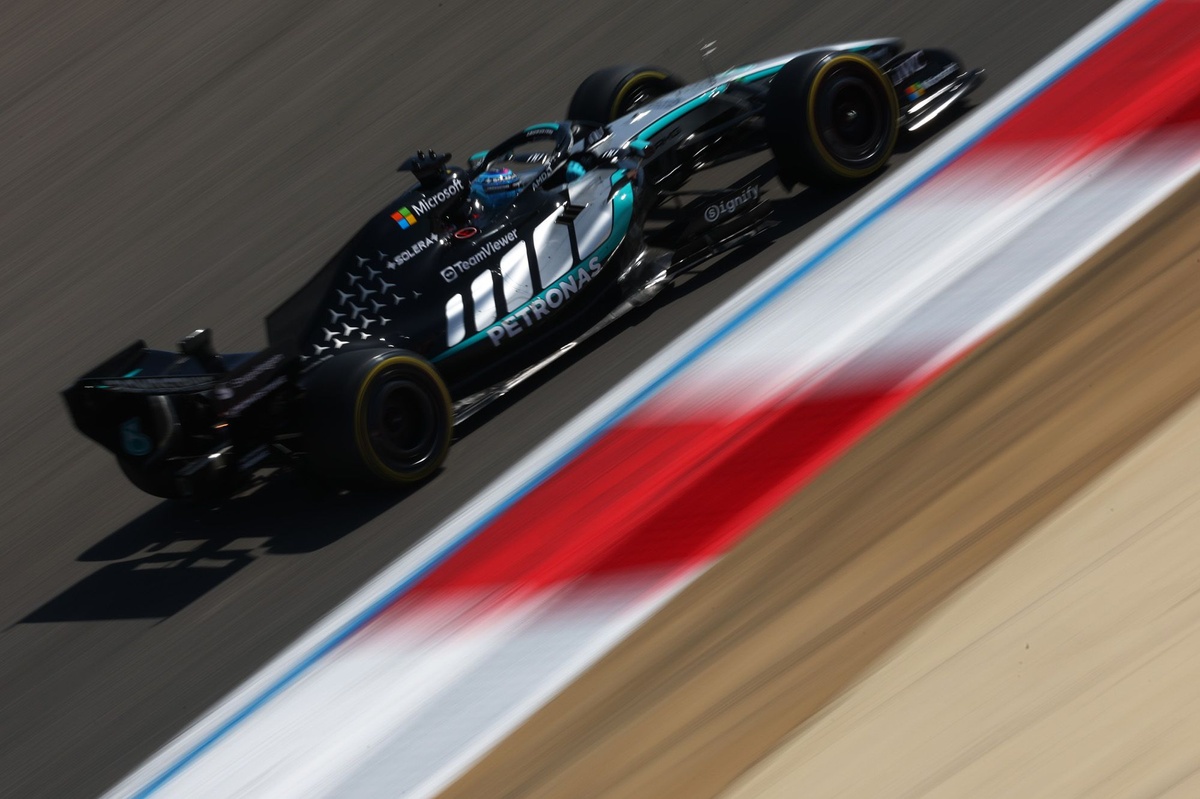
In the build-up to the new Formula 1 season, alongside energy management, much of the discussion has centred on two words: compression ratio. Put simply, it is the ratio between the volume of the cylinder when the piston is at the bottom of its stroke and the volume when the piston is at the top. To make the 2026 engine formula more accessible to newcomers and easier to work with fully sustainable fuels, the limit was reduced from 18:1 to 16:1.
The issue became political when competitors caught wind of the fact that Mercedes was able to comply with the 16:1 limit during static tests at ambient temperature, but could achieve a higher ratio when running. This is potentially linked to material expansion in the piston and connecting rod, although it should be noted that the reality today is far more complex than simply the material itself, as those components are often made up of numerous layers using advanced 3D-printing techniques.