Get all your news in one place.
100's of premium titles.
One app.
Start reading
The Conversation
The Conversation
Peter Matanle, Senior Lecturer in Japanese Studies, University of Sheffield

Fewer people doesn’t always mean better outcomes for nature – just look at Japan

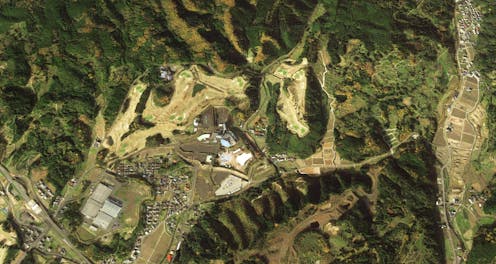
Satellite photo of rural Saga prefecture, Japan, showing farmland disuse, consolidation and intensification and urban development. Google Earth Pro, CC BY-NC-ND

Since 1970, 73% of global wildlife has been lost, while the world’s population has doubled to 8 billion. Research shows this isn’t a coincidence but that population growth is causing a catastrophic decline in biodiversity.

Yet a turning point in human history is underway. According to UN projections, the number of people in 85 countries will be shrinking by 2050, mostly in Europe and Asia. By 2100, the human population is on course for global decline. Some say this will be good for the environment.
Sign up to read this article
Read news from 100's of titles, curated specifically for you.
Already a member? Sign in here
Related Stories
Top stories on inkl right now
One subscription that gives you access to news from hundreds of sites
Already a member? Sign in here
Our Picks
Fourteen days free
Download the app
One app. One membership.
100+ trusted global sources.