
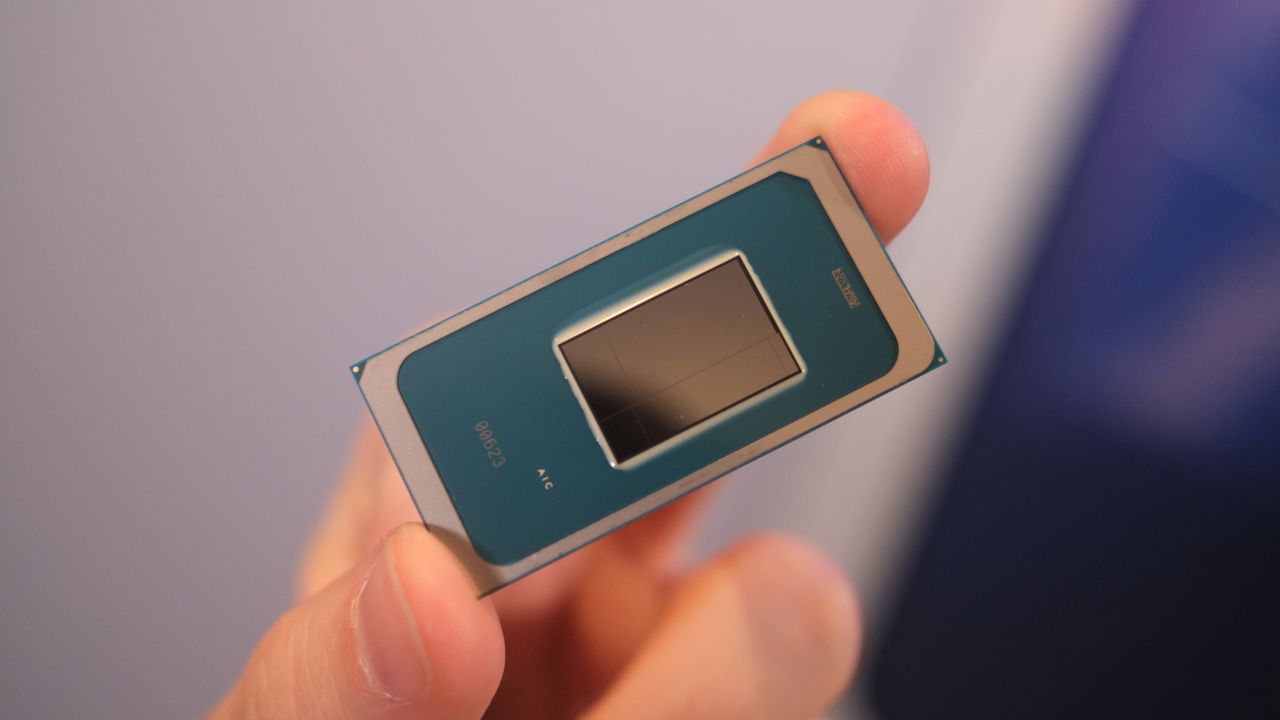
The wheel never stops turning. If you're in big tech, the moment you launch a big new product or device, it's immediately time to swap your focus onto its successor, sometimes before you even get real feedback on what was good or bad about the first version.
In Intel's case, though, it sounds like the timeline is sometimes even more aggressive, with the design process for a new chip often starting before the prior chip is even publicly available.

In the case of its Core Ultra Series 2 (that's Lunar Lake, for those who know their stuff), this was exactly the scenario – before it was even on sale, Intel's engineers were tasked with coming up with how the Series 3 would improve on things.
The new codename was, as we all know by now, Panther Lake, and the brief from Intel's higher-ups was daunting. It was described to T3 by Shlomi Alkaley, a SOC Microarchitect who worked on both Lunar Lake and Panther Lake for Intel: "You’re already building the most power-efficient CPU and then you’re asked to build another one".
Intel focused on refining how its power consumption was handled, among a variety of other deeply technical changes, and now, in early 2026, we have Core Ultra Series 3, with some impressive leaps forward on efficiency and integrated graphics performance, but that didn't mean the engineering journey wasn't a little perilous.
Alkaley described the engineering and design process as a little like a balance sheet – when you want to make gains in one area, you generally have to accept that they'll bring shortcomings in another, whether that just means more power draw costing more energy, or another more complicated equation.
Progress means finding a balance that works for the outcomes needed, and much of that boils down to "feeding the beast", in his words – allowing the system-on-a-chip (SoC) to get the power it needs to perform. This is governed in no small part by algorithms that are a constant work in progress until the first device ships: "Until the last [device] will launch, we will keep honing the algorithms".
It was fascinating to learn about how one huge milestone in a new Intel chip's delivery is handled, too: the day the first prototype is actually switched on. Alkaley described a "big ceremony", with dozens of engineers gathered in war rooms around the world: "everybody’s sitting together waiting for the silicon to arrive".
When it does, the process of getting it to boot can often be a marathon of firmware updates and fixes, but in the case of the Series 3, things were apparently remarkably smooth: "for Panther Lake we managed to boot the first silicon within a day". Even if that just means that the engineers can be confident "it will not explode", says Alkaley, it's still perhaps the biggest milestone the chip can pass as it nears the point of getting slapped into laptops.
Now, of course, it's over to us – the wave of laptops with Intel Core Ultra Series 3 chips is about to start rolling in, and I'll be testing plenty. In fact, I've got my hands on one of the slickest right now, with the Asus ZenBook Duo 2026 in-house for review – keep your eyes peeled for my verdict pretty soon.