
Get all your news in one place.
100's of premium titles.
One app.
Start reading
TechRadar
TechRadar
Benedict Collins

Federal regulator to ban all Chinese labs from vetting US-bound devices over national security concerns – major supply chain shakeup will affect 75 percent of devices sold in the US

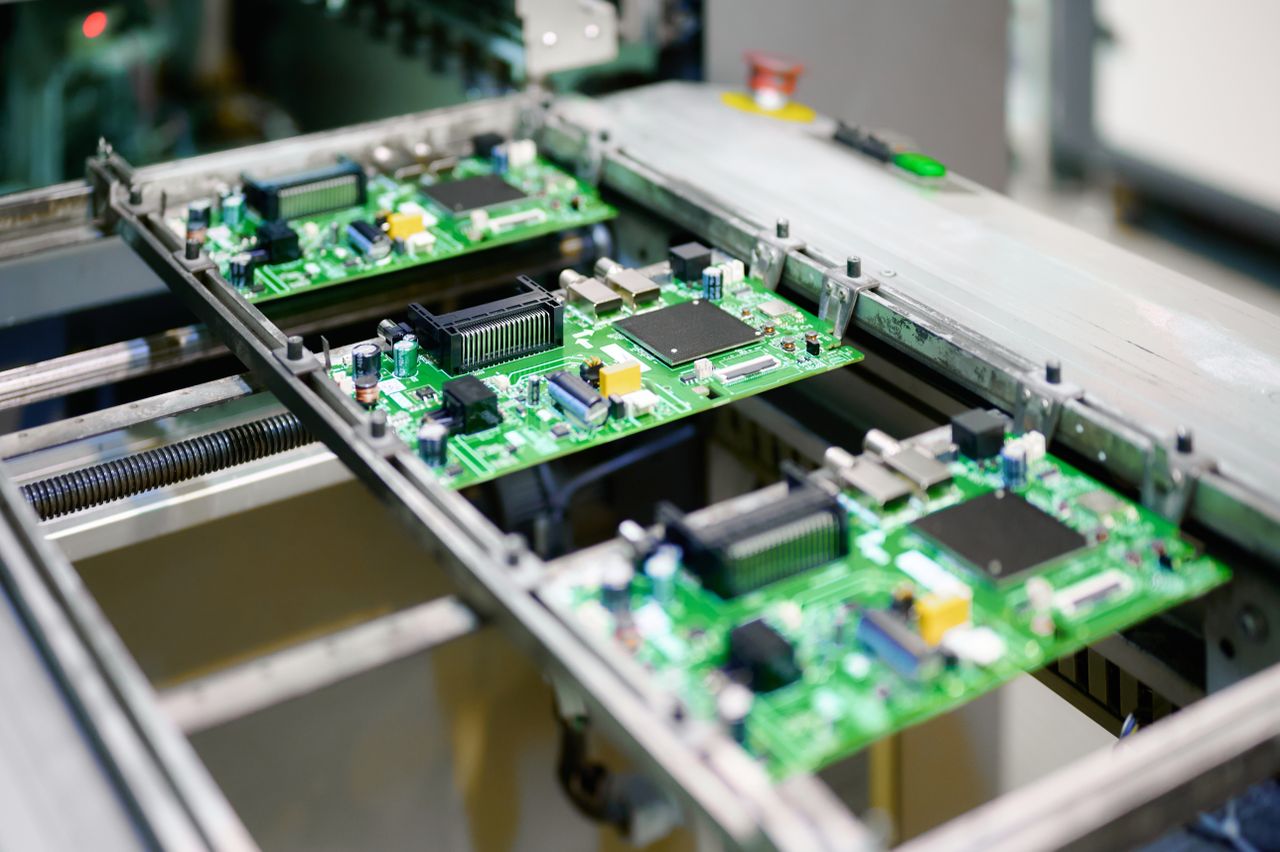
Electronic circuit boards moving along a conveyor system in a manufacturing facility for assembly and quality control.
  • FCC votes to ban Chinese and Hong Kong testing labs
  • 75% of US-bound devices are tested in China
  • The ban could seriously shake up the US electronics supply chain

The Federal Communications Commission (FCC) has voted in favor of banning Chinese labs from certifying devices bound for the US.

Any device that emits a radio frequency requires FCC approval before being sold in the US, and currently 75% of devices bound for the US are tested in labs in China.

Every lab in China and Hong Kong will lose its ability to certify products over fears China could compromise devices before they are shipped to the US.

China lab ban could shake up supply chain

The unanimous vote on April 30 2026 by the FCC extends a previous ban on 15 state-owned or government-affiliated Chinese labs to apply to every lab in China. This means that up to 75% of devices bound for the US will need to be tested elsewhere.

Many testing labs are located in China near manufacturing sites, making the logistics of transporting goods to testing laboratories far simpler. Of the FCC's 591 recognized testing labs, 126 are located in China.

Some of the labs operate as subsidiaries of Western firms, meaning that there is some capacity for relocating testing facilities outside of China, or using existing facilities in the US, Europe, and Taiwan. However, this will likely incur additional transportation costs that may be passed on to the consumer.

As Tom’s Hardware reports, FCC certification testing in China costs between $400 and $1,300, compared to $3,000 to $4,000 for testing in the US. FCC certification in Europe and Taiwan will also likely be more expensive than China, further increasing the cost of transportation.

While the vote is not final, and is subject to a public comment period expected to last 60 to 90 days, it raises big questions around how device manufacturers will change their supply chains to comply with the potential ban. There will, however, be a two-year grace period if the ban is passed, allowing manufacturers to adjust.

While there is certainly rationale in questioning the integrity of electronics testing labs in China, especially state-owned firms, China is a dominant manufacturing hub for US electronics. If there are national security concerns over Chinese testing facilities, there are national security concerns over Chinese manufacturing facilities.

FCC Chair Brendan Carr said the commission is considering a number of options “to secure our networks from these bad actors.”

Sign up to read this article
Read news from 100's of titles, curated specifically for you.
Already a member? Sign in here
Related Stories
Top stories on inkl right now
One subscription that gives you access to news from hundreds of sites
Already a member? Sign in here
Our Picks
Fourteen days free
Download the app
One app. One membership.
100+ trusted global sources.