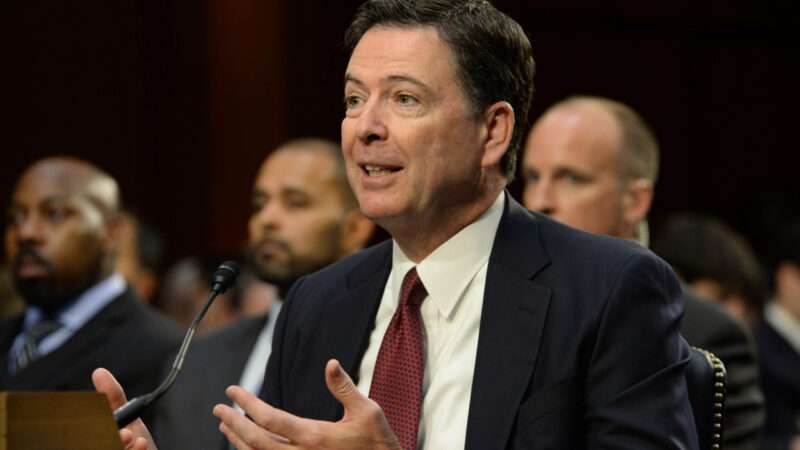
On July 5, 2016, FBI Director James Comey publicly explained why he did not think Hillary Clinton, Donald Trump's Democratic opponent in that year's presidential election, should be prosecuted for her "extremely careless" handling of "very sensitive, highly classified information" as secretary of state during the Obama administration. But four months later, just 11 days before the election, Comey informed Congress that the FBI had reopened its investigation of Clinton in light of recently discovered emails between her and her personal assistant. Although the new evidence did not change the FBI's assessment of Clinton's conduct, Comey did not report that outcome to Congress until November 6, two days before the election.
Comey took a lot of flak from Democrats, who thought he had recklessly undermined their nominee's prospects by revealing a renewed yet ultimately fruitless investigation so close to the election. He responded by encouraging his "good friend" Daniel Richman, a Columbia law school professor, to defend him in interviews with reporters, which helped generate stories that summarized Comey's perspective on the controversy. Sometimes Richman was quoted by name, and sometimes he provided information "on background." Richman's interactions with the press, it turns out, are at the center of the perjury and obstruction charges against Comey.