Get all your news in one place.
100's of premium titles.
One app.
Start reading
Medical Daily
Medical Daily
Dorothy Brooks

Federal Flu Shot Campaigns Halted as Children's Flu Deaths Reached 190 Last Season After a Record 297

Federal health agencies have stopped multimillion-dollar campaigns urging Americans to get vaccinated against flu and other respiratory viruses this fall, The Wall Street Journal reported, according to a KFF Health News summary of the report. The agencies have also scaled back informational materials sent to clinicians and pharmacies ahead of respiratory virus season. The change comes after two of the deadliest flu seasons for U.S. children since national tracking began.

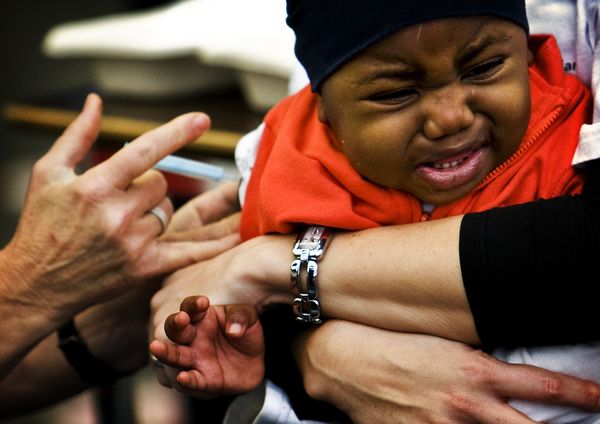
For parents, the practical question is simple. Fewer public reminders do not change how flu spreads or who gets seriously ill, but they can make it easier for a child's annual shot to slip past. Only about half of U.S. children were vaccinated against flu last season, and most children who died of flu were not vaccinated.

It is too early to know how severe the coming season will be. The concern is less about a forecast and more about whether families will hear clear guidance at the moment they usually make vaccine decisions.


Two Seasons of Heavy Losses for Children

Pediatric flu deaths have climbed in recent years. According to CDC figures presented to FDA vaccine advisers in June, 187 children died of flu in the 2022-23 season, 210 in 2023-24, and 297 in 2024-25, the highest count for any non-pandemic season since reporting began in 2004. The 2025-26 season had reached 190 pediatric deaths as of the American Academy of Pediatrics' latest flu recommendations, a toll the academy said continues to rise as delayed reports arrive.

The AAP described 2025-26 as another high-severity season for children. Historically, about 85% of children who died of flu were not vaccinated, the academy said.


A Quieter Federal Push, with Guidance Already Shifting

The campaign halt follows other changes. In February 2025, the CDC pulled its "Wild to Mild" flu vaccine campaign after an HHS review, NPR reported. The campaign had targeted groups at higher risk, especially pregnant women and children.

In January, the CDC moved children's flu vaccination from a routine recommendation to shared clinical decision-making between families and clinicians, a change the AAP opposes. A federal court in Massachusetts later suspended the revised schedule in a lawsuit brought by the AAP, Contemporary Pediatrics reported. The WSJ report also noted that President Trump signed an executive order last month calling for most children to receive fewer vaccines.

The CDC had not released new flu vaccine recommendations for the coming season as of the AAP's August release. The vaccine itself remains available, and the AAP expects flu shots to be covered by commercial insurance and offered through the Vaccines for Children program as usual.


The Evidence Parents Can Still Rely On

The AAP continues to recommend flu vaccination for everyone 6 months and older who does not have a medical reason to skip it. The academy cited a CDC study finding that flu vaccines cut children's and teens' risk of dying from flu by 80%. A separate CDC analysis estimated that vaccination prevented nearly 15,000 hospitalizations and 245 deaths among children and teens in 2024-25.

"We know they are safe in children," said Dr. Kristina Bryant, a member of the AAP Committee on Infectious Diseases, in the academy's release. The AAP noted that only 49.4% of children 6 months through 17 years had been vaccinated through May 16, 2026, similar to the year before.

The evidence has limits. Flu vaccines work better against severe illness than against any infection, and effectiveness varies each year depending on how well the shot matches circulating strains. The 80% figure comes from observational research, which is strong but cannot rule out every difference between vaccinated and unvaccinated children.

Children at highest risk include those under 5, especially under 2, and those with asthma, heart disease, diabetes, neurologic conditions, or weakened immune systems. Many children who die of flu were previously healthy, however, which is why pediatricians recommend vaccination broadly. The AAP also recommends flu vaccination during pregnancy, which helps protect newborns too young for their own shot.

Flu usually starts suddenly with fever, chills, cough, sore throat, body aches, and fatigue. Children may also have vomiting or diarrhea. Call a clinician early if a child is at higher risk, since antiviral medicines work best when started quickly. Seek emergency care for fast or labored breathing, bluish lips, chest pain, dehydration, severe muscle pain, seizures, or a fever that improves and then returns.

Uninsured families can check with county health departments, community health centers, or pharmacies about low-cost options. The AAP advises getting the shot as soon as it is available, ideally by the end of October. Some children under 9, including those getting a flu vaccine for the first time, need two doses at least four weeks apart.


Key Questions Answered

What changed with federal flu shot campaigns? Federal health agencies halted multimillion-dollar campaigns urging flu vaccination and scaled back materials for clinicians and pharmacies, The Wall Street Journal reported.

How many children died of flu last season? At least 190 children died in the 2025-26 season as of August, after a record 297 in 2024-25. The count is still rising.

Is the flu vaccine still available for children? Yes. The AAP expects flu vaccines to be covered by insurance and available through the Vaccines for Children program as usual.

Does the flu shot prevent child deaths? A CDC study cited by the AAP found flu vaccines reduced children's risk of dying from flu by 80%.

Which children face the highest risk? Children under 5 and those with chronic conditions face higher risk, but many children who die of flu were previously healthy.

When should my child get vaccinated? The AAP recommends vaccination as soon as the vaccine is available, ideally by the end of October. Some children under 9 need two doses.

Published by Medicaldaily.com

Sign up to read this article
Read news from 100's of titles, curated specifically for you.
Already a member? Sign in here
Related Stories
Top stories on inkl right now
One subscription that gives you access to news from hundreds of sites
Already a member? Sign in here
Our Picks
Fourteen days free
Download the app
One app. One membership.
100+ trusted global sources.