Get all your news in one place.
100's of premium titles.
One app.
Start reading
The Economic Times
The Economic Times
Mythili Bhusnurmath

Fed up or down with Don? How independent Trump nominee Kevin Warsh will be as Fed chair matters far beyond the US

In less than a fortnight, the dust will settle on two issues that, together, will have a huge impact on the global economy. No, not whether the war in West Asia is ending for good. Or whether the Strait of Hormuz has been opened unconditionally. Both are a function of Donald Trump's whims and fancies. As we have seen over the past few months - indeed, ever since January 2025, when he was sworn in - there's no knowing what the mercurial leader will do next.

But what we will know for sure is whether Kevin Warsh, Trump's nominee, will take over from Jerome Powell as chair of the US Fed. And, related to that, whether central bank independence is an idea whose time is done.
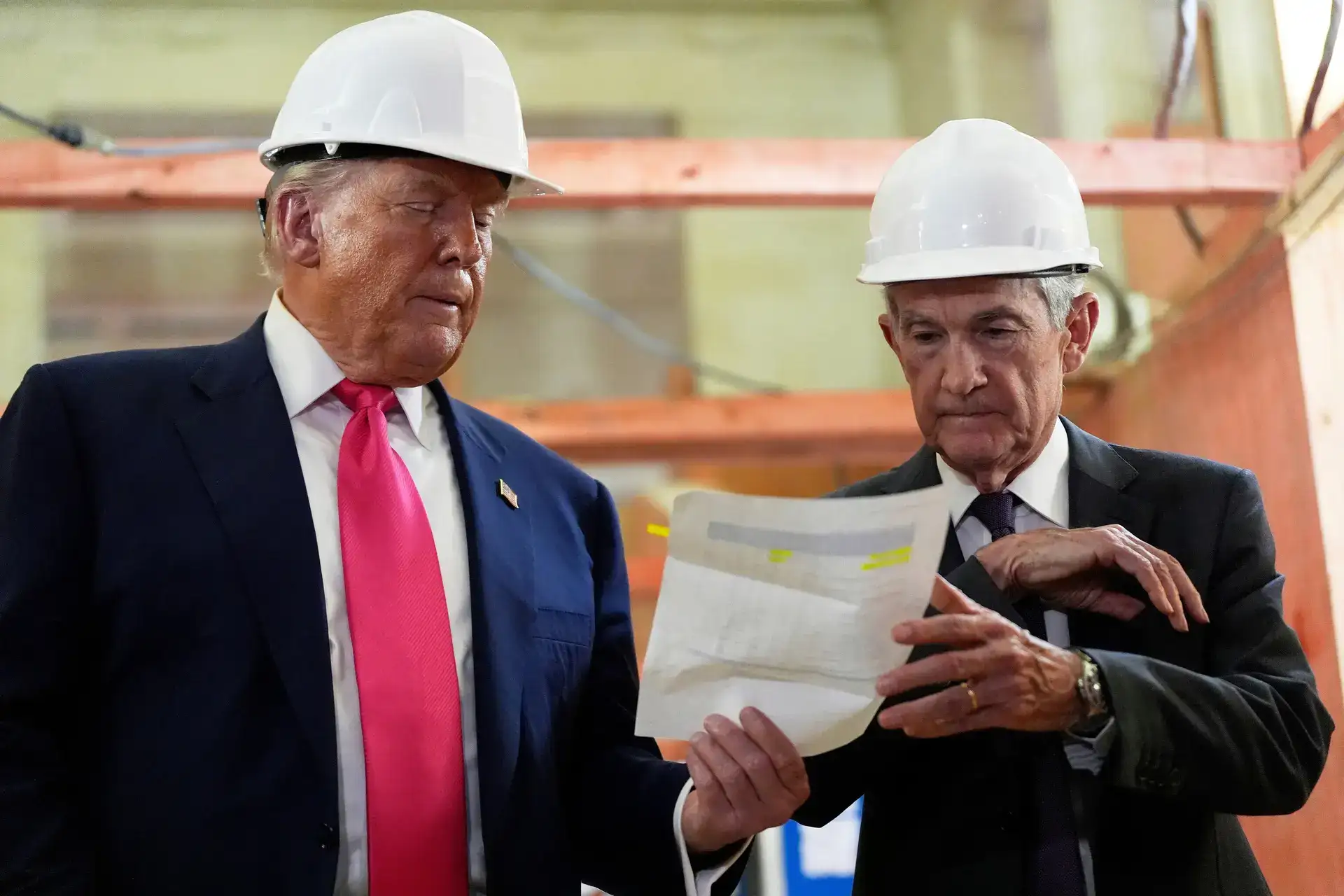
For now, the odds are that Warsh will step into the hot seat when Powell's term ends on May 15. Trump announced his name in January. But, unlike in India, where GoI is the sole authority to appoint the RBI governor, the Fed chair goes through a lengthy confirmation process - first by Senate Banking Committee (SBC) and then by the full senate - before a new chair takes over.

Normally, this should not be a problem. Support for the Fed chair nominee tends to be bipartisan. Powell, for instance, was appointed by Trump during his first term and then reappointed by Joe Biden in 2022. But this time around, Trump's almost personal animosity towards Powell for repeatedly defying his call to cut interest rates, and his subsequent attempt to frame charges against him, have queered the pitch.

The confirmation initially faced a roadblock, thanks to Senator Thom Tillis, who vowed not to advance any Fed nomination until the justice department ended its probe into Powell's supposed misdeeds: cost overruns in the renovation of the Fed headquarters. But now that the probe has been called off, and SBC has cleared the nomination, chances are Warsh's confirmation will be through by May 15, even as Powell remains on the Fed board till 2028.

With that, the curtain will, hopefully, come down on an unseemly spat between Trump and Powell. In an interview in mid-April, Trump made no bones about his determination to get Powell out, saying he will fire him if he opts to stay at the Fed after his term ends (in case Warsh's confirmation is delayed). Adding, in his characteristic style, 'I've held back firing him. I've wanted to fire him. But I hate to be controversial, you know.'

Which brings us to the second issue: the question of independence of the US Fed. Here, the picture is far from settled. Warsh told US senators that his monetary policy decisions would be independent of any advice or pressure from Trump, describing success in keeping inflation low as the 'plot armour' that would insulate the central bank from criticism.

'Monetary policy independence is essential,' Warsh said in a public statement delivered to the SBC, adding that it was 'largely up to the Fed' to maintain that independence by succeeding in its goals and not straying beyond its mandate from Congress.

'We need to take politics out of monetary policy and monetary policy out of politics. If I'm confirmed, the Fed should stay in its lane.' The question is, what is its lane? Will it be a lane dictated by Trump? Or by a Fed that has, so far, steadfastly refused to do Trump's bidding, including holding interest rates unchanged at its last meeting under Powell, in late April?

Asked whether he expected rates would fall this year, Trump was emphatic, 'When Kevin gets in, I do.' But if the Fed cuts rates when US inflation, at 3.3%, is running well above the Fed's target rate of 2%, inflation is bound to increase. At a time when high oil prices are already putting pressure on fuel prices in the US and, through second-order effects, on other products as well, it is only a matter of time before the impact of higher prices in the US gets transmitted globally - and affects us in India, too.

Unfortunately, Warsh's statement, coming just hours before Trump repeated in an interview that he would be disappointed if his handpicked nominee did not cut rates quickly, has not convinced anyone. As the feisty Democrat leader Elizabeth Warren pointed out, 'Independence takes courage,' before going on to put Warsh on the spot by querying, 'Let's check out your independence and your courage. We'll start easy: Mr Warsh, did Donald Trump lose the 2020 election?' - something Warsh has steadfastly refused to concede.

It's no wonder, then, that markets are waiting with bated breath to see what happens when Warsh gets his foot in the door. Empirical evidence shows that not only is no country immune from the spillover effects of US monetary policy, but also that uncertainty surrounding the Fed's monetary policy decisions affects all financial markets adversely.

Sign up to read this article
Read news from 100's of titles, curated specifically for you.
Already a member? Sign in here
Related Stories
Top stories on inkl right now
Our Picks
Fourteen days free
Download the app
One app. One membership.
100+ trusted global sources.