Get all your news in one place.
100's of premium titles.
One app.
Start reading
The Economic Times
The Economic Times
Anupam Nagar

Fed Chair Warsh sees global investment surge replacing savings glut

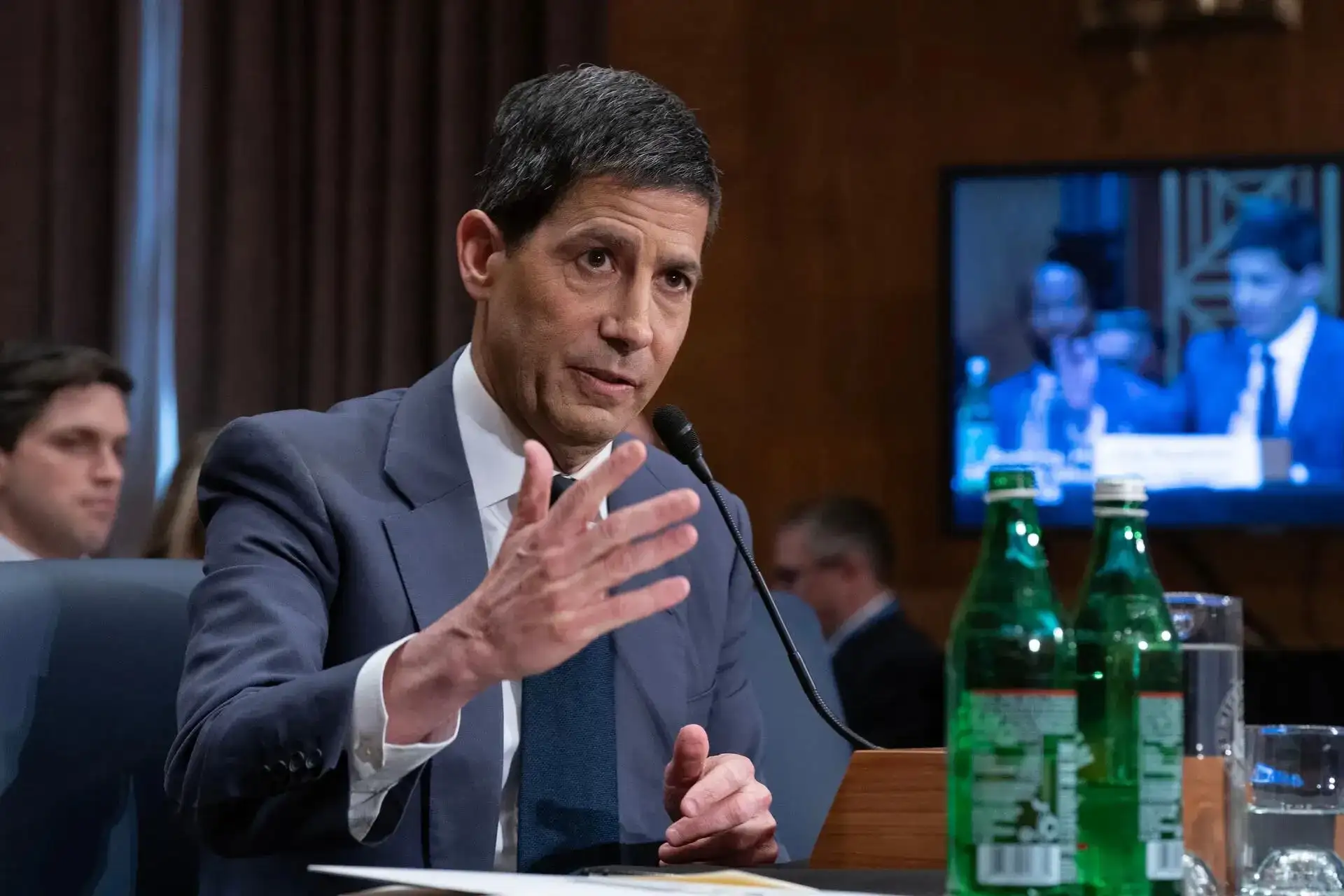
US Federal Reserve Chair Kevin Warsh told G20 finance leaders that the global economy is experiencing a shift from a prolonged savings glut towards a broad-based investment surge, a development that could support stronger economic growth and productivity.

According to a report by Reuters, Warsh made the assessment on Monday at the G20 finance leaders' opening plenary session in Asheville, North Carolina. The meeting marked his first international economic policy gathering since becoming head of the U.S. central bank in May.

Also Read | Global Market | Shein's weak listing draws analyst concerns over valuation and margins

From savings glut to investment boom

Warsh highlighted a major change in the global economic environment compared with the period before and after the 2008 financial crisis. For years, policymakers had focused on an excess of global savings relative to investment opportunities, which pushed capital toward safe, low-yielding assets.

The Fed chief now sees the opposite dynamic emerging, with a growing number of investment opportunities drawing capital into productive activities.

Warsh also questioned whether the long-standing concept of secular stagnation remains relevant. The theory had suggested that weak investment, limited innovation and subdued productivity could constrain economic growth for an extended period.

The shift toward heavier investment could challenge those assumptions and potentially raise the economy's underlying growth potential.

Productivity becomes a key focus

Warsh indicated that policymakers need to reassess the growth prospects of the U.S. and other major economies, particularly in light of developments in productivity.

Traditional forecasts, including those from the U.S. Congressional Budget Office, have generally pointed to annual economic growth of around 1.8%, accompanied by relatively subdued productivity gains.

The report stated that Warsh is examining whether actual growth could exceed those projections if investment and productivity prove stronger than expected.

The question is particularly important for monetary policy because stronger productivity can allow an economy to expand faster without generating the same degree of inflationary pressure.

AI investment changes the savings landscape

One of the biggest changes affecting global capital flows is the enormous investment being directed toward artificial intelligence infrastructure.

Companies and investors are financing large bond offerings to build data centers, power infrastructure and other facilities required to support the rapid expansion of AI. Those investments are creating new destinations for capital that previously might have flowed into safer assets such as U.S. government bonds.

This shift has implications for both the Federal Reserve and the U.S. Treasury.

For decades, strong global demand for Treasuries helped keep government borrowing costs relatively low. The abundance of savings also contributed to favorable financing conditions for households, including lower mortgage rates.

The emergence of competing investment opportunities could reduce that demand for Treasuries and contribute to higher government bond yields.

Higher Treasury yields pose a challenge

The changing global savings pattern comes at a time when the U.S. government is already facing a substantial financing requirement.

According to the report, that Treasury Secretary Scott Bessent said stronger economic growth was one factor contributing to elevated Treasury yields. Bessent, however, played down concerns over the functioning of the Treasury market and the sustainability of U.S. government debt.

U.S. public debt surpassed $40 trillion earlier in August, adding to the significance of borrowing costs for the government's finances.

Warsh's monetary policy outlook

Warsh's comments also come as markets closely monitor the Fed's approach to inflation and interest rates.

At the annual central bankers' conference in Jackson Hole, Wyoming, Warsh indicated that the Fed could have additional work to do if policymakers fail to gain sufficient confidence that inflation is moving sustainably toward the central bank's 2% target.

His recent comments have brought the possibility of tighter monetary policy into greater focus. A stronger investment cycle and higher productivity could support growth, but sustained investment demand could also contribute to upward pressure on prices and interest rates.

For the Fed, the challenge will be determining whether the emerging investment boom represents a durable increase in the economy's productive capacity or a source of additional inflationary pressure.

The report stated that Warsh's appearance at the G20 meeting offered an unusually detailed look at how the new Fed chief is assessing the changing global economic landscape.

Sign up to read this article
Read news from 100's of titles, curated specifically for you.
Already a member? Sign in here
Related Stories
Top stories on inkl right now
One subscription that gives you access to news from hundreds of sites
Already a member? Sign in here
Our Picks
Fourteen days free
Download the app
One app. One membership.
100+ trusted global sources.