Get all your news in one place.
100's of premium titles.
One app.
Start reading
Tom’s Guide
Tom’s Guide
Technology
Nick Harris-Fry

Fantastic foams and supercritical science — why running shoes have improved so much in the past 10 years, explained by an expert who makes them

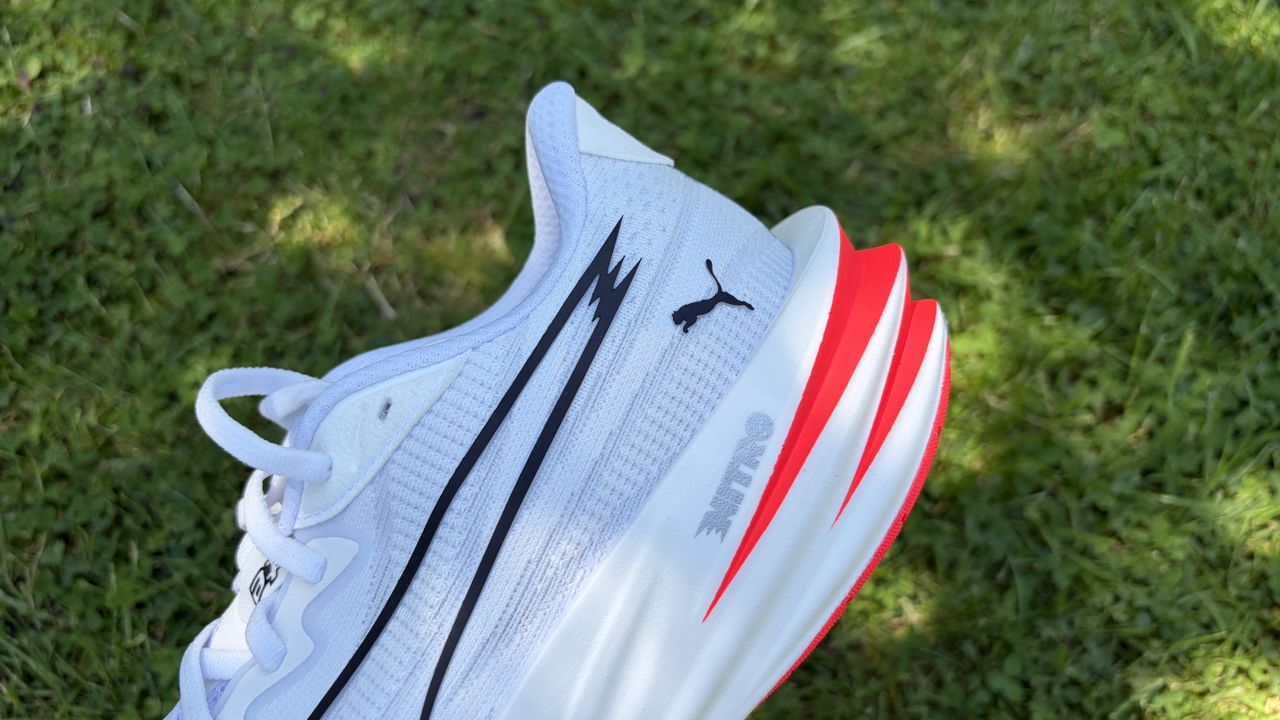
Puma Deviate Pure Nitro.

I’ve been running for just over 10 years and consider myself very fortunate to have taken up the sport when I did, because running shoes have never been better.

The most high-profile area of this is carbon plate running shoes, which have proved controversial in aiding rapid improvements in world records for elites and personal records for amateurs.

However, there’s no controversy over the advances in shoe design that have led to brilliant training shoes that everyone can enjoy.

Right now, the best running shoes are lighter, bouncier and just flat-out more fun than shoes were when I started the sport, and that’s mostly down to what’s going on in their midsoles — the part of the shoe between the sockliner and the outsole on a sneaker.

To find out more about advancements in midsole tech and performance, I spoke to Damion Perry, Senior Product Line Manager at Puma Running.

Why is the midsole so important on a running shoe?

(Image credit: Future)

Uppers and outsoles are important, but the key to running shoe performance is the foam in the midsole, which serves two purposes, according to Perry.

“One is to absorb the impact of you landing on the ground,” says Perry, “and the second is to return energy for you to feel that sense of lift and bounce.”

Finding a material that does both those jobs effectively is the tricky part.

“You have something soft like sand which absorbs a lot of impact very well,” says Perry. “Then you have something like a trampoline, which provides an extraordinary amount of energy return.

“In a running shoe, you're trying to use a material that effectively absorbs those forces and then gives them back to you as much as it can. That’s the midsole, and we use foam to do that.”

Why have midsoles improved so much in recent years?

(Image credit: Future)

When I started, running shoes were a lot better at absorbing energy than they were at giving it back, but foams have improved dramatically in recent years, and a lot of that comes down to using supercritical foams.

“Previously, foams were injection-moulded or compression-moulded,” says Perry. “Plastic-based materials that are poured into the shape of a sole.

“Inherently, with that, they’re quite dense materials. They provide some level of cushioning, but not at the level of what we're seeing today from using the supercritical foaming process.”

The process of supercritical foaming is what has created this drastically new underfoot feel. Materials that compress and feel really airy and bouncy and absorb those forces. It allows for a better cushioning experience.

Damoin Perry, Puma Running

Supercritical foams are created by infusing foams with a gas (usually nitrogen) using a high-pressure, heated chamber called an autoclave. This creates air within the cell structure of the foams, making them lighter and less dense than older foams.

“You can use a lot of different raw materials for it,” says Perry, “but the process of supercritical foaming is what's created this drastically new underfoot feel. Materials that compress feel really airy and bouncy and absorb those forces. It allows for a better cushioning experience.”

What are the differences between the foams you get in midsoles?

(Image credit: Future)

This supercritical process is used with all kinds of foam used in running shoes. EVA was the main material used for a long time, before springier modern materials like PEBA and now aliphatic TPU became more popular.

Brands still use a variety of foams in their line-ups, though, because each has properties that make it attractive to certain consumers, including EVA.

“Everyone's running experience or use of running shoes is quite different, right?” says Perry. “There's a difference between clicking off three- or four-minute Ks [five- or six-minute miles] and walking.

“If you need something that feels supportive and secure and familiar underfoot, something like EVA is a great solution for that. But if you want a PR in the 5K, you get this foam [aliphatic TPU] that has an extremely high amount of energy return, and mix that with the modern geometries and plates that allow it to be harnessed in its maximized way, there's a clear preference and purpose for that.”

Right now, the market is certainly skewing toward foams like PEBA and aliphatic TPU that deliver high levels of energy return, but when picking your running shoe, it’s not just about the foam used; it’s also about how the brand uses it.

What is shoe ‘geometry’ and why does it matter?

(Image credit: Future)

If you look at a shelf of running shoes, you’ll quickly notice that they don’t all have the same shape. Some are much more rockered than others, with a curved sole that rolls you forward, and they also differ in width, stack height and drop — how much higher the heel stack height is compared with the forefoot stack height.

This is the geometry of the shoe, and it has a huge effect on the ride feel of a shoe, regardless of the foam used. Speaking of foams, those can also differ hugely in feel even if they’re made from the same material.

“There are so many things that can be tweaked to create a particular experience that we on the brand side are trying to curate,” says Perry. “This is a daily trainer, this is a racer, this is a super trainer, this is a recovery shoe. We might be able to use the same ingredients, but there are things that we can toy with.

“At the foam level, density is one — just because something is made of aliphatic TPU does not mean it's going to feel exactly the same in every single shoe, because we can change the density.

“We make decisions on geometry, and we make decisions on density to curate an experience that we want you to have.”

(Image credit: Future)

The differences in foam can be drastic even if brands use the same name across different shoes, like Puma’s Nitro Elite material or Nike’s ZoomX. You can’t just go by the label — it’s important to look at what the shoe is designed to do.

Cushioned shoes for daily training will generally have more stable, less springy foams in the midsole to protect your body when racking up a lot of mileage, while racing shoes use the most energetic materials possible to try and help you get faster and more efficient, and those foams are often used in tandem with a carbon plate to boost those benefits.

One of the things I love most about testing running shoes is that there is no one best foam or shoe geometry — we all like different things, and experimenting with a mix of shoes is always a good idea where possible.

Follow Tom's Guide fitness on Instagram for more workouts, routines, tips, and tricks.

More from Tom's Guide

Sign up to read this article
Read news from 100's of titles, curated specifically for you.
Already a member? Sign in here
Related Stories
Top stories on inkl right now
One subscription that gives you access to news from hundreds of sites
Already a member? Sign in here
Our Picks
Fourteen days free
Download the app
One app. One membership.
100+ trusted global sources.