
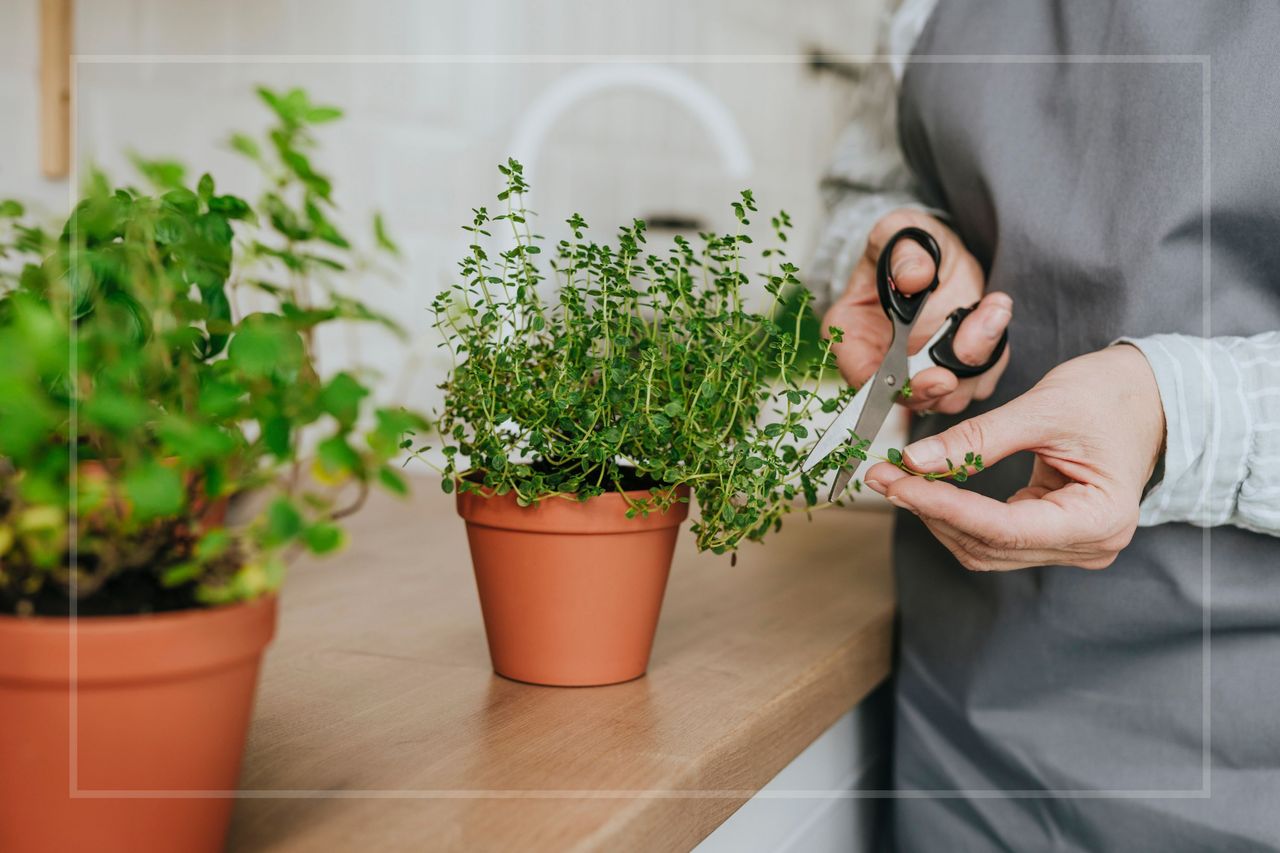
Thyme is one of those herbs that elevates any occasion. Great in soups, stews, and roasts, or tossed whole into a pan for roasting vegetables and meats, it brings out new flavours in some late summer and autumn dishes.
It is also a lovely aromatic herb to boil with water and use as a fragrant DIY spray to make your home smell lovely. Despite such greatness, it doesn't necessarily merit a trip to the shops if you’re not heading out anyway.

Garden writer Simon Akeroyd has shared how you can always make sure you’ve got a handful of thyme whenever you need it, without having to go out and buy some. All you’ll need to get started is a couple of thyme cuttings from your local supermarket - usually found in the herbs section and costing less than £1.
A post shared by Simon Akeroyd (@simonakeroydgardenwriter)
A photo posted by
Place your sprigs straight into a tall glass or jar and fill it roughly halfway full with water. Then simply leave it somewhere where it won’t be knocked over - the kitchen counter is fine, or a room that doesn’t get much interference.
During this first step, you’ll want to change the water every one or two days to keep it fresh. After a short period, which is typically between 10-14 days, you should start to notice roots appearing. Once these roots have grown well, it’s time to pot your thyme.
Plant your new rooted cutting in peat-free compost inside a terracotta pot. If you’re planting multiple cuttings at once, dig deep enough holes in the compost and plant each root in a separate hole.

Discover 40 simple, fun hacks to try – no gardening experience needed, just a windowsill and a recycled container.
Thyme is a hardy plant, so it’ll be fine to grow outdoors if you’re still getting plenty of sun each day. Thyme needs at least six hours of direct sun every day.
If the weather has turned, or you’re hoping to keep growing thyme throughout the autumn and winter months, you can place your pot anywhere indoors that has access to natural light, or use an LED grow light to encourage growth.
In terms of temperature, if it gets chillier outside, bring the plant in. Anything between 16 degrees Celsius and the upper 20s is a good climate for thyme to grow.
Once your thyme plant starts to grow fresh sprigs, the best part is that you can repeat the process above and just keep it going. Simon suggests that the perennial nature of the plant means you’ll get a good few years of harvest.